

Adobe just made a move that creative professionals will want to pay close attention to. The company is partnering with Anthropic to bring its Firefly AI assistant directly into Claude, and the implications are pretty exciting.
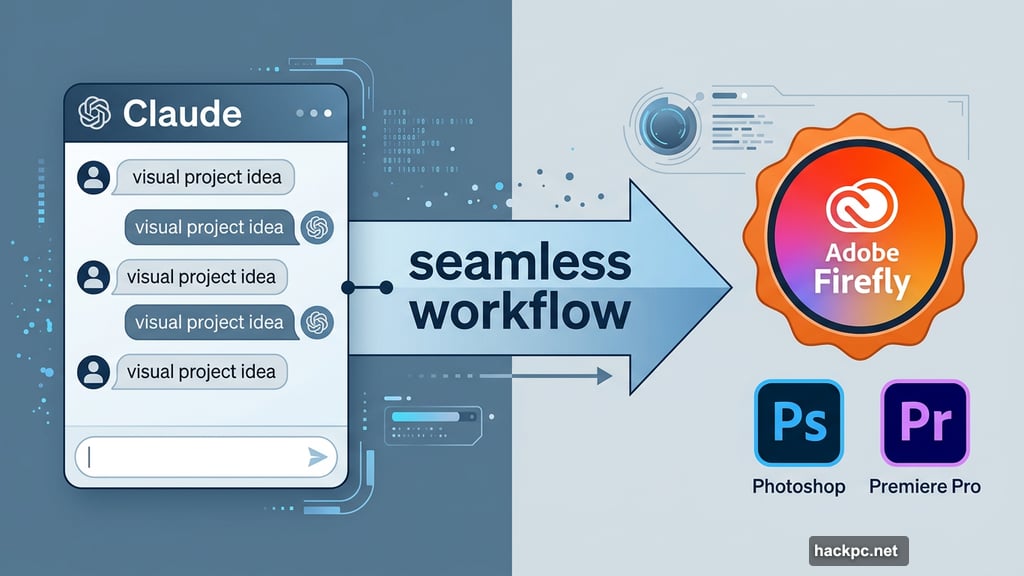
Think about what this means in practice. You open Claude to brainstorm a visual project, then reach straight into Adobe’s creative tools to execute it without jumping between apps. That’s the vision Adobe and Anthropic are building toward together.
Adobe’s Firefly Agent Goes Agentic
If you haven’t followed Firefly closely, here’s the quick version. Firefly is Adobe’s central hub for all things AI, with connections running through Photoshop, Acrobat, Premiere Pro, and the rest of the Creative Cloud family.
The new Firefly AI assistant takes things a step further by going fully agentic. That word gets thrown around a lot in tech right now, but the practical meaning is simple. Agentic AI can take on multi-step tasks and complete them without someone clicking through every single action manually.
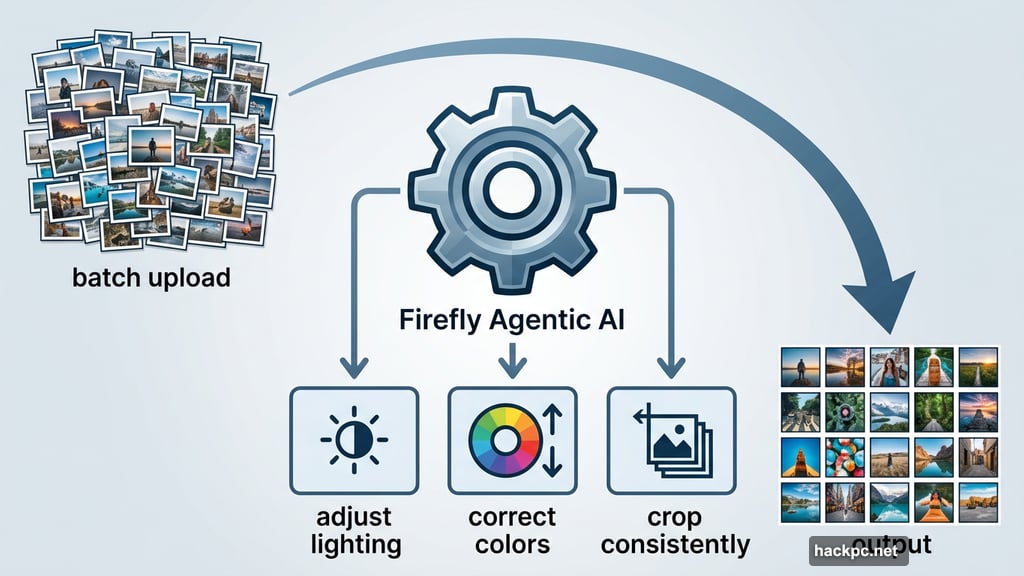
Picture uploading a batch of 200 vacation photos and asking Firefly to adjust the lighting, correct the colors, and crop them consistently. It handles the whole job. You’re not approving each edit one by one. Instead, you describe what you want and the assistant gets to work.
One useful way to think about it is that this is a next-generation AI tool built to handle very traditional, non-generative editing tasks. It’s not just generating new images from scratch. It’s doing the tedious, time-consuming work that eats up hours in a professional’s day.
Why the Claude Connection Matters
Adobe bringing its creative agent to Claude is a first for both companies. This marks Claude’s first major creative AI integration, which is a meaningful expansion for a platform that’s built its reputation primarily on coding assistance and enterprise productivity.
Anthropic’s chief commercial officer Paul Smith put it well in a press release: “Together with Adobe, we’re exploring new ways to help creators conceptualize a project in Claude and reach straight into Adobe Firefly to execute it.”
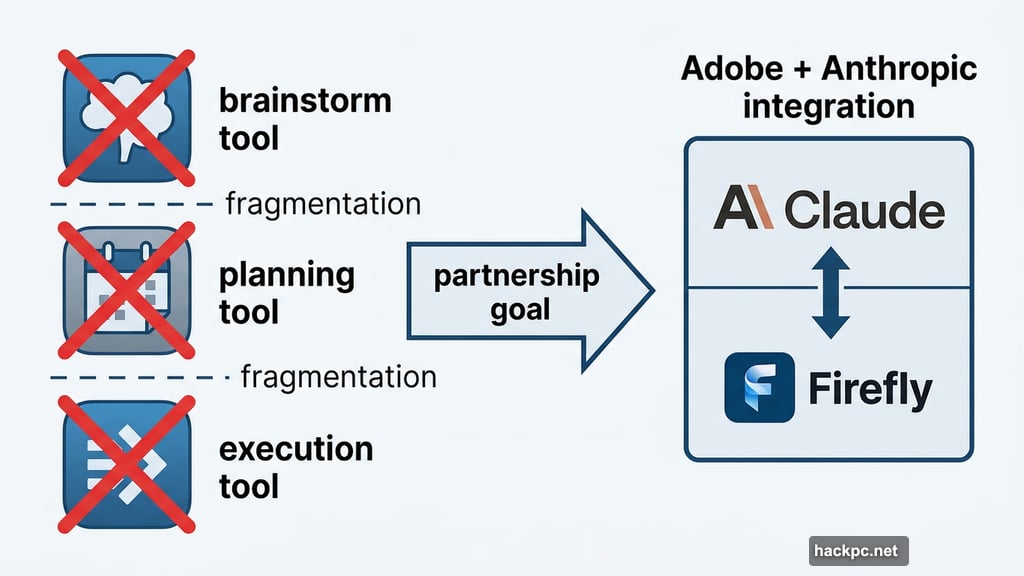
That workflow — from idea to execution inside a single conversational interface — is exactly what creative professionals have been asking for. Right now, the process looks like this: brainstorm in one tool, plan in another, execute in a third. This partnership chips away at that fragmentation.
Adobe framed its goal as “enabling creators to access the best of Adobe directly across the surfaces where they work every day.” In other words, the tools should come to you rather than forcing you to jump between platforms constantly.
What’s Rolling Out and When
Adobe is being a bit cautious with the timeline, which is understandable given how complex these integrations can be. More details about the Firefly connector to Claude will drop in the coming weeks, including the exact availability date.
The Firefly assistant itself launches as a public beta later this month. So you won’t be waiting long to try the core product, even if the Claude integration needs a bit more time.
Several other Firefly updates are already live right now. The video editor received better audio, advanced coloring tools, and deeper Adobe Stock integrations. The image editing suite also picked up fresh upgrades. Plus, two new Kling models — Kling 3.0 and Kling 3.0 Omni — are joining the more than 30 outside AI models that creators can already access through the Firefly platform.
Agentic Creative Tools Are Clearly the Next Battleground
Adobe has been steadily building AI assistants into its software for a while now. The company launched AI assistants in both Adobe Express and Photoshop back in October, so this isn’t a sudden pivot. It’s more of an acceleration.
And it fits a broader pattern across the industry. Tools like Claude Code have already rattled the developer world by handling complex coding tasks with minimal human input. The same shift is clearly coming for creative work.
The difference with Adobe’s approach is the depth of integration. Firefly doesn’t just generate a result and hand it back. It plugs into the full Creative Cloud ecosystem, which means it understands layers, formats, color profiles, and all the professional details that generic AI image tools tend to ignore.
For working designers, photographers, and video editors, that level of context matters enormously. A tool that understands your existing Photoshop workflow is far more useful than one that produces a pretty output with no awareness of what comes next in your process.
The Adobe-Anthropic partnership is still in its early stages, but the direction is clear. Creative AI is growing up fast, and it’s learning to work the way professionals actually work.


Comments (0)