
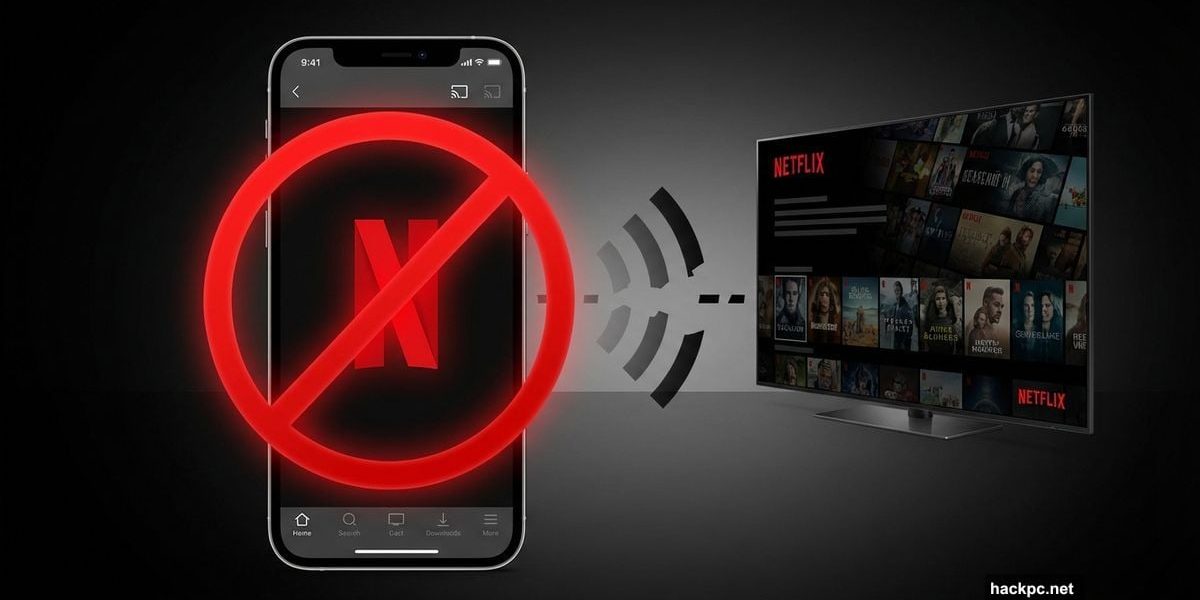
Netflix quietly removed one of its most convenient features. No announcement. No explanation. Just gone.
Users discovered they could no longer cast shows from their phones to TVs. The change hit sometime in mid-November. Plus, Netflix only acknowledged it through an updated help page buried on their website.
This isn’t a bug. It’s deliberate. And it affects nearly everyone who streams Netflix.
What Actually Disappeared
Casting let you control Netflix from your phone while watching on your TV. Simple, convenient, familiar.
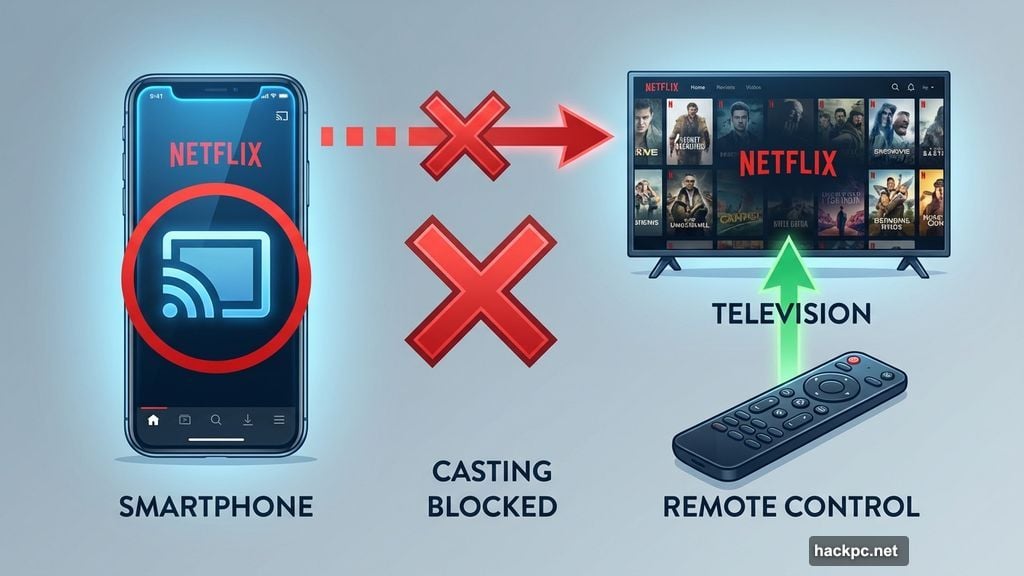
Now that option vanished for most subscribers. Open the Netflix app on your phone today and the casting button simply doesn’t exist anymore. Instead, Netflix directs you to use your TV remote to navigate their app directly.
The change affects both Android and iPhone users. One Reddit user reported losing casting support on November 10th. My colleague Dom Preston confirmed the same thing. He could cast using an older version of the Netflix app. But after updating? The casting option disappeared entirely.
Netflix’s support page finally acknowledged the change. Their wording? The streaming service “no longer supports casting shows from a mobile device to most TVs and TV-streaming devices.” That’s it. No explanation for why.
The Hidden Exceptions
Netflix didn’t kill casting completely. But the exceptions reveal something interesting.
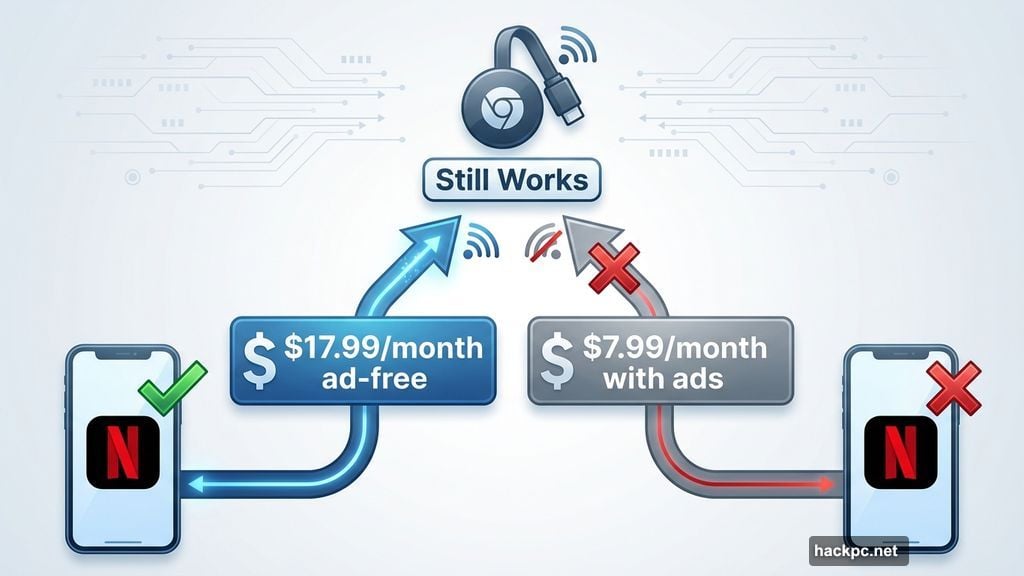
Legacy Chromecast devices still work. Same with TVs that natively support Google Cast technology. However, there’s a catch. Only ad-free subscribers can use these older devices for casting.
That means you need to pay $17.99 per month minimum. The cheaper ad-supported tier at $7.99? No casting whatsoever. Even if you own the right hardware.
So Netflix preserved casting for their most expensive customers only. Everyone else gets nothing.
This Feels Familiar
Netflix pulled similar moves before. Back in 2019, they killed AirPlay support for Apple devices.
Their reasoning then? Something vague about “ensuring quality standards for viewing.” Translation unclear. Reality? They cut a popular feature without much justification.
Now they’re doing it again with casting. Same pattern. Remove functionality. Offer minimal explanation. Force users toward their preferred method of interaction.
The company hasn’t explained the latest decision. They didn’t respond to requests for comment either.
Why This Actually Matters
Casting isn’t just about convenience. It represents control over your viewing experience.
Phone casting let you search, browse, and queue content using a device with a real keyboard and responsive touch interface. Anyone who’s hunted for shows using a TV remote knows how frustrating that experience gets. Typing with a directional pad? Painful.
Plus, casting worked seamlessly across devices and platforms. You could start browsing on your phone during dinner. Find something interesting. Cast it to your TV when ready. Now that flow breaks completely.
The change particularly hurts users with older TVs running outdated Netflix apps. Their TV interfaces run slowly. Phone casting solved that problem by offloading navigation to faster hardware. Not anymore.
What You Can Actually Do
Your options look pretty limited right now.
First, check if you own compatible hardware. Legacy Chromecast devices or TVs with native Google Cast support still work. But remember, you’ll need an ad-free subscription. So factor in that $17.99 monthly cost.
Second, consider screen mirroring instead of casting. This mirrors your entire phone screen to your TV rather than casting the stream directly. It works, but drains your phone battery faster and uses more bandwidth. Quality might suffer too.
Third, just use your TV remote like Netflix wants. Navigate their app directly on your TV. It’s slower and more awkward. But it’s free and works for everyone.
Fourth, vote with your wallet. If this change bothers you enough, cancel your subscription. Tell Netflix why in the exit survey. Companies track those metrics carefully.
The Pattern Gets Clearer
Netflix keeps removing features users actually like. AirPlay gone. Now casting mostly eliminated.
Each time, they offer weak explanations or none at all. “Quality standards.” “Technical limitations.” Generic corporate-speak that means nothing specific.
Meanwhile, subscription prices keep climbing. The ad-supported tier launched to attract budget-conscious users. But now it comes with fewer features than premium tiers. That’s not just tiered pricing. That’s deliberate feature removal to push upgrades.
This feels less like technical necessity and more like strategic control. Netflix wants you navigating their interface, seeing their promotions, interacting how they prefer. Your convenience matters less than their business model.
The streaming wars intensified competition. Yet Netflix responds by making their service less user-friendly. That’s a bold strategy. We’ll see if it pays off or drives subscribers toward competitors who still respect user preferences.



Comments (0)