
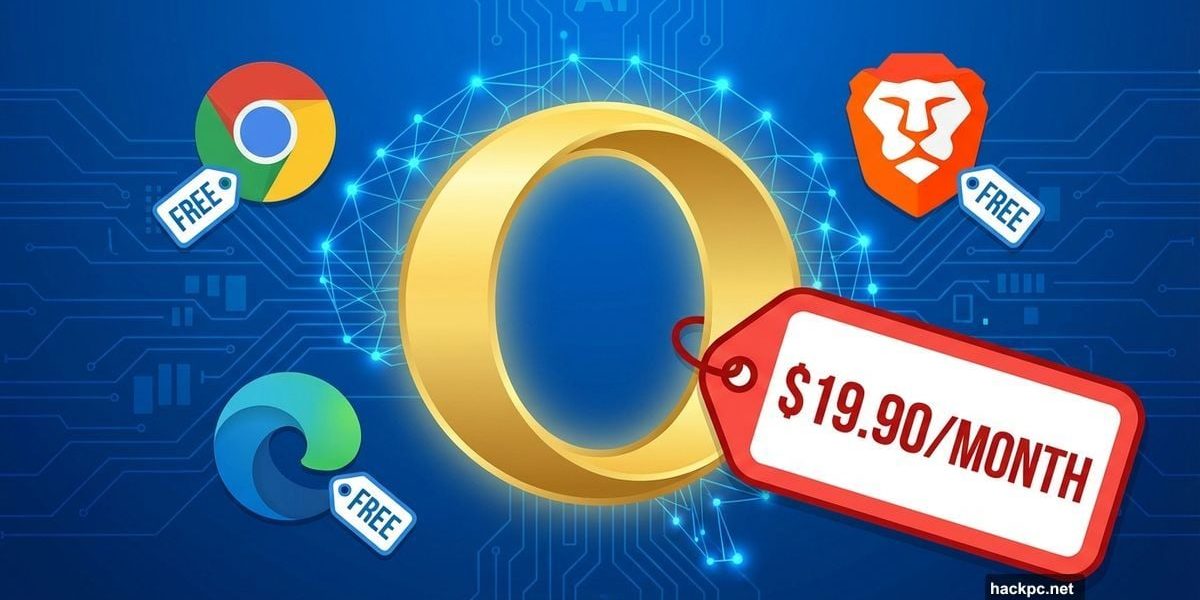
Opera just launched Neon, its AI-powered browser. But there’s a steep price attached.
The Norway-based company wants $19.90 per month for access. That’s not a typo. Twenty bucks monthly to browse the web with AI features baked in.
After months of testing with select users, Opera opened Neon to everyone this week. But “everyone” means anyone willing to pay a subscription fee that rivals premium streaming services.
What You Get for Twenty Bucks
Neon packs AI directly into browsing. The interface includes a chatbot that answers questions about pages, creates mini apps and videos, and handles tasks automatically.
The browser uses your browsing history as context. So you can ask it to pull details from a YouTube video you watched last week or find that article you read yesterday. Sounds convenient until you think about the privacy implications.
You also get “Cards” for repeatable tasks using prompts. Plus, a research agent digs deep into any topic you throw at it. Opera included a tab organization feature called Tasks too. These are workspace containers combining AI chats and tabs with their own context.

Beyond browser features, subscribers access top AI models like Gemini 3 Pro, GPT-5.1, Veo 3.1, and Nano Banana Pro. You also get into Opera’s Discord community and direct developer access.
The Competition Does It Free
Here’s where Opera’s pricing looks questionable. Most AI browser features elsewhere cost nothing.
Perplexity offers Comet. OpenAI has Atlas. The Browser Company built Dia. All these AI-first browsers integrate similar features without charging monthly fees.
Even Opera’s own products include free AI features. Opera One, Opera GX, and Opera Air all have chat-based assistants at no cost. So Opera is essentially charging users for premium versions of capabilities it already gives away.
Google and Brave are adding AI features to their browsers too. Neither plans to charge subscription fees. Google detailed security measures for protecting users against AI attack surfaces this week. Brave previewed agentic features in a nightly build, offering isolated browsing profiles for AI usage.
Who Actually Needs This

Opera positions Neon for “people who like to be the first to the newest AI tech.” That’s marketing speak for early adopters with money to burn.
Most people don’t need AI deeply integrated into browsing. Sure, asking questions about pages sounds useful. But so does just reading the page yourself. The research agent might help students or researchers. But $240 yearly for that feature feels steep.
The target audience likely consists of professionals who expense software costs or tech enthusiasts who must have every new tool. Average users will stick with free alternatives.
Krystian Kolondra, Opera’s EVP of browsers, called Neon “a rapidly evolving project with significant updates released every week.” Translation: We’re charging you to beta test our product.
The Bigger Browser Battle
Opera’s subscription model reveals how companies plan to monetize AI browsers. Instead of ads or data collection, they’re testing direct user payments.
This approach has upsides. Subscription revenue means Opera doesn’t need to sell your data or cram ads everywhere. Plus, paying customers get priority support and feature access.
But it also creates a two-tier internet. Those who can afford premium browsers get better AI tools. Everyone else makes do with free versions or browsers without AI features. That divide could widen as AI becomes more central to how we work and research online.

The real test comes in six months. Will enough users pay $20 monthly to justify Opera’s development costs? Or will they migrate to free alternatives that offer similar capabilities?
Free Alternatives Work Fine
Opera’s free browsers already include AI assistants. Unless you desperately need access to the latest AI models or can’t live without Opera’s Discord community, the free options probably suffice.
Chrome, Firefox, and Safari work perfectly well without AI subscriptions. You can always open ChatGPT, Claude, or Gemini in a tab when you need AI help. That workflow costs nothing and gives you control over when AI enters your browsing experience.
The $19.90 price point feels disconnected from what most users actually need. Opera built something impressive technically. But they may have priced themselves out of mainstream adoption.
Smart money says wait. Let the early adopters test Neon for a few months. Watch which features actually prove useful. Then decide if those capabilities justify the monthly cost.
For now, your current browser probably does everything you need.


Comments (0)