
Facebook Messenger‘s desktop app stopped working today. If you’re a Mac or Windows user, you’ll now need to use the web version instead.
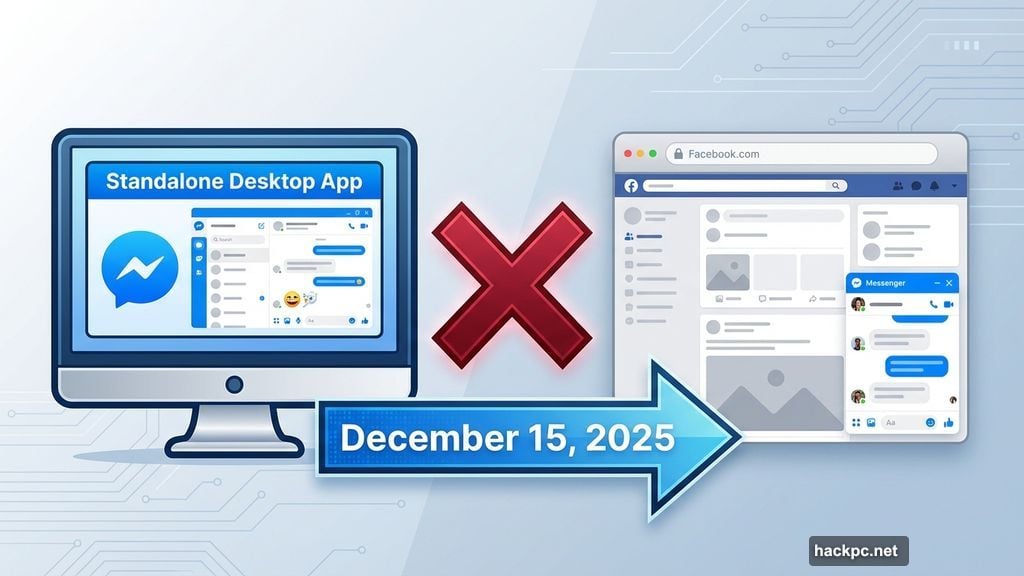
Meta officially killed the standalone desktop app on December 15, 2025. Users who try to launch it now get redirected to Facebook’s website. No warning. No grace period. Just a sudden shutdown after five years of availability.
So what happened? Why did Meta abandon a perfectly functional desktop app? The answer reveals a lot about the company’s shifting priorities and declining faith in standalone tools.
The App Never Really Competed
Messenger’s desktop app launched during the COVID-19 pandemic in 2020. Great timing, right? Everyone suddenly needed video calling tools for remote work.
But the app couldn’t keep up with competitors. Zoom handled way more participants on video calls. Microsoft Teams offered better screensharing. Even Google Meet made it easier to share meeting links.
Plus, Messenger’s desktop app felt like an afterthought. It lacked features that business users needed. That made it useful for casual chats but worthless for professional communication. So most people stuck with business-focused platforms instead.
Meta never seriously invested in making Messenger competitive for work. The company focused on personal messaging while rivals dominated the enterprise market. That strategic choice sealed the app’s fate years ago.
Meta Kept Downgrading the Technology
The desktop app went through multiple technical downgrades over the years. Each change made it less appealing to use.
First, the Mac version used Electron technology. Then Meta switched to React Native Desktop. Later, they rebuilt it with Catalyst, which lets developers port iPad apps to Mac.
Developers hated working with Catalyst. Users noticed the app didn’t feel native to macOS. It had that clunky, not-quite-right feel of a ported mobile app.
Meanwhile, the Windows version became a progressive web app last year. Basically just a glorified browser wrapper. At that point, why bother downloading a separate app?
These downgrades probably killed user interest. If the desktop app feels worse than just using a browser tab, most people will skip the app entirely. Meta’s technical decisions actively discouraged adoption.
Messenger Moved Back to Facebook
Meta started merging Messenger back into the main Facebook app in 2023. That shift signaled the company’s real strategy.
Facebook’s user numbers have been declining. Younger generations prefer platforms like TikTok and Instagram. So Meta needed ways to make Facebook more essential again.
Forcing users to access Messenger through Facebook accomplishes that goal. More people visit Facebook. More time spent on the platform. More ad impressions. Better metrics for investors.
The standalone desktop app contradicted this strategy. It let people use Messenger without ever opening Facebook. That’s exactly what Meta wants to prevent now.
So the desktop app had to die. Not because it didn’t work. But because it worked too well at keeping people away from Facebook’s main platform.
What This Means for Users
If you relied on the desktop app, you now have two options. Use Messenger through Facebook.com in your browser. Or visit Messenger.com directly if you don’t have a Facebook account.
Meta promises you can save your chat history by setting up a PIN before transitioning. They provide separate help documentation for Mac users and Windows users. But the core experience will feel different.
Browser-based messaging lacks some desktop app benefits. No native notifications on Mac. No proper dock integration. No offline access. Just another browser tab competing for your attention.
For users without Facebook accounts, the shift to Messenger.com at least preserves some independence. You won’t need to create a Facebook profile just to keep chatting. But you’ll still use Meta’s web platform instead of a dedicated app.
Meta’s Real Priority Shows Through
This shutdown reveals Meta’s actual priorities. The company doesn’t care about providing the best user experience. It cares about maximizing engagement on Facebook.
Every decision Meta makes now serves that goal. Merge Messenger into Facebook. Kill the desktop app. Force users back to the main platform. Drive up usage numbers for the aging social network.
That strategy might work short-term. Users don’t have better options for messaging their Facebook contacts. So they’ll grudgingly adapt to the browser experience.
But long-term? This approach accelerates Facebook’s decline. Users resent being pushed around. They’ll look for alternatives that respect their preferences. And they’ll remember how Meta treated them when better options emerge.
The desktop app’s death isn’t just about one product. It’s a symptom of Meta’s larger problem. The company prioritizes its needs over user needs. That rarely ends well.




Comments (0)