
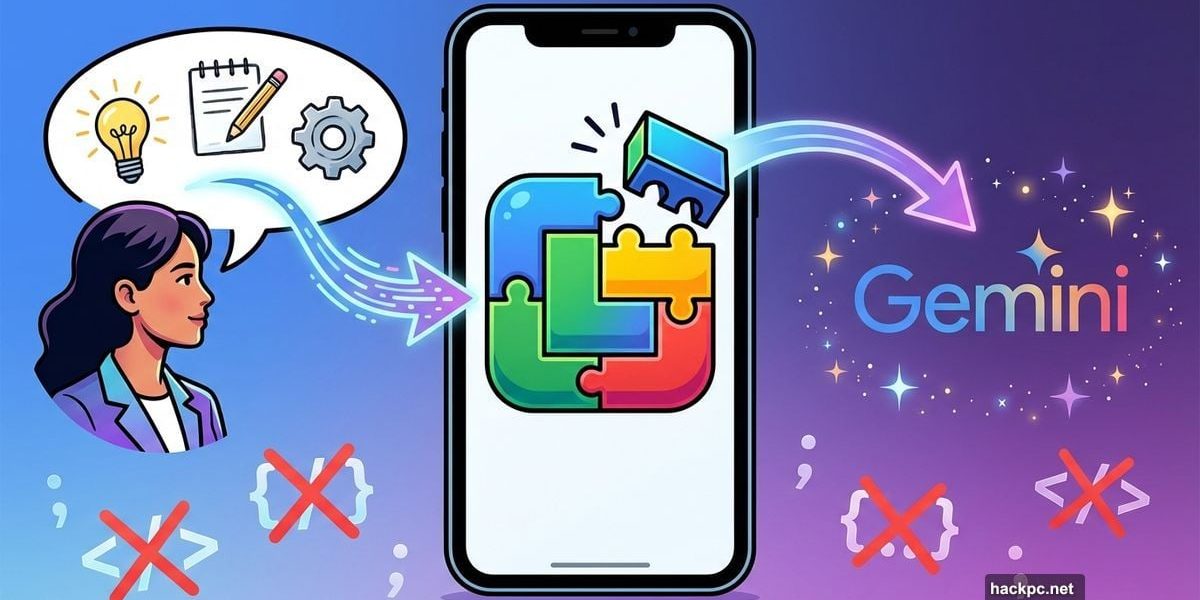
Google quietly slipped a game-changing feature into Gemini. Now anyone can build custom AI apps without writing a single line of code.
The company integrated Opal, its vibe-coding tool, directly into the Gemini web app. That means you describe what you want in plain English, and the AI builds it for you. No programming knowledge required.
What Opal Actually Does
Think of Opal as a construction kit for AI-powered mini apps. You tell it what you need. It creates the app. Simple as that.
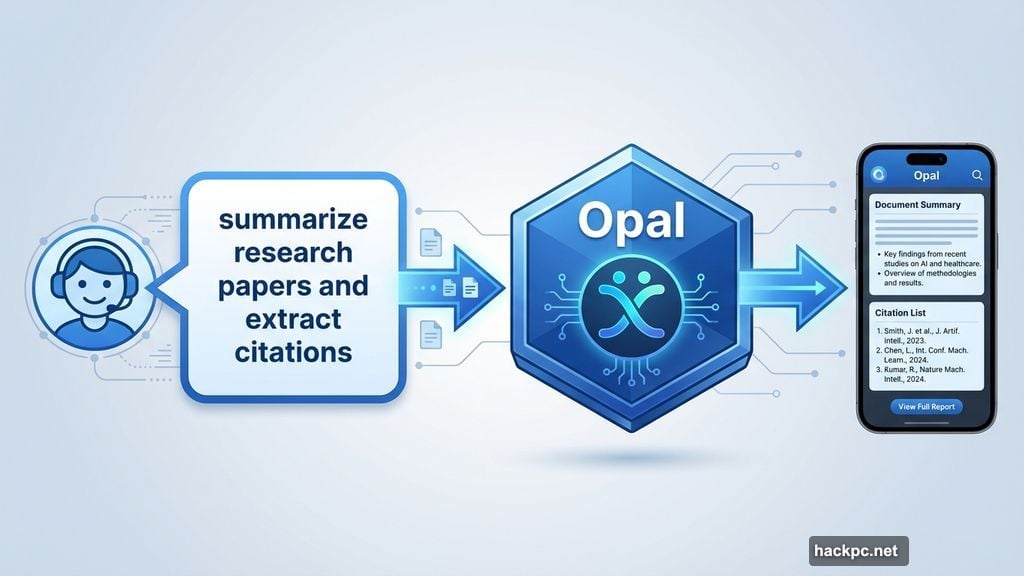
Here’s how it works in practice. Say you want an app that summarizes research papers and extracts key citations. You describe this goal in natural language. Opal takes your description and uses Gemini’s models to build the app automatically.
The tool now lives inside Gemini’s Gems manager. Gems are customized versions of Gemini designed for specific tasks. Google already offers pre-built Gems like a learning coach, brainstorming assistant, and coding partner. But now you can create your own.
Visual Editor Makes Building Apps Actually Easy
Google added a visual editor that breaks down app creation into clear steps. You can see exactly how your app works without touching code.
The editor lets you rearrange steps and link them together using drag-and-drop. Plus, Gemini converts your written prompts into a visual list of steps. That makes it easier to understand what’s happening behind the scenes.
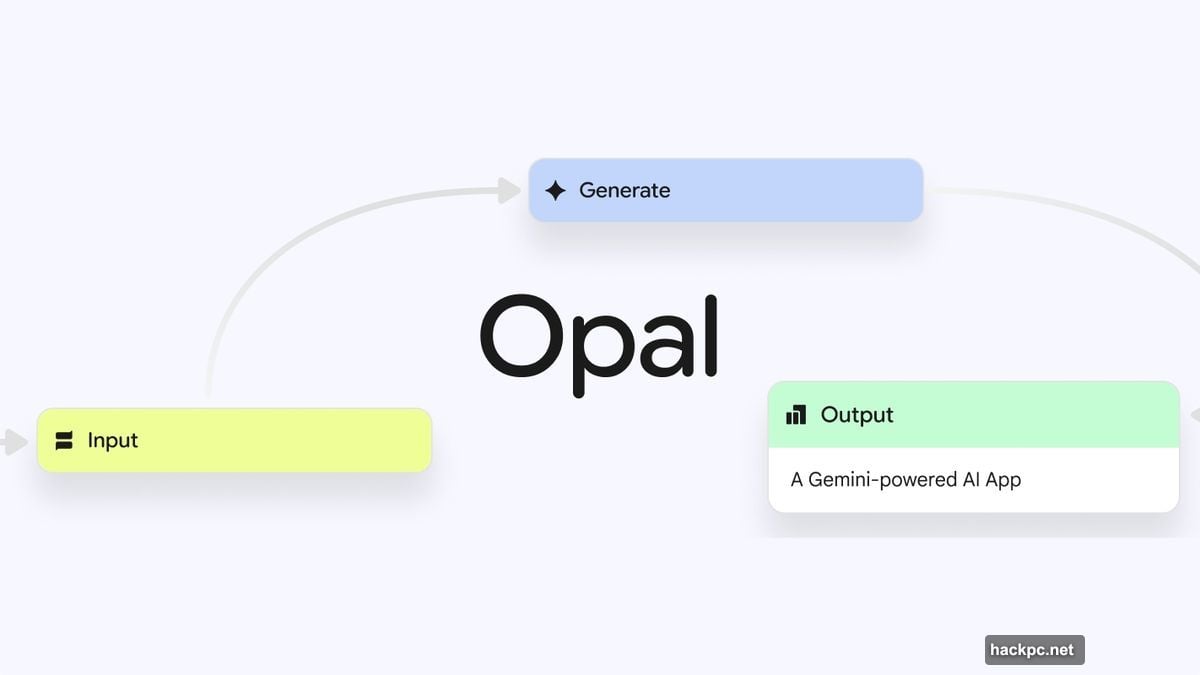
Need more control? You can switch to the Advanced Editor at opal.google.com. That gives you deeper customization options while still avoiding traditional programming.
Once you build an app, you can reuse it whenever you want. Create it once. Use it forever.
Vibe-Coding Exploded This Year
The ability to build software by describing what you want has taken off fast. Startups like Lovable and Cursor built entire businesses around it. Even major AI providers jumped in.
Anthropic and OpenAI both released their own vibe-coding tools this year. Consumer-focused startups like Wabi launched products that let anyone create functional apps through conversation.
Google’s move puts this capability directly into Gemini, which millions already use daily. That’s a much bigger distribution channel than standalone tools.
Why This Matters for Regular Users
Most people have ideas for useful tools but can’t code. Opal removes that barrier completely.
Need a custom research assistant? Build it. Want an app that formats your meeting notes a specific way? Create it. Have a workflow that requires combining multiple tasks? Opal can handle it.
The apps you create integrate directly with Gemini’s existing capabilities. So they can access web search, analyze documents, and process images without extra setup.
Plus, since everything happens inside Gemini, there’s no separate tool to learn. If you already use Gemini, you already know the interface.
Competition Heats Up Fast
Google faces serious competition in this space. OpenAI’s custom GPTs let users create specialized chatbots. Anthropic’s Claude Projects offer similar functionality. Microsoft added custom GPT support to Copilot.
But Google has advantages. Gemini’s multi-modal capabilities mean your apps can work with text, images, and other data types automatically. The visual editor makes the building process more transparent than competing tools.
Moreover, Google’s integration approach feels smoother. You don’t leave Gemini to build apps. Everything happens in one place.
What You Can Build Right Now
The feature works today at gemini.google.com. Just open the Gems manager to find Opal.
Start simple. Create an app that solves one specific problem you face regularly. Test it. Refine it. Then build something more complex.
The visual editor helps you understand how AI apps work. Even if you never become a programmer, you’ll gain insight into how software processes information and makes decisions.
That knowledge proves valuable whether you’re building more apps or just using AI tools more effectively.
The Bigger Picture on AI Development
Vibe-coding represents a fundamental shift in who can build software. Programming used to require years of learning syntax, debugging, and best practices. Now it requires clear communication about what you want.
This democratization has downsides. Apps built through natural language might not follow security best practices. They might be inefficient. They probably won’t scale like professionally coded software.
But for personal tools and quick solutions? Vibe-coding works remarkably well. And it’s getting better fast.
Google’s integration of Opal into Gemini makes this technology accessible to millions more users. That’s probably good for innovation. It’s definitely good for productivity.
Whether it leads to better software overall remains to be seen. But it’s changing who gets to create digital tools. And that change is happening right now.



Comments (0)