
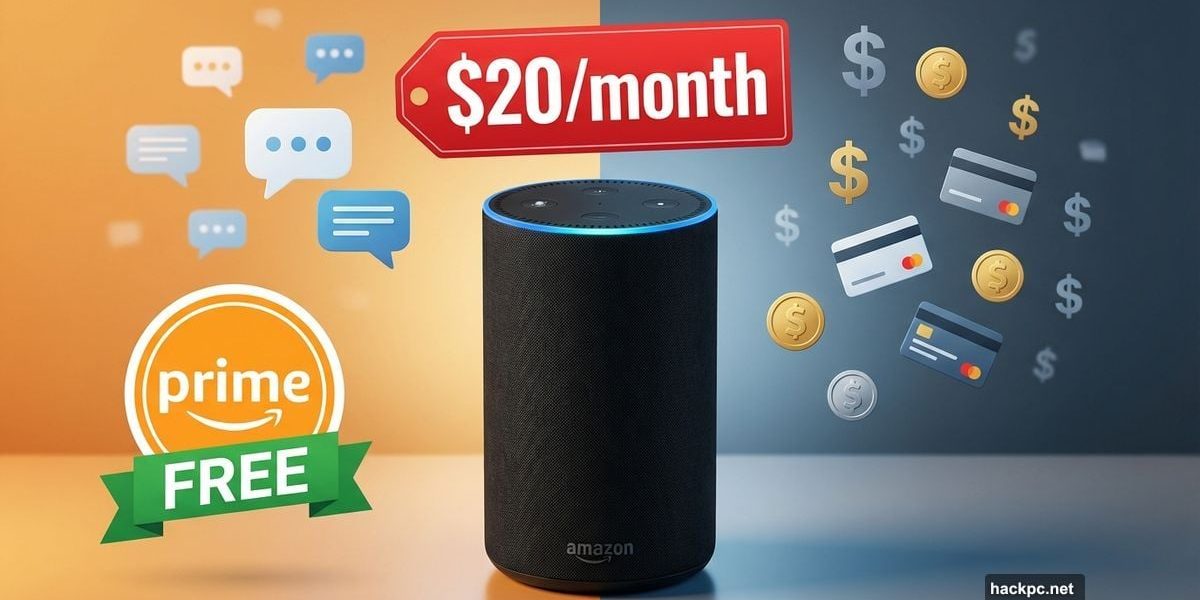
Amazon’s AI voice assistant arrived with big promises. After a year of daily use, it delivers surprisingly well. But only if you’re already paying for Prime.
I’ve spent 12 months testing Alexa Plus through cooking mishaps, smart home commands, and late-night questions about whatever crossed my mind. The upgrade feels genuinely useful. Yet the $20 monthly fee for non-Prime users creates a sharp divide between who benefits and who pays too much.
Conversations That Finally Sound Human
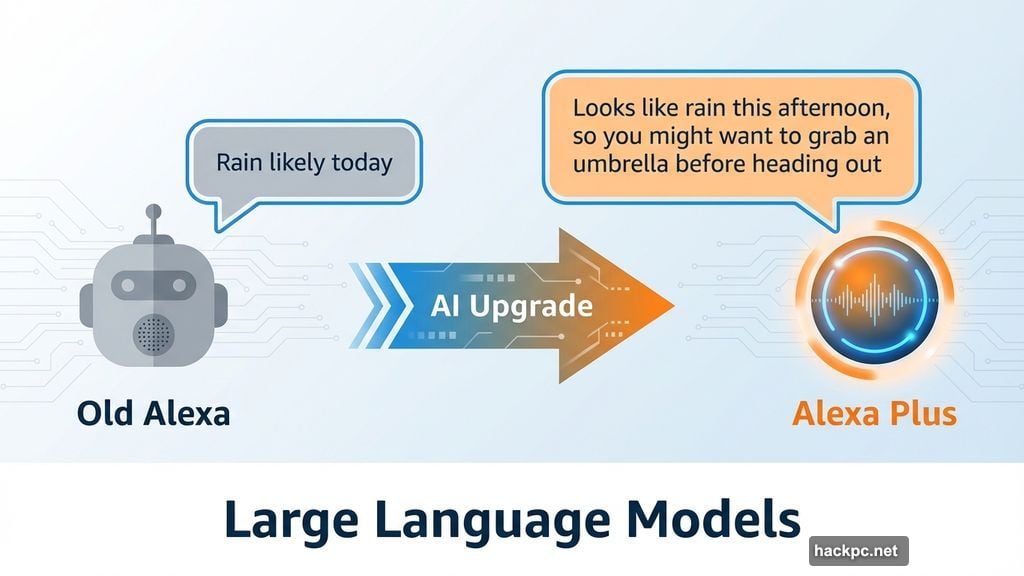
Old Alexa felt robotic. You asked a question, got a terse answer, then moved on. Alexa Plus changes that completely.
The new AI-powered version uses large language models trained on human speech patterns. So responses sound warmer and more natural. Instead of “Rain likely today,” you get “Looks like rain this afternoon, so you might want to grab an umbrella before heading out.”
That shift matters more than it sounds. Voice assistants feel less like talking to a machine and more like chatting with someone who understands context. Plus, you can chain questions together without repeating the wake word constantly.
My household uses Alexa for weather checks, traffic updates, reminders, smart home control, and random trivia. The conversational upgrade improved all of it. No more awkward phrasing to make commands work. Just talk naturally and Alexa follows along.
Early Delays Have Mostly Disappeared
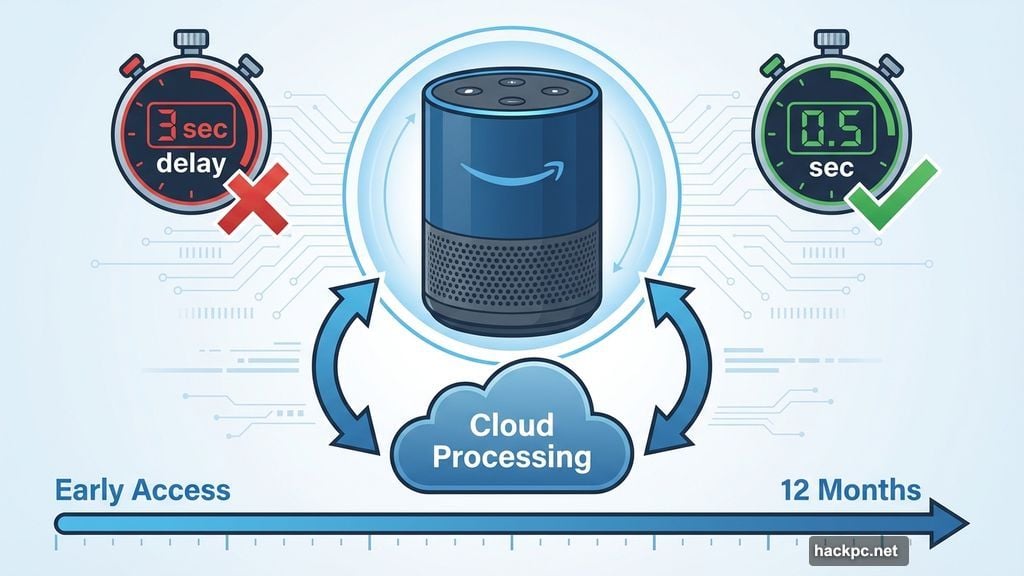
When Alexa Plus first launched in early access, noticeable delays plagued responses. You could almost hear the AI processing your request before answering.
Over months of testing, those delays shrunk dramatically. Now response time closely matches the old Alexa. So conversations flow smoothly without awkward pauses.
Accuracy improved too. Alexa Plus understands commands better than Google’s Gemini for Home in my testing. It catches nuances and follows multi-step requests without confusion.
However, Amazon made one privacy tradeoff. The company now requires Echo speakers to analyze voice commands in the cloud. You can’t turn that off anymore. Amazon wants voice data to train the AI model continuously. That decision makes sense technically but creates privacy concerns for some users.
App Integration Finally Works Right
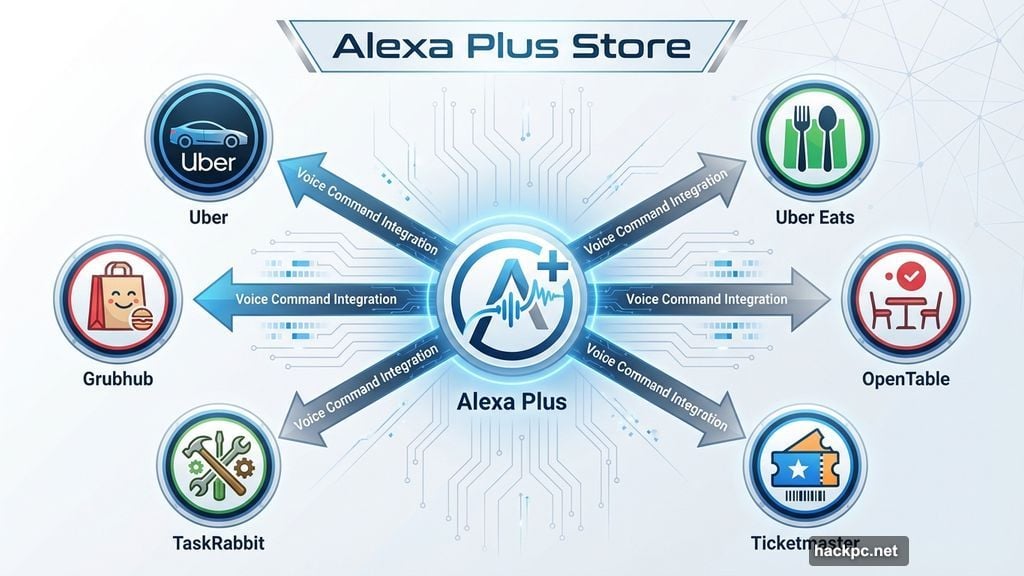
The new Alexa Plus Store brings genuinely useful app connections. Linking accounts takes some work depending on the company, but once connected, voice commands unlock powerful shortcuts.
Uber integration became my favorite quickly. I can schedule rides on the fly while making plans, just by asking Alexa and confirming a few details. Plus, it supports Uber Eats for quick food orders without pulling out my phone.
OpenTable reservations work smoothly too. Same with Ticketmaster for buying event tickets. Upcoming support includes TaskRabbit, Grubhub, Fandango, and Yelp. These integrations fill out Alexa’s personal assistant role in ways the old Skills system never achieved.
Smart home control improved significantly as well. Shifting music between speakers, setting up shows, creating routines—all simpler now. Ring doorbell support added conversational greetings, which I particularly enjoy when someone arrives.
One question keeps nagging me though. Where were all these capabilities on old Alexa? Now that they’re here, Alexa Plus feels like the version we deserved all along.
The Prime Membership Wall
Here’s where things get complicated. Amazon offers Alexa Plus free to Prime subscribers. But non-Prime users pay $20 monthly.
That’s steep. Really steep. It matches Google’s Gemini for Home premium tier at $20 per month. But most people already using Alexa devices likely subscribe to Prime anyway. Amazon clearly designed this pricing to push more people toward Prime membership at $15 monthly.
So Alexa Plus creates a sharp value divide. Prime subscribers get substantial upgrades at no extra cost. Everyone else faces a price tag equivalent to a full streaming subscription for a voice assistant upgrade.
For me as a long-term Prime subscriber, the value proposition works great. Free upgrades, better conversations, useful app connections. But would I pay $20 monthly for this if I wasn’t already in the Amazon ecosystem? Probably not.
AI Promises What It Can’t Deliver
Alexa Plus suffers from the same problems plaguing ChatGPT and similar chatbots. It’s too eager to please, too ready to confirm requests, completely unaware when it’s wrong.
I ran into this repeatedly while testing with my Echo Show. Timer display became a perfect example. I asked Alexa to show current timers continuously on the home screen while cooking.
“Sure! Here are your timers, and I’ll display them on the home screen from now on,” Alexa promised enthusiastically.
Then the timers immediately vanished. I tried multiple times with the same result. Alexa agreed each time, apologized for mistakes, but never actually changed anything.
Similar problems cropped up when adjusting settings, correcting locations, or updating preferences. The voice assistant promises exactly what you want without delivering. That’s a fundamental flaw with language model training—these systems prioritize sounding helpful over being accurate.
The Echo Show Gets Weirdly Personal
Alexa Plus on Echo Show devices includes a new motion-sensing interface. When you walk by, chatty messages pop up like “Reminder: I’m always in your corner” and “Ready to dive into whatever’s on your mind.”
Plus, Alexa’s new logo winds into stars, hands, and hearts across the screen. It all feels uncomfortably parasocial. Like Amazon wants Alexa to be your best friend rather than a useful tool.
That’s one aspect of the upgrade I could skip entirely. The conversational improvements work great. The overly friendly interface messages? Not so much.
Worth It Only If You’re Already In
Alexa Plus represents genuine progress for voice assistants. Conversational abilities, app integrations, and improved accuracy all deliver real value.
But that value depends entirely on your Amazon ecosystem involvement. Prime subscribers get everything free, making it a no-brainer upgrade. Non-Prime users face a steep monthly fee for features they might not use enough to justify the cost.
If you frequently use voice assistants, have multiple Echo devices, and already subscribe to Prime, you’ll probably enjoy Alexa Plus. The improvements genuinely enhance daily interactions.
But if you’re not deep in the Amazon ecosystem or rarely talk to voice assistants, $20 monthly isn’t worth it. Especially when chatbot problems like false promises and overly eager responses persist.
Amazon pushed voice assistant AI further than competitors. However, it built that progress specifically for its existing customer base. Everyone else should probably wait for prices to drop or features to expand.


Comments (0)