
ChatGPT isn’t just a chatbot anymore. OpenAI just dropped a full app directory that turns conversations into actions.
Need to order groceries? Book a flight? Create a presentation? You can now do all of that without leaving your chat window. Plus, OpenAI opened the doors for developers to submit their own apps. This could change how millions of people use AI daily.
Apps That Actually Do Things
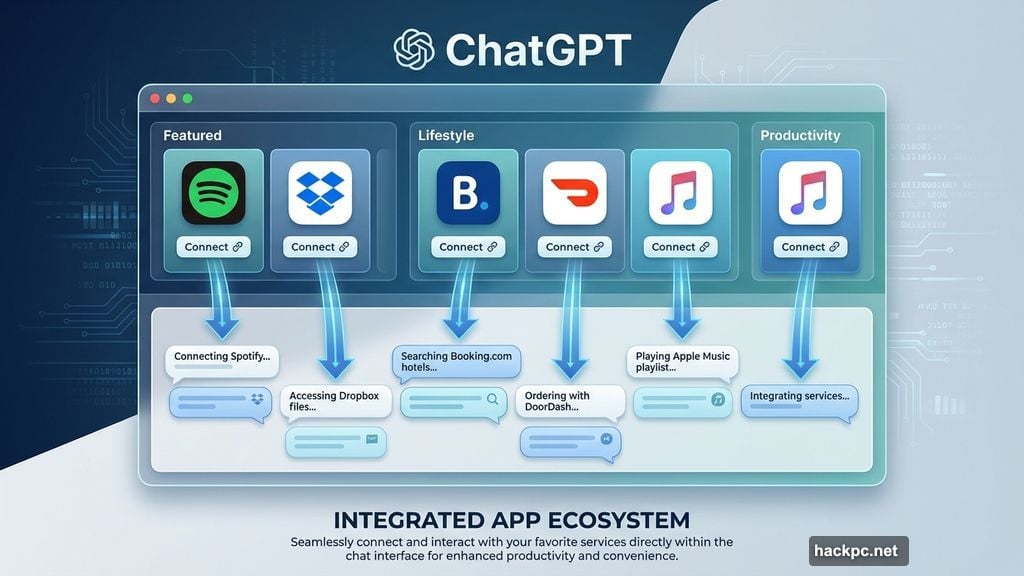
The new directory splits into three sections: Featured, Lifestyle, and Productivity. You’ll find familiar names like Spotify, Dropbox, and Booking.com waiting to connect.
Here’s how it works. Click an app, hit “Connect,” and authorize access to ChatGPT. Then start chatting about what you need. The app handles the rest.
Take Dropbox, for instance. Once connected, you can ask ChatGPT to summarize internal documents or prepare project briefs. The AI pulls files directly from your Dropbox account and analyzes them in real time.
Or consider the new DoorDash integration. Turn a recipe or meal plan into a shopping cart through simple conversation. ChatGPT figures out what you need and builds your order automatically.
Apple Music Joins the Party
Apple Music landed in the directory alongside Spotify. Both let you discover music, build playlists, and manage your library through chat.
So instead of bouncing between apps, you can ask ChatGPT to create a workout playlist or find songs similar to your favorite track. The AI handles the music service integration while you keep chatting.

That’s the whole point. OpenAI wants these apps to feel like natural extensions of conversation, not separate tools you need to switch between.
Developers Can Now Submit Apps
OpenAI didn’t just launch the directory. They opened submissions to anyone who wants to build ChatGPT apps.
The company published submission guidelines, best practices, and open-source example code. There’s even a UI library designed specifically for chat-native interfaces. Plus, OpenAI added a step-by-step quickstart guide and SDK to make development easier.
But here’s the catch. Developers can’t monetize inside ChatGPT yet. For now, you can only link out to your native app or website for payments. However, OpenAI is exploring internal monetization options.
Privacy matters too. Companies must provide clear policies about data usage. OpenAI emphasized this requirement in their announcement.
The @ Mention System
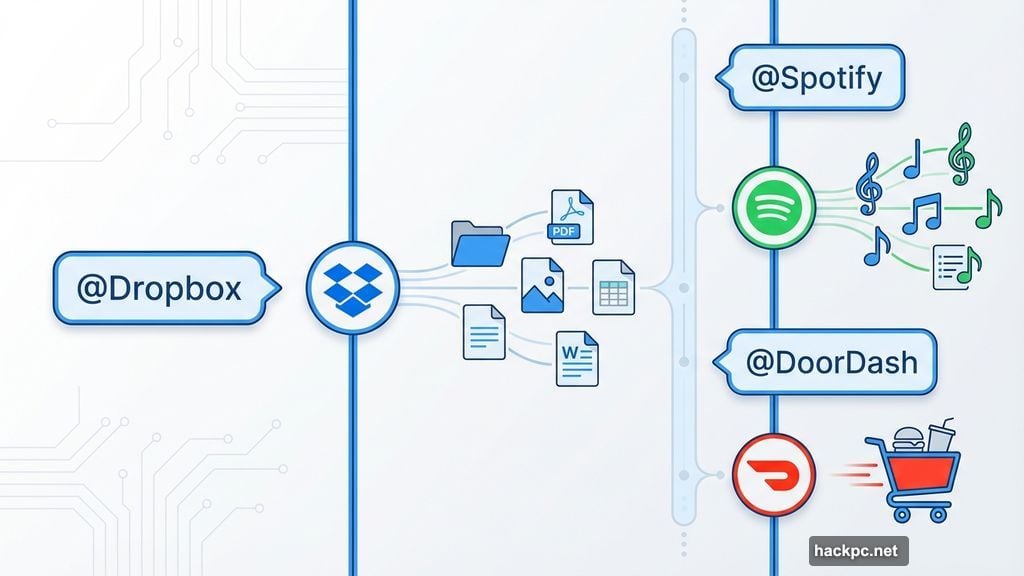
Once you connect an app, accessing it stays simple. Just type @ followed by the app name in any conversation.
So “@Dropbox” pulls up your files. “@DoorDash” activates grocery ordering. “@Spotify” starts music recommendations. You don’t need to leave your chat or open separate windows.
This makes multitasking feel seamless. You can research vacation spots, book flights through Booking.com, create packing lists, and add reminders all in one conversation thread.
What This Means for ChatGPT Users
ChatGPT evolved from answering questions to taking action. That’s a big shift.
Before, you might ask ChatGPT to help plan a trip. Now it can actually book your hotel. Previously, you’d get meal suggestions. Today it builds your grocery order.
The app directory works on iOS, Android, and web. So you get the same experience across all your devices. And OpenAI keeps adding new apps, expanding what ChatGPT can do beyond text generation.
Sam Altman’s Vision Coming True
This launch fulfills promises Sam Altman made about custom GPT bots and versatility. He wanted ChatGPT to handle more than conversation.
The app ecosystem achieves that goal. Developers build specialized tools. Users access them through natural language. And OpenAI created infrastructure to support both sides.
Over time, OpenAI expects this to feel completely natural. You won’t think “I need to use an app now.” You’ll just chat, and the right tools activate automatically based on context.
Building a Developer Ecosystem
OpenAI clearly wants third-party innovation. They provided tools, documentation, and submission pathways to encourage development.
That mirrors how Apple and Google built their app stores. Give developers the resources. Let them create useful tools. Then millions of users benefit from that innovation.
The difference? ChatGPT’s app store lives inside conversations, not on home screens. That creates unique design challenges and opportunities.
Privacy and Data Concerns
Connecting multiple apps to ChatGPT raises obvious questions about data sharing. OpenAI addressed this by requiring clear privacy policies from all developers.
Still, users should understand what they’re authorizing. When you connect Dropbox, you grant ChatGPT access to your files. With DoorDash, you share delivery addresses and payment methods.
Read those authorization screens carefully. Make sure you trust both OpenAI and the app developer with your information.
The Future of Conversational Computing
This feels like a significant moment in AI development. We’re moving from AI that answers to AI that acts.
Google and Microsoft are racing toward similar goals with their assistants. But OpenAI just shipped a working version that anyone can use today. That puts them ahead in the race to build truly useful AI helpers.
Will it work perfectly? Probably not at first. But the infrastructure exists now. Developers can build on it. Users can experiment with it. And the ecosystem will grow from there.
Your relationship with ChatGPT just changed. It’s not just answering questions anymore. It’s helping you get things done.



Comments (0)