
Someone just copied Spotify‘s entire music library. Every track. Every artist. Every album.
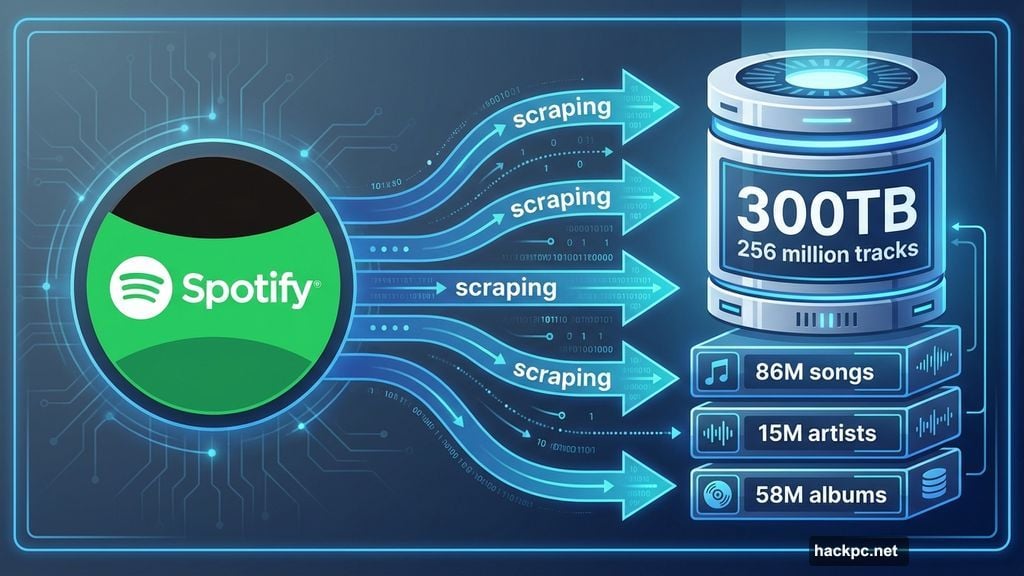
Anna’s Archive, the open-source piracy group, pulled off what might be the largest music heist in history. They scraped 256 million track entries from Spotify’s platform. That includes 86 million actual songs spanning 15 million artists and 58 million albums. The total file size? Just under 300TB of data.
This wasn’t a simple hack. Instead, the group found a systematic way to scrape Spotify at massive scale. Now they’re planning to release everything for public download.
How They Pulled It Off
Anna’s Archive discovered a method to scrape Spotify systematically. The group won’t reveal exact techniques. But they managed to extract not just songs, but complete metadata for the entire catalog.
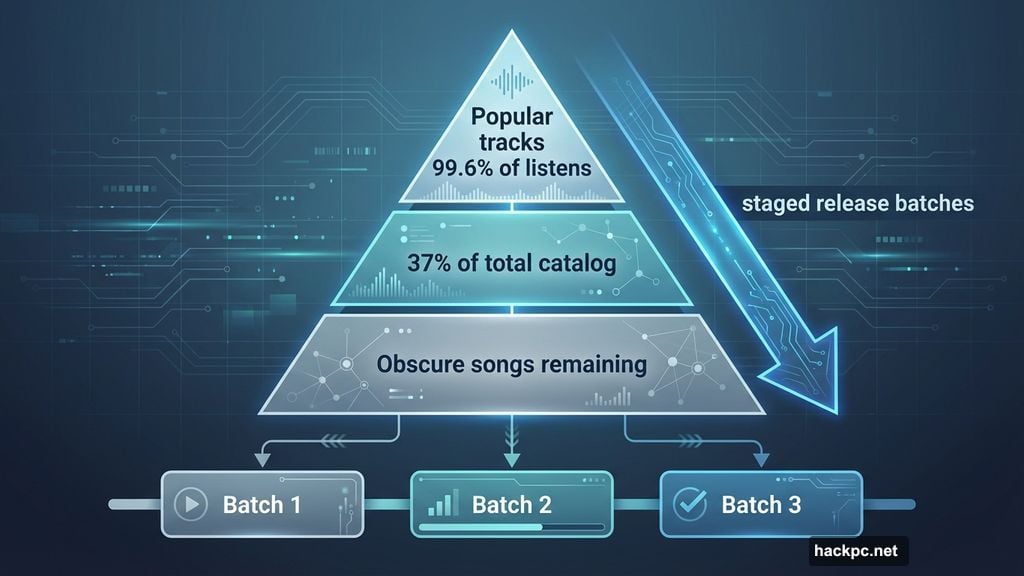
The 86 million songs they’ve archived represent 99.6 percent of all listens on Spotify. However, that’s only 37 percent of the total track count. Millions more obscure songs remain in their pipeline.
Plus, they’re organizing everything by popularity. The most-streamed tracks will release first in staged batches. Less popular songs will follow later.
Why Music Instead of Books
Anna’s Archive typically focuses on text. Books and academic papers offer higher information density per megabyte. So why pivot to music now?
The group says preserving humanity’s knowledge doesn’t distinguish between media types. Music represents cultural heritage just like literature does. Therefore, it deserves the same preservation effort.
Moreover, they argue current music collections have major flaws. Physical libraries over-index to popular artists. Digital archives prioritize audio fidelity over breadth. Collectors want lossless FLAC files that consume enormous storage space.
Anna’s Archive claims their database is now the largest publicly available music metadata collection anywhere. No other archive comes close to this scale.
The Legal Nightmare Begins
None of this is legal. Obviously.
Downloading or sharing these files violates copyright law in virtually every jurisdiction. Artists and labels own these recordings. Spotify licenses them for streaming, not wholesale copying.
Yet Anna’s Archive doesn’t seem concerned. The group operates outside traditional legal frameworks. They’ve survived takedown attempts for their book piracy operations. Now they’re applying the same model to music.
Spotify confirmed the breach happened. “Spotify has identified and disabled the nefarious user accounts that engaged in unlawful scraping,” a spokesperson told Engadget. The company implemented new safeguards against similar attacks. But the damage is done.
What This Means for Artists
Independent musicians face the biggest threat. Major label artists have legal teams and licensing infrastructure. But smaller creators depend on streaming revenue for survival.
Widespread piracy could devastate emerging artists. Spotify already pays fractions of cents per stream. Now fans might skip streaming entirely and grab pirated files instead.
However, some argue this preserves music that might otherwise disappear. Obscure recordings, regional artists, and experimental work often vanish when services shut down or labels go bankrupt. Anna’s Archive claims they’re building a digital safety net.
Still, that doesn’t compensate artists. Preservation and theft aren’t mutually exclusive. You can support one without enabling the other.
Spotify’s Security Failed
How did this happen in the first place? Spotify should have rate limiting, bot detection, and access controls to prevent exactly this type of scraping.
The platform serves billions of streams monthly. They have sophisticated infrastructure to handle that load. Yet someone systematically downloaded their entire catalog without triggering alarms until it was too late.
Spotify says they’ve added new safeguards now. But the vulnerability existed long enough for pirates to extract 300TB of data. That suggests either inadequate monitoring or insufficient security prioritization.
The Bigger Picture
This incident highlights a fundamental tension in digital media. Streaming services offer convenience and access. But they don’t guarantee permanence.
When Netflix removes shows, they’re gone. When Spotify loses licensing deals, music disappears from the platform. Users don’t own anything. They rent access until contracts expire.
Piracy fills that gap. Groups like Anna’s Archive claim they’re preserving culture that companies treat as disposable. They have a point, even if their methods are illegal.
However, preservation requires compensation. Artists deserve payment for their work. The current system is broken, but wholesale theft isn’t the solution.
What Happens Next
Anna’s Archive plans to release files in stages. The most popular tracks will arrive first. That means mainstream artists get pirated immediately while obscure musicians wait.
Spotify will likely pursue legal action. But Anna’s Archive operates in legal gray zones across multiple jurisdictions. Taking them down permanently remains difficult.
Meanwhile, other groups might replicate this approach. If one piracy operation can scrape Spotify successfully, others will try. This could become an ongoing battle rather than a one-time incident.
Artists should monitor their work closely. Some might find their entire discography available for free download within months. Labels will need strategies beyond DMCA takedowns to combat systematic piracy at this scale.
The music industry fought Napster in the early 2000s. Now they face a more sophisticated threat with better infrastructure and stronger ideological justification. This fight isn’t ending anytime soon.


Comments (0)