
Amazon just announced four major integrations coming to Alexa+ in 2026. The AI assistant will now work with Angi, Expedia, Square, and Yelp.
This matters because it’s part of a bigger shift. Plus, both Amazon and OpenAI are betting that people will start using apps through AI chatbots instead of traditional interfaces. But will anyone actually do it?
What These New Integrations Actually Do
Each integration brings specific real-world capabilities to Alexa+. Let’s break down what you can actually accomplish with each one.
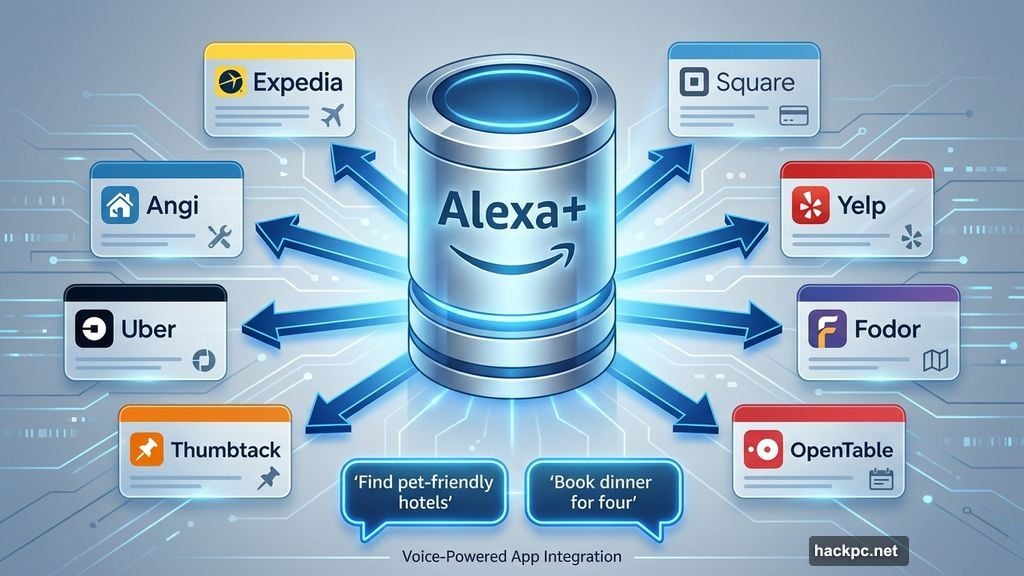
Expedia integration lets you compare and book hotel rooms through conversation. For instance, you could say “Find me pet-friendly hotels in Chicago this weekend” and get personalized recommendations. Then you can book directly through Alexa and manage your reservations later.
Angi integration focuses on home services. Need a plumber or electrician? Ask Alexa to get quotes from local professionals. The assistant handles the back-and-forth so you don’t need to make multiple phone calls.
Square and Yelp integrations help with appointments and local business discovery. You can schedule salon appointments or find restaurants without opening separate apps. It’s all handled through natural language conversation.

Moreover, these join existing integrations with Fodor, OpenTable, Suno, Ticketmaster, Thumbtack, and Uber. So the ecosystem is growing steadily, even if slowly.
The Battle for Your AI App Platform
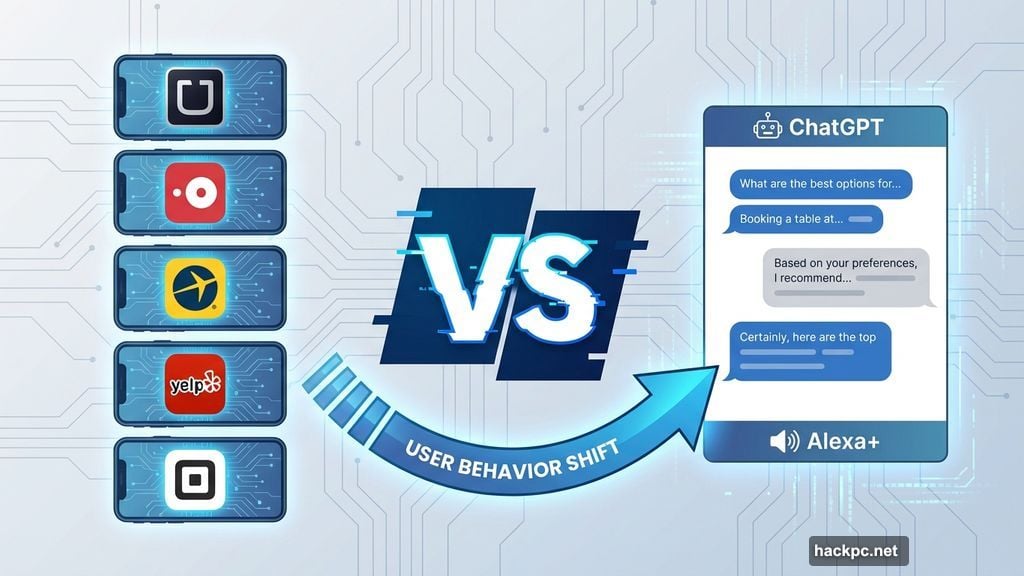
Amazon isn’t alone in this strategy. ChatGPT recently started integrating apps directly into its chatbot interface. Both companies are testing whether people will abandon traditional apps for AI-powered alternatives.
Here’s the theory. Instead of opening Uber’s app, you just tell your AI assistant “Get me a ride to the airport.” Instead of browsing OpenTable, you say “Book dinner for four tonight downtown.” The AI handles everything.
But there’s a catch. This only works if using AI feels easier than opening an app. And right now, most people have muscle memory for tapping familiar app icons. Breaking that habit requires the AI experience to be noticeably better, not just slightly different.
Furthermore, AI assistants face a credibility problem. When ChatGPT or Alexa suggests an app or service, users might wonder if they’re seeing genuine recommendations or paid promotions. That trust issue hasn’t been solved yet.
Early Adoption Signals From Real Users
Amazon shared some data about how people are actually using Alexa+ integrations. According to the company, home and personal service providers like Thumbtack and Vagaro have seen “strong” engagement.
That’s promising but vague. Strong engagement could mean anything from 5% of users trying it once to 50% using it regularly. Amazon didn’t provide specific numbers or usage statistics.
Still, the fact that service-based integrations perform well makes sense. Booking a haircut or hiring a contractor involves multiple steps and phone calls. If Alexa can genuinely simplify that process, people might adopt it.
Meanwhile, simpler tasks like ordering an Uber may not show the same adoption. Opening the Uber app takes two seconds. Unless Alexa is literally faster, there’s no reason to change behavior.
The Natural Language Promise
Alexa+ emphasizes conversational AI. You can have back-and-forth exchanges, refining your request as you go. This sounds great in theory.
For example, you might start with “Find hotels in Chicago.” Then add “Make it pet-friendly.” Then specify “Under $200 per night.” Then narrow it to “Near downtown.” The AI remembers context and adjusts recommendations.
However, this assumes the AI understands every refinement correctly. One misunderstanding and you’re stuck either starting over or correcting the assistant multiple times. That’s frustrating compared to just filtering search results yourself.
Plus, speaking requests out loud doesn’t work in many situations. Searching for hotels on a crowded train or in a quiet office means you can’t use voice commands. So the conversational interface only helps in specific contexts.
Why This Might Actually Work
Despite the challenges, Amazon has some advantages that could make this succeed. First, millions of homes already have Echo devices. The hardware is in place and people are familiar with basic Alexa commands.
Second, Amazon’s existing retail ecosystem makes integration natural. People already shop through Alexa. Adding services like hotel booking or home repairs isn’t a huge conceptual leap.
Third, Amazon has strong relationships with service providers. Companies want access to Amazon’s massive customer base. So partnerships with Angi, Expedia, Square, and Yelp likely happened faster than they would for a startup.
Finally, there’s genuine value in voice-controlled booking for certain tasks. Scheduling appointments while cooking or getting quotes while doing chores saves time compared to stopping what you’re doing to use your phone.
The Reality Check Nobody Wants to Hear
Here’s what bugs me about this whole AI-apps-everywhere strategy. Both Amazon and OpenAI are pushing it hard, but neither has proven people actually want it beyond novelty use.
Yes, early adopters will try booking hotels through Alexa+ or ChatGPT. But early adopters try everything. The real question is whether mainstream users will consistently choose AI over traditional apps six months from now.
Moreover, traditional apps have huge advantages. Visual interfaces let you compare options quickly. Reviews and photos help you make decisions. And you can browse at your own pace without speaking out loud.
So Amazon needs to nail the execution. If using Alexa+ for bookings is clunky or error-prone even 10% of the time, people will go back to apps immediately. There’s no room for “pretty good” when competing with established behaviors.
My prediction? These integrations will see initial curiosity-driven usage, then settle at low single-digit adoption rates. Prove me wrong, Amazon.


Comments (0)