

Remember when you could only judge your friends’ terrible music choices on desktop Spotify? Those days are over.
Spotify finally brought its Listening Activity feature to mobile. Now you can see exactly when your college roommate cranks Taylor Swift at 2AM. Plus, the company added a new Jam request feature that lets you sync playlists remotely with friends.
Here’s what changed and why it matters for how you share music.
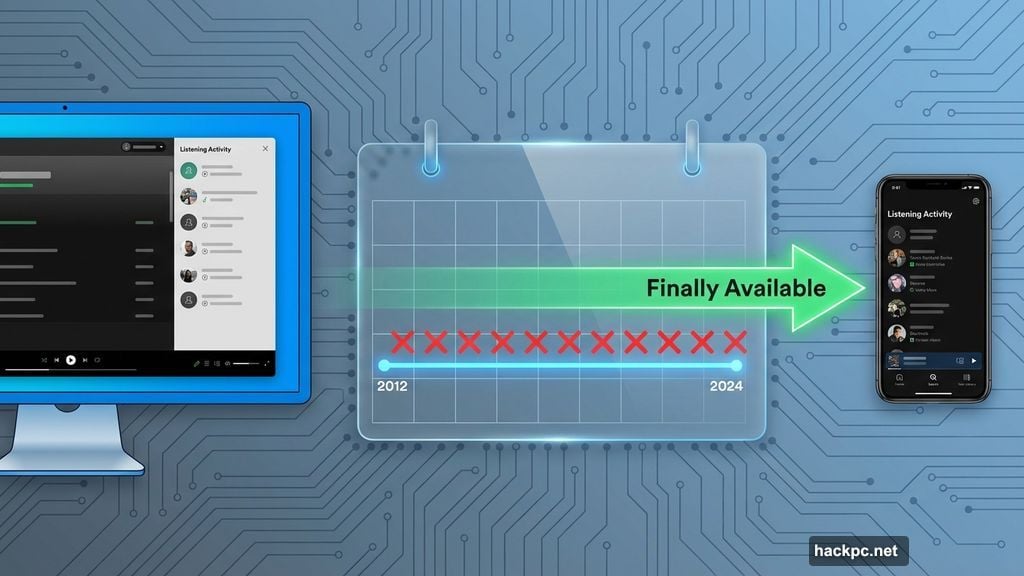
Listening Activity Hits Mobile After Years of Desktop-Only Access
Spotify launched Listening Activity on desktop nearly from day one. But mobile users got left out for over a decade.
The company tested a community feature in 2022. That experiment never went anywhere. So millions of users kept opening their desktop app just to creep on friends’ listening habits.
Now that’s fixed. The mobile rollout starts this month and reaches everyone by early February. Works on both iOS and Android in markets where Spotify messages are available.
Privacy Controls Actually Let You Choose Who Sees What
Here’s the smart part. Listening Activity is opt-in, not opt-out.
You need to manually enable it in privacy settings. Then you pick which friends can see your activity. That means you can hide your embarrassing Kidz Bop playlist from coworkers while still sharing indie rock discoveries with music snob friends.
Most social features force you to go all-in or stay completely private. Spotify’s granular controls make way more sense for real-world friendships.
New Features Make Music Discovery More Social
Listening Activity shows up in your sidebar next to chats. Tap any song to add it to your library or react with an emoji.
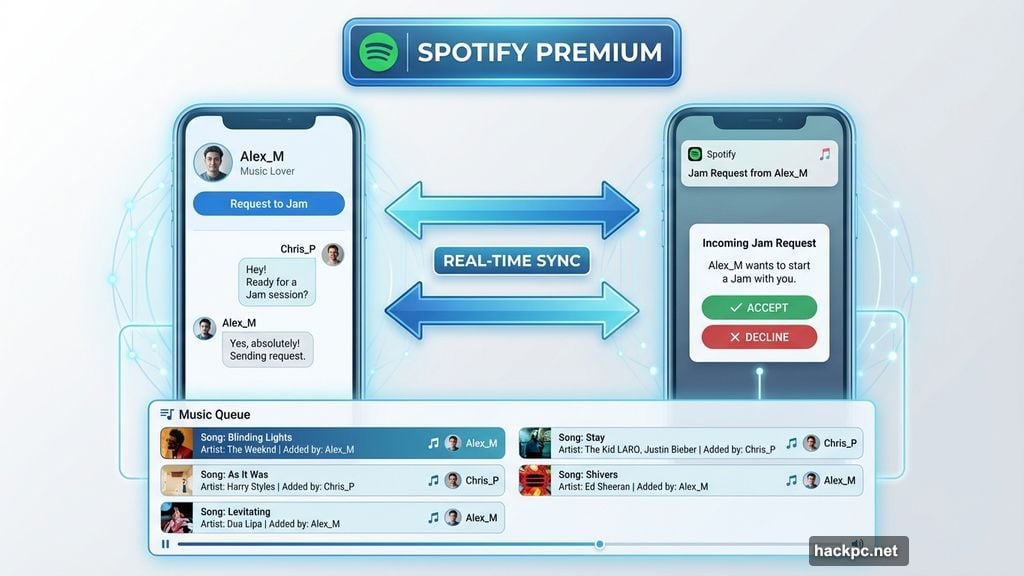
But the bigger addition is Request to Jam. Premium users can send a Jam request through chat. If your friend accepts, your listening syncs remotely.
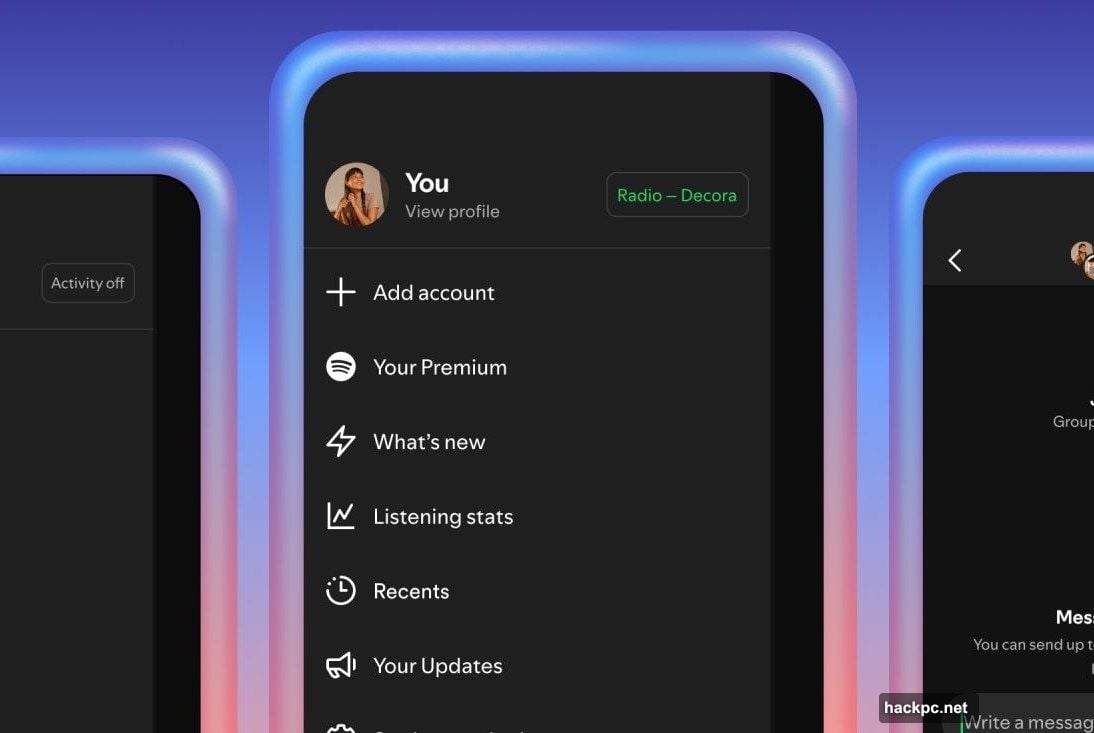
Both of you can queue songs. Spotify suggests tracks based on shared taste. You can chat while listening together even when you’re miles apart.
Free users can join Jams but can’t start them. That’s a reasonable limit for a premium feature that requires real-time sync infrastructure.
Mobile Finally Catches Up to Desktop Social Features
Desktop Spotify users have enjoyed these social features for years. Mobile users had to settle for sharing individual tracks or playlists.
The gap never made sense. Most people stream on phones now. Spotify’s own data shows mobile accounts for the majority of listening time.
So why did this take so long? Likely because Spotify prioritized other mobile features. Audiobooks, AI playlists, and podcast improvements all shipped first. Social features apparently ranked lower on the product roadmap.
Now mobile users get the full social experience. About time.
Remote Listening Parties Solve a Real Problem
Jam requests address something people actually want. Music is inherently social but streaming made it solitary.
Sure, you could share links. But that requires coordination. Someone has to manually sync play, pause, and skip. It’s clunky.
Remote Jams handle the technical sync automatically. You focus on discovering music and chatting. The app manages the rest.
This works great for long-distance relationships, separated friends, or even coworkers in different offices. You get the shared experience without the logistics headache.
Limited Rollout Means Patience Required
Spotify isn’t flipping a switch for everyone at once. The features roll out gradually starting now.
Broad availability hits in early February. That’s Spotify’s usual approach for major feature launches. Gradual rollout helps catch bugs before millions of users experience problems.
So don’t panic if you don’t see these features immediately. Check back in a few weeks.
Meanwhile, make sure your app stays updated. New features require the latest version.
Your Friends’ Music Taste Might Disappoint You
One warning. Seeing what people actually listen to can shatter illusions.
That friend who claims to only like obscure indie bands? Turns out they play Top 40 hits on repeat. Your coworker who brags about jazz knowledge? Their top artist is whoever scored the last Marvel movie.
Spotify’s about to expose everyone’s guilty pleasures. Whether that brings you closer or ruins friendships depends on how judgmental you are about music taste.
Choose your sharing settings wisely.



Comments (0)