
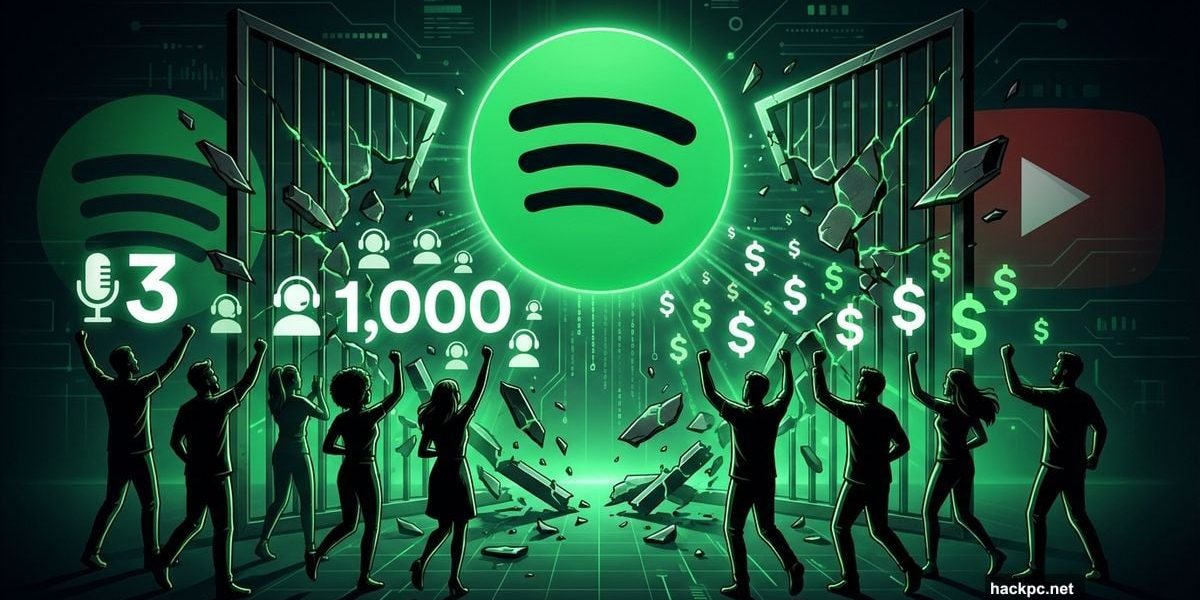
Spotify made video podcasting accessible to thousands more creators overnight. The platform dropped its monetization requirements so dramatically that shows with just three episodes can now earn money.
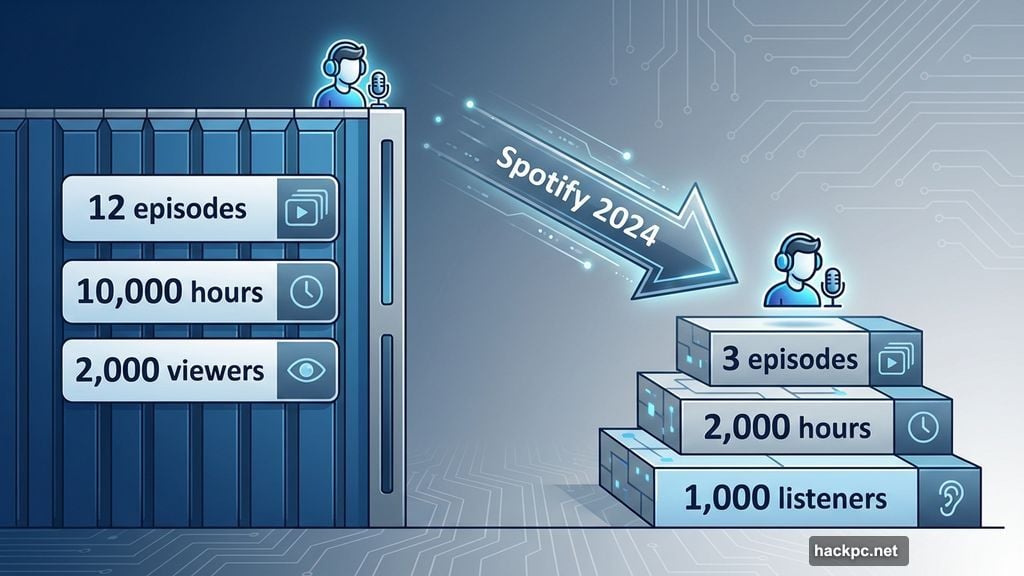
Before this change, getting paid meant meeting brutal thresholds. Podcasters needed 12 episodes, 10,000 watch hours, and 2,000 regular viewers. Those numbers locked out most independent creators. Now? Three episodes, 2,000 hours, and 1,000 engaged listeners in 30 days.
This isn’t just a minor tweak. It’s Spotify betting hard on video to challenge YouTube’s podcast dominance.
The Math Changed Completely
Let’s break down what actually shifted here. The old requirements created an impossible chicken-and-egg problem for new creators.
Publishing 12 episodes takes months for most podcasters. Plus, hitting 10,000 consumption hours without monetization meant burning through resources with zero return. So creators either gave up or went elsewhere.
Now the barrier dropped to three episodes. That’s achievable in weeks, not months. The consumption requirement fell 80% to 2,000 hours. Engaged audience members dropped from 2,000 to 1,000.
Why does this matter? More creators can test video podcasting without massive upfront investment. They’ll know within weeks whether their content works instead of waiting months to qualify.
Premium Subscribers Drive Most Revenue
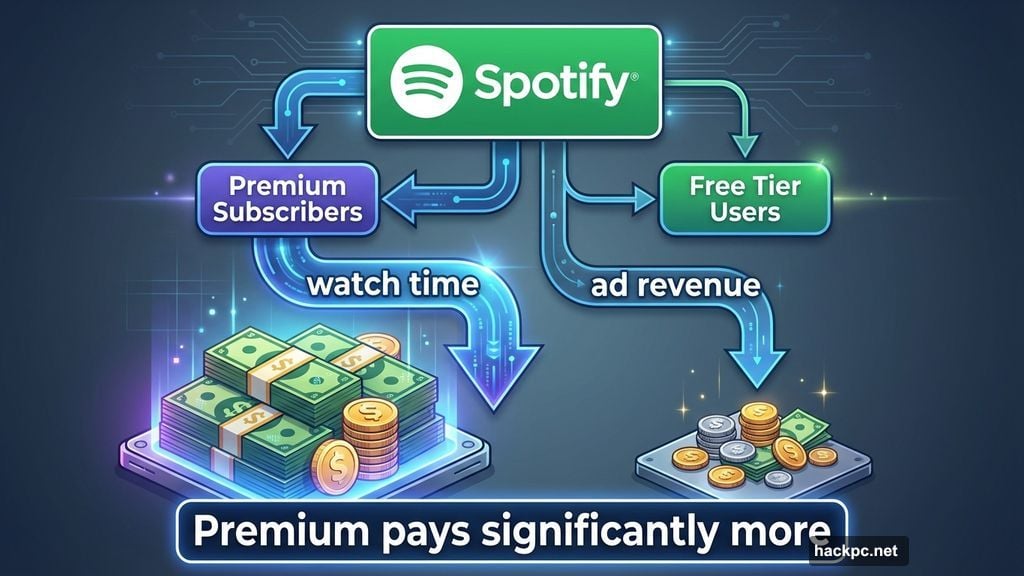
Here’s how Spotify actually pays creators. The platform splits revenue between two sources.

First, premium subscribers generate payments based on watch time. When paying users watch your videos, you earn a share proportional to consumption. This creates stable, predictable income.
Second, free tier users generate ad revenue. Spotify shares earnings from ads shown during your videos. But this matters less than premium revenue for most creators.
The company won’t disclose exact payment rates. However, early partner program participants report that premium subscriber views pay significantly more than ad-supported streams. So focusing content toward premium users makes financial sense.
New Tools Make Sponsorships Simpler
Beyond platform payments, Spotify rolled out sponsorship management features. Creators can now schedule, update, and track host-read ads directly through the app.
These tools launch in April across Spotify for Creators and Megaphone. Previously, managing sponsorships meant juggling spreadsheets and manual tracking. Now everything lives in one dashboard.
Host-read ads typically pay better than programmatic spots. But they require more management work. These new tools reduce that friction, making direct sponsorships viable for smaller shows.
The catch? You still need sponsors willing to pay you. Lower monetization thresholds help you qualify for Spotify’s program. They don’t automatically bring advertisers to your door.
YouTube Should Worry About This API
Spotify introduced an API that lets creators publish videos from existing platforms. This changes the competitive landscape entirely.
Services like Acast, Audioboom, Libsyn, Omny, and Podigee already integrated the API at launch. Creators using these platforms can now distribute and monetize on Spotify without extra work.
Why does this matter? Most video podcasters already use YouTube. But now they can syndicate content to Spotify with minimal effort. That creates new revenue streams without additional production costs.
YouTube built its podcast audience through exclusive content and creator-friendly tools. Spotify just made it easy to be everywhere at once. So the battle shifts from exclusive relationships to platform features and revenue splits.
Video Consumption Doubled Since Launch
Spotify claims video podcast consumption nearly doubled since the partner program launched. Plus, users now stream twice as many video shows monthly.
These numbers sound impressive. But they need context. Spotify surfaces video content more prominently now than before. Algorithm changes drive some of that growth.
The real question is whether creators earn meaningful money. Doubling consumption means nothing if payments stay tiny. Unfortunately, Spotify hasn’t shared average creator earnings yet.
Industry observers estimate most shows need thousands of monthly viewers to replace even part-time income. Lower thresholds help creators start earning sooner. But scaling revenue still requires significant audience growth.
New LA Studio Targets Premium Creators
Spotify opened a recording studio in West Hollywood. The facility serves the Ringer podcast network and select partner program creators.
This studio joins existing locations in LA’s art district, New York, Stockholm, and London. Access remains limited to established shows and strategic partners.
Here’s the reality. Most podcasters won’t access these studios. They exist primarily for promotional purposes and supporting Ringer content. But they signal Spotify’s commitment to competing with YouTube’s creator infrastructure.
YouTube offers production resources and training programs at scale. Spotify focuses resources on fewer, higher-profile creators instead. Different strategies, both with tradeoffs.
The Real Battle Isn’t Features
Spotify versus YouTube comes down to creator economics and audience behavior. Features matter less than where creators earn more money for their effort.
YouTube has massive scale and established monetization. Viewers already watch video content there. Creators understand the platform and trust the payment system.
Spotify brings podcast listeners and premium subscribers. The audience leans audio-first but increasingly accepts video. Revenue per viewer might exceed YouTube due to subscription economics.
Lower monetization thresholds help Spotify compete for new creators. But winning requires proving creators earn comparable or better income than YouTube provides. That data hasn’t emerged yet.
Most creators will likely hedge bets by publishing everywhere. So the platform offering the best creator experience and highest revenue share will eventually win mindshare and exclusive content.
Watch creator earnings, not feature announcements. Money talks louder than press releases.



Comments (0)