

Flying doesn’t have to drain your bank account. But figuring out when to buy tickets? That’s the puzzle that stresses everyone out.
Should you book now or wait? Will prices drop next week? Is Tuesday really cheaper than Sunday?
Google Flights finally answered these questions with actual data. Their massive travel report analyzed years of flight patterns to reveal exactly when prices hit rock bottom. No more guessing games or buyer’s remorse.
Tuesday Wins for Cheapest Flying Days
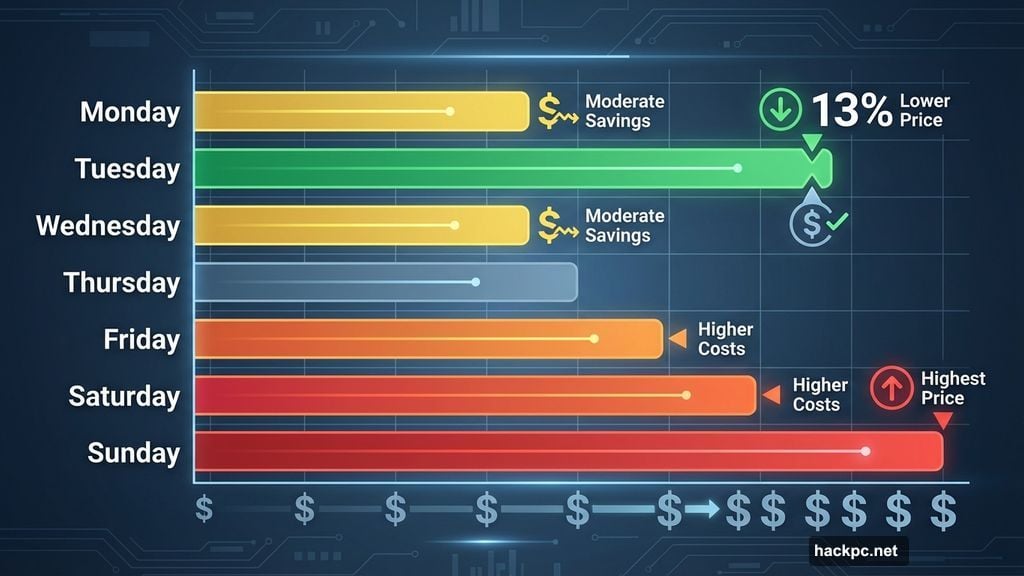
Want to save money? Fly on Tuesday.
The data proves Tuesday flights cost about 13% less than weekend departures. Monday and Wednesday work almost as well. But Sunday? That’s the most expensive day to fly.
So your weekend getaway actually starts costing more the moment you pick Friday through Sunday travel dates. Business travelers flying Monday through Wednesday get the best deals without even trying.
Plus, this pattern holds year-round. It’s not seasonal or random. Airlines consistently price midweek flights lower because fewer people want them.
Layovers Save 22% Every Time
Nobody likes layovers. But your wallet does.
Flights with connections cost 22% less than nonstop options. That’s significant savings for tolerating an extra hour or two in an airport.
Here’s the math: A $400 nonstop flight drops to about $312 with one layover. For a family of four, that’s $352 back in your pocket. Suddenly that airport layover seems less annoying.
Moreover, many layover cities offer decent airport amenities now. Free WiFi, charging stations, and better food options make the wait bearable. Some travelers actually prefer it as a chance to stretch their legs.
Booking Day Barely Matters
Stop obsessing over which day to click “purchase.”
The data reveals booking on Tuesday saves just 1.3% compared to Sunday. That’s basically nothing. A $500 ticket becomes $493.50 on Tuesday instead of Sunday. Not worth losing sleep over.
So book whenever it’s convenient. The departure date matters way more than the booking date. Focus your energy on finding the right travel days instead of the “perfect” booking day.
This myth has persisted for years. Now the numbers finally put it to rest.
Domestic Sweet Spot: 39 Days Out
For trips within the US, prices bottom out 39 days before departure on average.
The broader window runs from 23 to 51 days out. But 39 days hits the lowest average price. That’s roughly five and a half weeks before your flight.
Here’s why this matters: Most people either book way too early or wait until the last minute. Both strategies cost extra money. The data shows prices rise both far in advance and close to departure.
So plan your calendar. If you’re flying in March, start watching prices in late January. Book when you hit that 39-day mark.
International Flights Need Earlier Booking
Flying overseas? Book as early as possible.
Prices for international flights stay lowest 49 or more days before departure. Then they start climbing. Unlike domestic flights, international fares rarely drop closer to travel dates.
Google’s data shows average international prices “don’t meaningfully drop anytime before departure but they usually do start to rise within 50 days of the flight itself.”
Translation: That “wait and see” strategy fails for international travel. The earlier you commit, the better your price. Procrastination costs real money on overseas trips.

Holiday Timing Changes Everything
Each holiday has its own booking pattern. Here’s when to buy for major travel seasons.
Thanksgiving flights hit their lowest prices 35 days out. That means late September or early October booking saves the most. The window runs from 24 to 59 days before your trip.
Christmas travel bottoms out at 51 days before departure. Book between mid-October and mid-November for winter holiday trips. The effective window spans 32 to 73 days out.
Spring break deals peak at 43 days before March or April trips. Start shopping in late January or early February. Prices stay good from 28 to 61 days in advance.
Summer flights work differently. The cheapest booking window sits just 21 days before July or August travel. The range runs from 14 to 43 days out, much shorter than other seasons.
Notice the pattern? Each season demands different timing. Summer allows last-minute planning. Winter holidays require months of advance booking.
Europe Breaks the Rules
Transatlantic flights follow their own playbook.
For European destinations, book at least 48 days ahead. Earlier is better. The data shows prices rarely drop as departure approaches, they only climb.
This matches international patterns generally. But Europe-specific routes show even more consistent price increases closer to travel dates.
So that spontaneous trip to Paris? It’ll cost you. Plan European vacations well ahead to avoid inflated last-minute fares.
Mexico and Caribbean Exception
Here’s the one international region that bucks the trend.
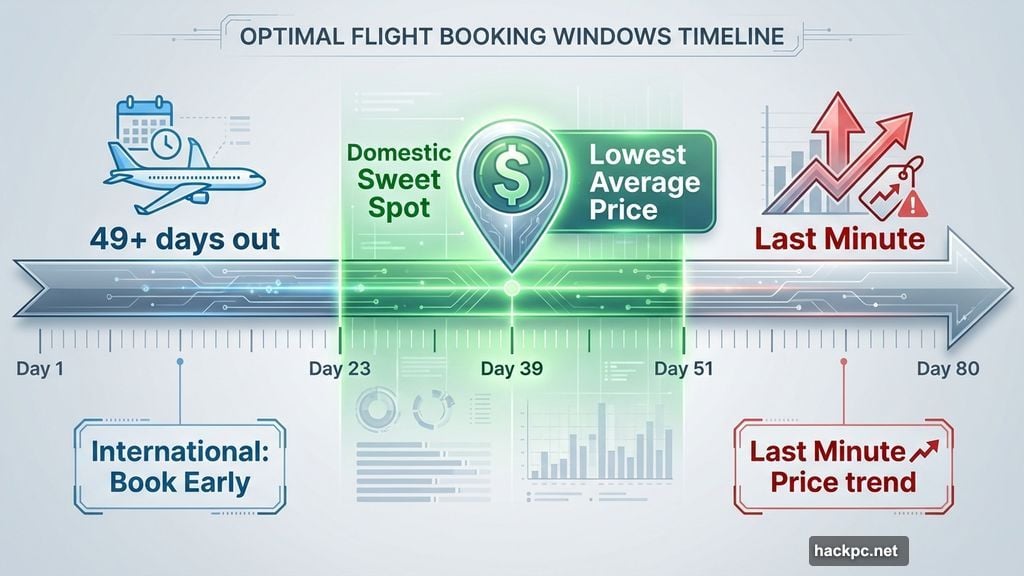
Flights to Mexico and the Caribbean hit their lowest prices around 50 days before departure. The effective window runs from 26 to 79 days out.
That’s different from other international destinations where earlier always wins. For tropical getaways, you can wait a bit longer than European or Asian trips.
Plus, this pattern makes beach vacations easier to plan on shorter notice. Two months out still nets good prices instead of requiring half-year advance booking.
Where Everyone’s Actually Going
Google’s search data reveals surprising destination trends for 2025.
Thanksgiving searches favor midsize cities over major hubs. Columbia, South Carolina and Bozeman, Montana rank high. Detroit and Omaha also made the list. People are skipping the usual suspects.
Winter holiday searches lean tropical. Rio de Janeiro, St. Lucia, Marrakech, and Curaçao top the lists. Forget white Christmas dreams—travelers want palm trees instead of fir trees.
This shift signals changing preferences. The traditional holiday destinations face competition from unexpected cities and warm-weather escapes. Maybe everyone’s tired of cold December flights.
Data Beats Guesswork Every Time
Flight pricing seemed mysterious for years. Airlines changed prices constantly with no apparent pattern.
Now Google’s massive dataset reveals the truth. Patterns exist. They’re consistent. And they’re predictable enough to save serious money.
The numbers don’t lie. Tuesday flights cost less. Layovers save cash. Booking windows matter more than booking days. These aren’t theories or hunches—they’re facts backed by millions of ticket prices.
So stop stressing about “perfect” timing. Instead, follow the data. Pick your travel dates strategically. Book within the proven windows. Your bank account will thank you.
The information’s free. The savings are real. And your next trip just got more affordable.




Comments (0)