
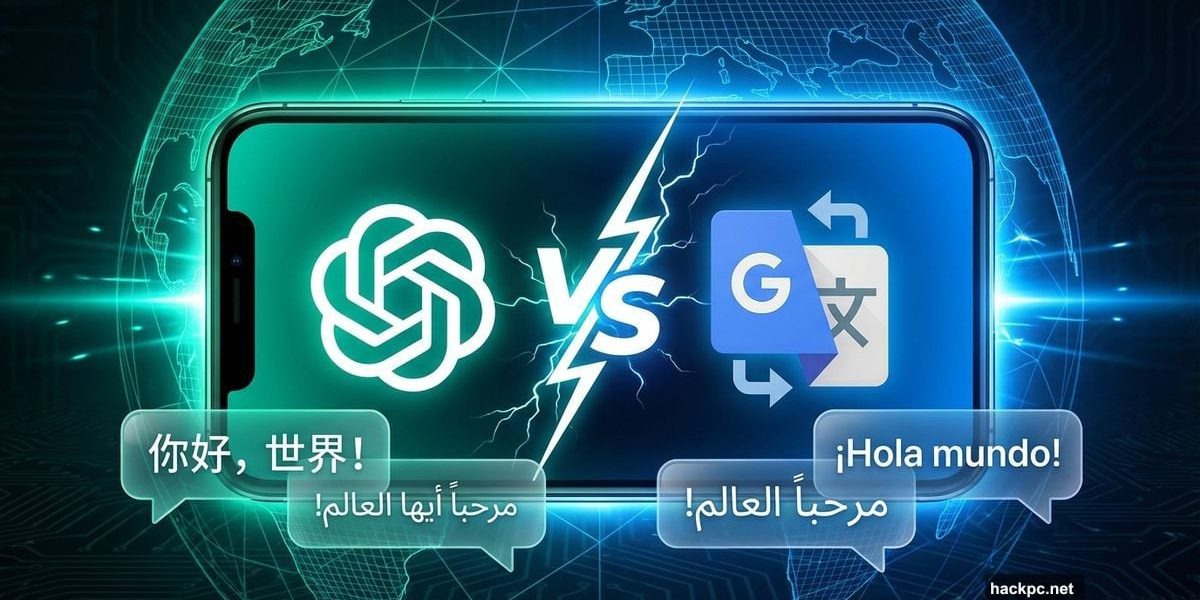
OpenAI quietly dropped a dedicated translation page this week. It looks simple. But the ambitions behind it reveal a direct challenge to Google Translate’s dominance.
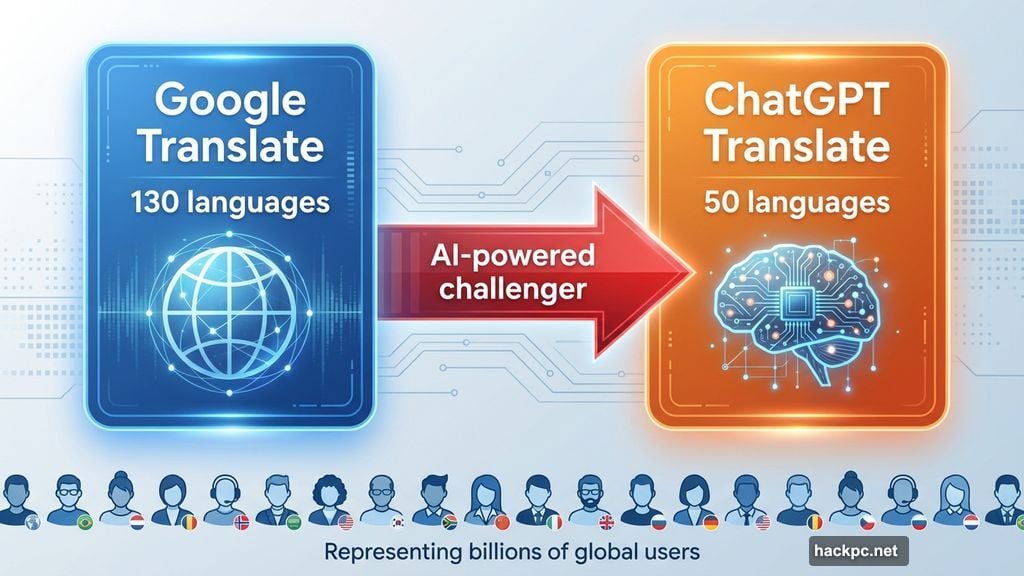
The new ChatGPT Translate webpage handles 50 languages right now. Type in text, get instant translations. Looks familiar, right? But OpenAI isn’t trying to clone Google Translate. They’re building something bigger.
Beyond Basic Text Translation
The webpage starts simple. Two text boxes. Pick your languages. Hit translate. Standard stuff.
Then you scroll down. That’s where things get interesting.
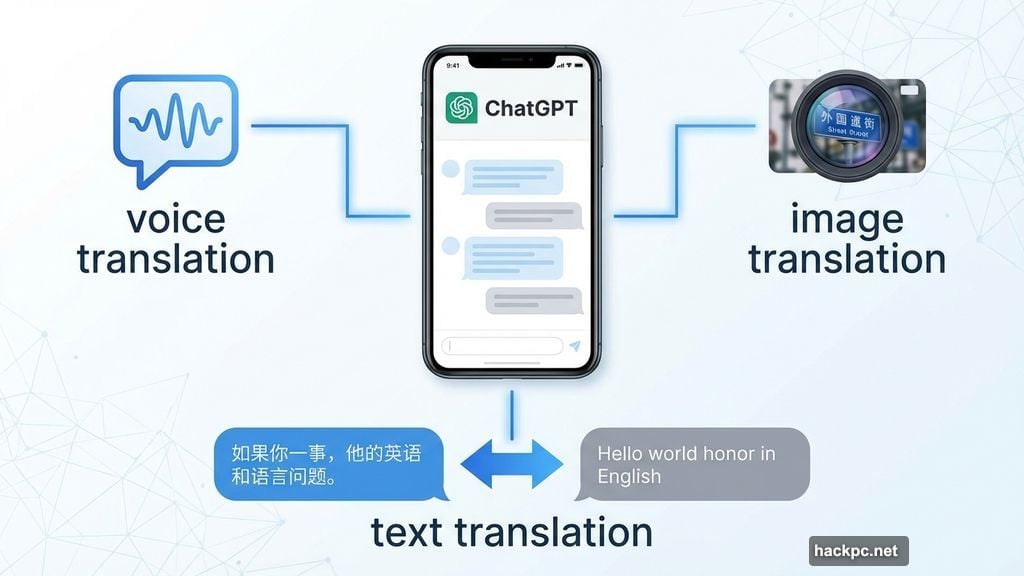
OpenAI mentions voice translation and image translation coming soon. Take a photo of a street sign in Tokyo? ChatGPT will translate it. Need to understand someone speaking Spanish? Voice translation handles it.
These features aren’t live yet. But OpenAI clearly planned this rollout. The foundation exists. They’re just adding capabilities over time.
Google Faces Real Competition
Google Translate dominated language translation for years. Nearly two decades of refinement. Over 130 languages supported. Billions of users worldwide.
Now Google faces its first serious AI-powered challenger.
Google isn’t standing still, though. They added 110 languages last year. Live translation through headphones launched recently. Plus, they’re building language-learning tools powered by Gemini AI.
But here’s what matters. ChatGPT already sits on millions of devices. People use it daily. Adding translation directly into that workflow creates friction for switching to Google’s tools.
The Translation Tech Race Heats Up
Translation became huge at CES 2026 last week. Companies showed off phone-sized devices with earpieces for live conversations. One demo let an English speaker chat naturally with someone speaking Polish. Neither person needed to know the other’s language.
That’s the future OpenAI wants. Not just text boxes on a webpage. Real-time, multimodal translation that feels invisible.
ChatGPT already has the conversational AI foundation. It understands context better than traditional translation tools. So translating “bank” correctly as either a financial institution or a river’s edge? ChatGPT handles those nuances naturally.
What Works Right Now
The current ChatGPT Translate page feels basic. Almost too basic. But it connects directly to ChatGPT’s main interface with clever prompts.
After translating text, you get one-click options. “Make this sound more fluent.” “Explain this like I’m five years old.” “Adjust the formality level.”
Those prompts take you straight into a ChatGPT conversation. Suddenly you’re not just translating. You’re refining, contextualizing, and adapting language with AI assistance.
Plus, image uploads work in the main ChatGPT interface already. So technically, you can translate images right now. Just not through the dedicated translation page yet.
The Hidden Strategy
OpenAI didn’t need to build a separate translation page. ChatGPT already handles translation inside regular chats. So why create a standalone tool?
Two reasons. First, it signals intent. OpenAI wants people to think “ChatGPT for translation” the same way they think “Google for search.”
Second, it creates a focused entry point. Someone needing quick translation might skip opening a full ChatGPT conversation. A simple webpage removes that friction.
But here’s the clever part. Once you’re translating on that page, OpenAI guides you into ChatGPT’s broader capabilities. The sample prompts act as on-ramps to more complex AI interactions.
Why This Matters More Than It Seems
Translation might feel like a small feature. Just another thing ChatGPT can do. But it’s actually strategic.
Language barriers affect billions of people. Translation tools get used constantly. If ChatGPT becomes the default translation solution, it embeds itself even deeper into daily workflows.
Moreover, translation showcases AI’s strengths. It requires understanding context, cultural nuances, and subtle meanings. Traditional software struggles with those challenges. AI excels at them.
So OpenAI isn’t just adding a feature. They’re demonstrating why AI matters for practical, everyday tasks. That’s powerful positioning against Google’s established tools.
What’s Coming Next
Voice and image translation will arrive eventually. OpenAI’s webpage mentions them specifically. That’s basically a roadmap announcement.
When those features launch, ChatGPT will match Google Translate’s core capabilities. But with one advantage. ChatGPT’s conversational interface lets users iterate and refine translations naturally.
Need a business-formal version? Just ask. Want slang translation? ChatGPT adjusts. Traditional translation tools can’t match that flexibility.
Plus, OpenAI keeps improving language understanding. They announced a new evaluation standard this week for testing AI performance across different languages and cultures in India. That signals serious investment in translation quality.
The translation space just got competitive. Google built its moat over 20 years. OpenAI plans to cross it with better AI and smarter integration. The next few months will show whether that strategy works.



Comments (0)