
I spent hours building the same web app twice using different Gemini models. The results shocked me.
Both versions worked. Both displayed horror movie posters with details and trailers. But getting there? Completely different experiences.
One model acted like a senior developer anticipating my needs. The other felt like a junior engineer who needed constant supervision. The gap between “fast” and “thinking” models matters more than I expected for vibe coding projects.
What I Actually Built
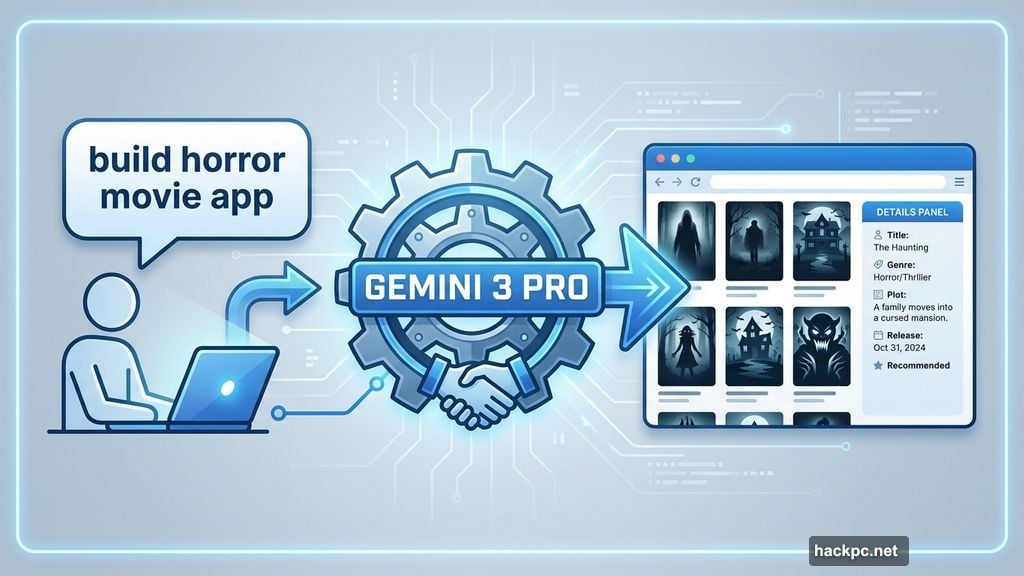
I asked Gemini to suggest interesting vibe coding projects. It proposed a “Trophy Display Case” concept. I modified the idea to showcase horror films instead.
The requirements were simple. Display movie posters in a grid. Click a poster to see details like synopsis and release date. Include trailer links. That’s it.
Nothing fancy. Just enough complexity to test how different models handle real coding tasks without actual programming knowledge.
Fast Models vs Thinking Models Explained
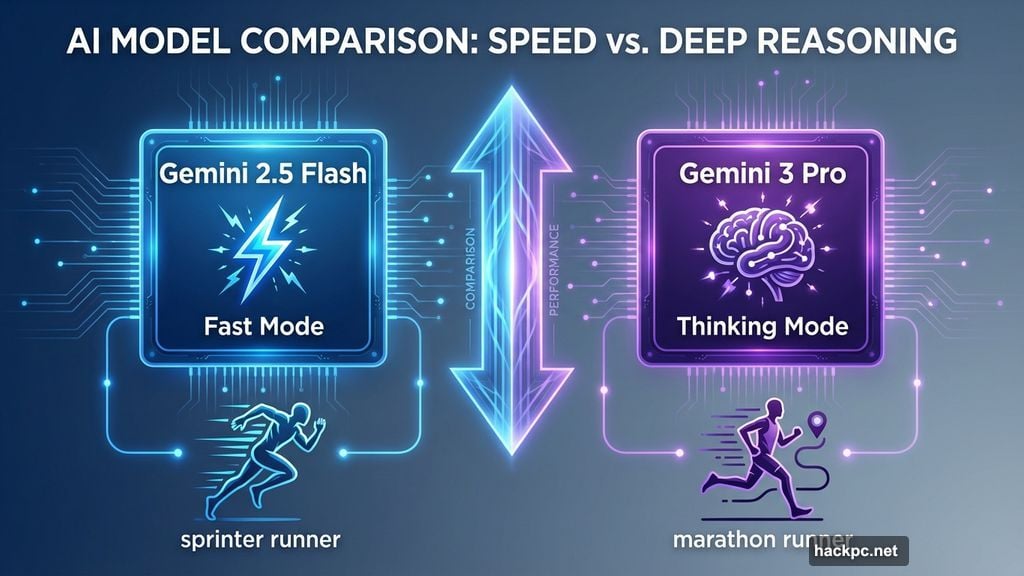
Google offers two main options in Gemini. Fast mode uses Gemini 2.5 Flash. Thinking mode runs Gemini 3 Pro.
Both are reasoning models. They break problems into smaller steps internally before generating output. But Gemini 2.5 Flash balances speed with reasoning. It moves quickly but thinks less deeply.
Gemini 3 Pro dives deeper into problems. It takes longer but produces more refined solutions. Think of Flash as the sprinter and Pro as the marathon runner.
The differences sound minor on paper. In practice, they completely changed my coding experience.
Gemini 3 Pro Did Most of the Heavy Lifting
Working with Gemini 3 Pro felt collaborative. The model anticipated problems before I noticed them.
I originally wanted embedded YouTube trailers on each movie page. Gemini 3 Pro tried several approaches. After multiple attempts, it explained why embedding wasn’t working reliably. Then it suggested linking to YouTube instead.
The model detailed specific technical issues. It gave me enough information to make informed decisions about features. I appreciated that transparency.
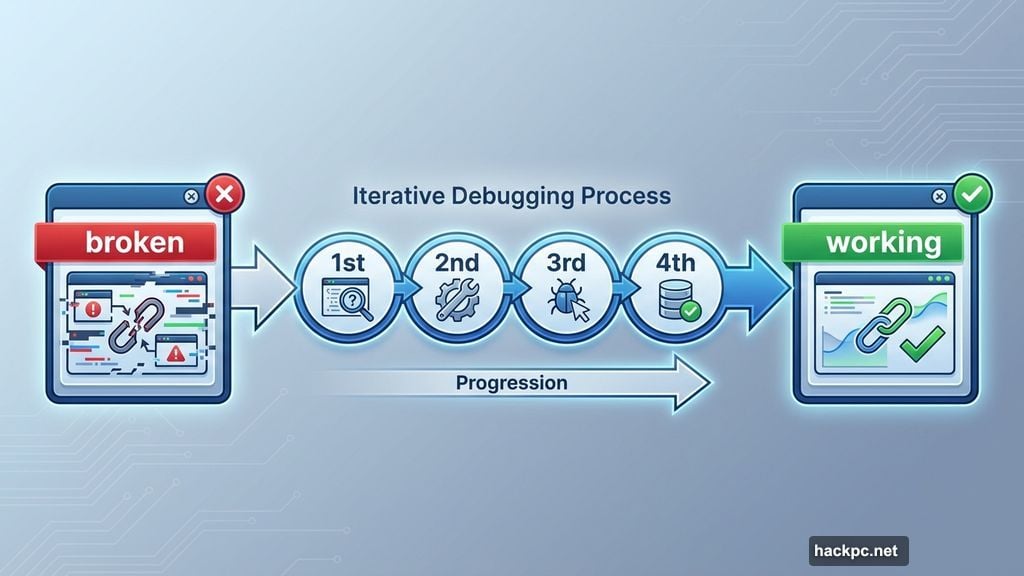
Another problem involved a close button on movie detail popups. The button appeared but didn’t work. I asked Gemini to fix it four times. On the fourth try, it finally worked.
Gemini 3 Pro also suggested improvements I hadn’t considered. It recommended adding a 3D wheel effect for browsing movies. It proposed a random pick feature. These additions elevated the project beyond my original vision.
The Movie Database Integration Just Worked
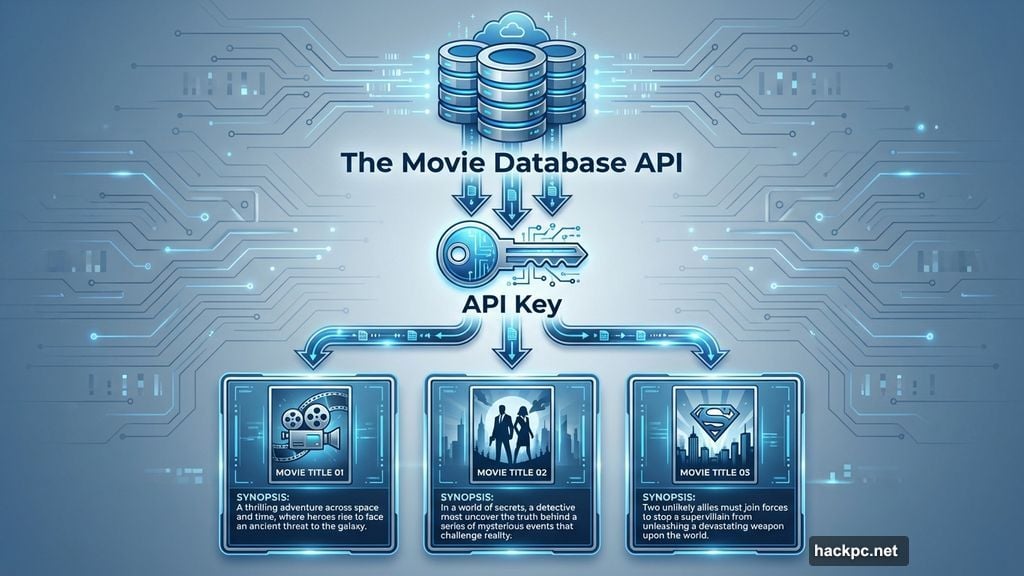
Gemini 3 Pro automatically suggested using The Movie Database API for posters and synopses. I never asked for this solution.
The model walked me through getting an API key. Then it integrated everything seamlessly. All the correct movie posters loaded on the first try. Plot summaries appeared without errors.
This took about 20 iterations total. Not perfect, but far better than expected. The final product exceeded my initial concept.
Gemini 2.5 Flash Required Constant Supervision
The fast model lived up to its name. Responses came quickly. But speed created different problems.
Gemini 2.5 Flash rarely anticipated my needs. It answered the exact question I asked, nothing more. If I wanted poster images, it told me to “acquire” them. How? That was my problem.
When I mentioned The Movie Database API, Flash welcomed the idea. But it didn’t integrate the API properly. Wrong movies loaded. Posters didn’t match my list. Fixing this required multiple rounds of specific prompting.
The model felt almost lazy compared to Gemini 3 Pro. It took shortcuts that created more work for me.
Code Updates Became a Manual Process
Gemini 3 Pro always rewrote the entire codebase after changes. I could copy and paste the full code without hunting for specific sections.
Gemini 2.5 Flash operated differently. It updated one section and told me to “swap out the old code for the new code.” If you don’t know where to find that section, you’re stuck.
For vibe coding, this matters. The whole point is creating without technical knowledge. Manual code surgery breaks that promise.
At one point, I asked Flash to rewrite the full code to avoid hunting for snippets. Its response? “That’s a huge ask.”
Gemini 3 Pro never complained about full rewrites. It just did them automatically every time.
Movie Database Integration Failed Repeatedly
Flash struggled with The Movie Database API from the start. Even after I provided my API key, it couldn’t pull the correct posters.
The model admitted limitations. It said finding exact Movie Database IDs was “time-consuming.” Then it promised to populate as many as possible from my list.
The results were comically wrong. Random movie posters loaded that had nothing to do with my horror film list. Maybe 1% matched. The rest felt like coincidence.
Gemini 3 Pro loaded all correct posters immediately. Same API, same list, completely different execution.
When Fast Models Actually Make Sense
Gemini 2.5 Flash isn’t bad. It’s just different. For simple tasks or when you understand code basics, the speed advantage matters.
If you’re making quick iterations on a working project, Flash handles it fine. You already know what works. You just need fast adjustments.
But for vibe coding from scratch? When you’re exploring ideas without technical knowledge? The thinking model saves massive time despite slower responses.
Flash requires more technical awareness to catch shortcuts and mistakes. You need to know when it’s taking the easy route that breaks your project later.
The Projects Side by Side
Both final products worked. Both displayed movies with details and trailers. But quality differed significantly.
Gemini 3 Pro created a polished experience. The 3D wheel effect looked great. The random pick feature added fun. Everything functioned as expected.
Gemini 2.5 Flash produced something functional but rough. Features worked inconsistently. The Movie Database integration failed. It felt unfinished.
Getting to those endpoints took dramatically different amounts of effort. Pro required less hand-holding. Flash needed constant course correction.
My Honest Take
Vibe coding works best with thinking models like Gemini 3 Pro. The slower response time disappears when you consider how much manual work it saves.
Flash models have their place. But that place isn’t beginner-friendly vibe coding. You’ll spend more time fixing mistakes than building features.
The “huge ask” moment with Flash really stuck with me. A model that complains about rewriting full code doesn’t understand vibe coding philosophy. We’re supposed to describe what we want and get it, not manage technical details.
Gemini 3 Pro understood that philosophy. It anticipated needs, suggested improvements, and handled tedious integration work automatically. That’s what vibe coding should feel like.
If you’re just starting with vibe coding, stick with thinking models. Save the fast models for when you actually know what you’re doing.

Comments (0)