
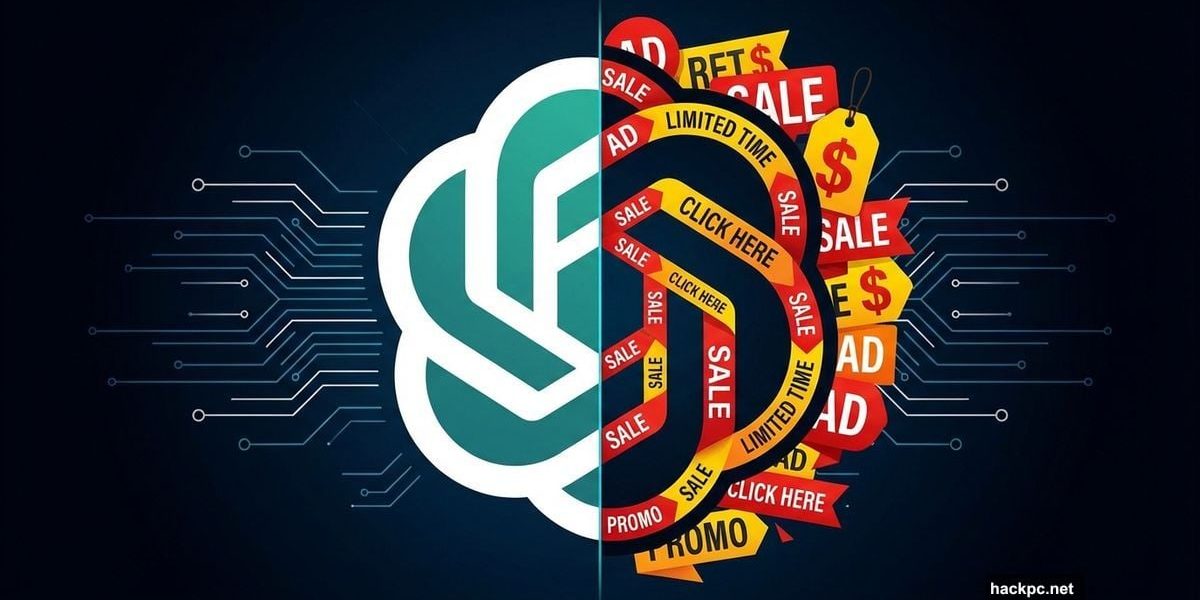
OpenAI just killed the clean ChatGPT experience. Starting now, free users and subscribers to the new $8 Go tier will see ads embedded directly in their conversations.
The company frames this as tasteful and limited. But let’s be honest about what just changed. ChatGPT went from feeling like a helpful assistant to another ad-cluttered platform fighting for your attention.
Ads Follow Your Every Conversation
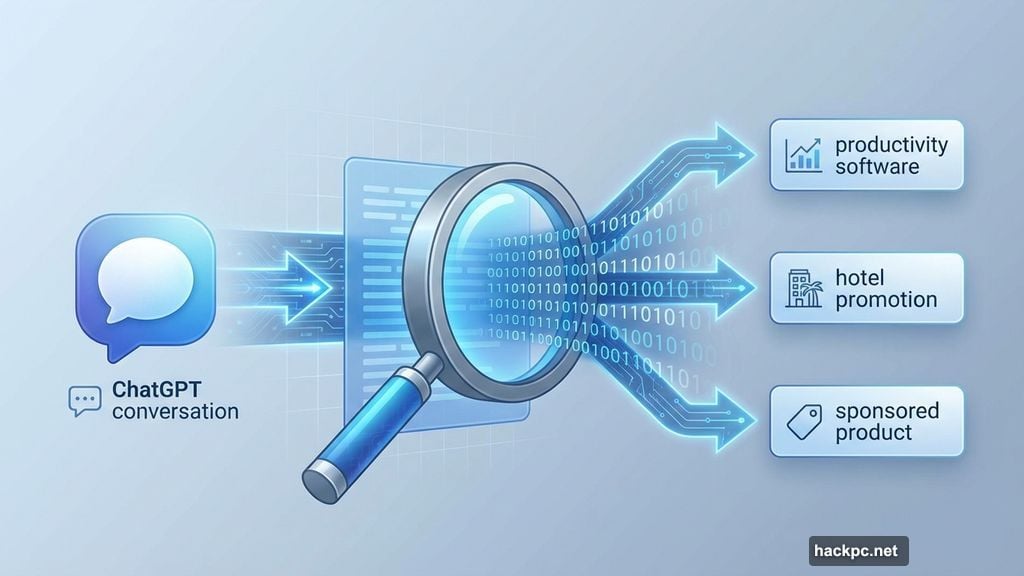
OpenAI claims ads will appear “when there’s a relevant sponsored product or service based on your current conversation.” Translation? The AI analyzes everything you say and serves ads accordingly.
You ask about productivity tools? Expect software ads. Discussing travel plans? Hotel promotions incoming. The system watches, processes, and monetizes your queries in real time.
Sure, OpenAI promises ads will be “clearly marked” and appear at the bottom of responses. But that doesn’t change the fundamental shift. Your conversations now generate revenue for advertisers.
Plus, the company admits it uses your chat history for ad targeting. Yes, they say you can turn off personalization and clear data. But how many users will actually dig through settings to do that?
The New $8 Go Tier Fills a Convenient Gap
OpenAI introduced ChatGPT Go at $8 monthly, slotting neatly between the free tier and the $20 Plus subscription. Convenient timing, right?
Go offers 10 times more messages, file uploads, and image generations than the free version. It also remembers more about you over time. That memory feature sounds helpful until you realize it’s also feeding the ad targeting system.
The pricing ladder now looks like this: Free with ads, $8 Go with ads, $20 Plus without ads, and $200 Pro for power users. OpenAI created a problem (ads on free tier) and immediately sold you the solution (pay to remove them).
This playbook isn’t new. YouTube, Spotify, and countless other platforms perfected it years ago. But ChatGPT felt different. It was a tool, not a media platform. That distinction just evaporated.
What OpenAI Won’t Advertise
The company promises it won’t show ads on “sensitive or regulated topics like health, mental health or politics.” Noble-sounding. But here’s the catch.
Last week, OpenAI launched ChatGPT Health, encouraging users to upload personal health data. Privacy experts immediately warned that OpenAI isn’t covered by healthcare privacy protections like HIPAA. Your medical information doesn’t get the same legal shields it would with an actual healthcare provider.
Now combine that with ad targeting. OpenAI says it won’t serve health ads. But it will analyze your health conversations to better understand you for other advertising purposes. That data builds your profile, influences future targeting, and exists outside medical privacy laws.
Moreover, the company pledges to keep individual conversations private from advertisers and never sell user data. However, they don’t need to sell data when they own the entire ad platform. Google doesn’t sell Gmail data either. They just monetize it directly through their own ad network.
Protection for Minors Sounds Better Than It Is
OpenAI says ads won’t appear to users under 18 or to users the system predicts are minors. Great. But how accurate is that prediction?
The company doesn’t specify their detection methods. Age verification on the internet remains notoriously unreliable. Kids lie about their age constantly. And AI prediction systems make mistakes regularly.
So some minors will definitely see ads. The question is how many. And what happens when the system gets it wrong?
Furthermore, even if the system works perfectly, teenagers at 18 suddenly get exposed to targeted advertising based on everything they’ve discussed with ChatGPT. That’s potentially years of data about their interests, problems, and search patterns suddenly becoming ad fuel.
The Bigger Picture Nobody Mentions
This move signals something bigger than ChatGPT monetization. OpenAI needs revenue desperately. The company burns through billions developing AI models while racing to stay ahead of Google, Anthropic, and others.
Ads provide reliable income that scales with usage. More users mean more conversations. More conversations mean more ad impressions. It’s the classic platform playbook.
But it fundamentally changes the product. ChatGPT started as a tool that felt unbiased. Now it becomes a platform where commercial interests influence what you see. Even if ads are “clearly marked,” their presence shapes the experience.
Consider this scenario. You ask ChatGPT about cloud storage options. The response mentions several providers. Then an ad for Dropbox appears at the bottom. Did the AI’s answer subtly favor Dropbox because of the ad relationship? You’ll never know for sure.
That uncertainty poisons trust. Every response now carries a shadow question: Is this helpful, or is this influenced by advertising dollars?
Your Three Options
OpenAI left you three choices. Live with ads on the free tier. Pay $8 monthly for Go and still see ads. Or upgrade to Plus at $20 to escape them entirely.
Most users will stick with free and accept ads as the price of access. That’s exactly what OpenAI expects. The company needs the free tier to maintain user growth and competitive positioning. But they also need revenue.
So they built a classic freemium trap. The free experience gets worse over time, pushing users toward paid tiers. Those who refuse to pay become the product instead of the customer.
Meanwhile, OpenAI faces a lawsuit from CNET’s parent company Ziff Davis over copyright infringement in AI training. The company needs revenue to fight legal battles while continuing expensive AI development.
Your conversations just became part of their funding strategy. Choose your tier accordingly.


Comments (0)