
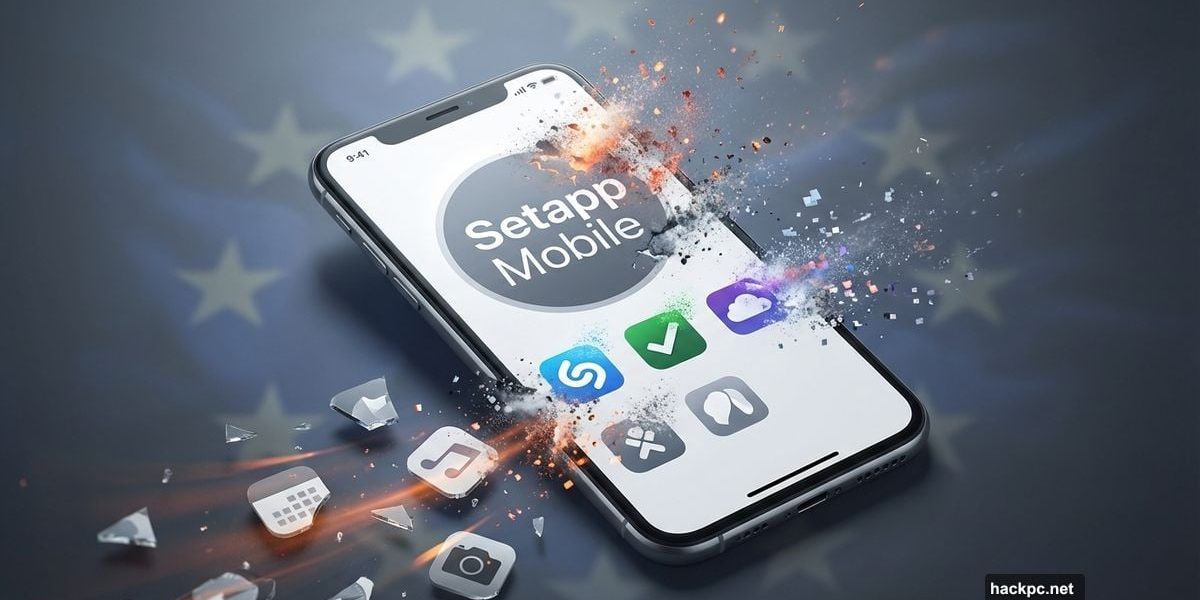
MacPaw just killed Setapp Mobile. Not slowly. Not gradually. Completely shut down on February 16th.
Every app downloaded through the store? Gone. User data stored in those apps? Inaccessible. The promise of a thriving alternative iOS marketplace? Dead in 10 months.
This wasn’t supposed to happen. When the EU’s Digital Markets Act forced Apple to allow third-party app stores, Setapp Mobile looked like one of the few with real potential. Now it joins the growing list of failed experiments in breaking Apple’s App Store monopoly.
Apple’s “Open” iOS Remains Anything But
The EU passed the Digital Markets Act to force competition. In theory, iPhone users could finally install apps from anywhere. In practice, Apple built so many roadblocks that most alternative stores couldn’t survive.
MacPaw launched Setapp Mobile as a subscription-based app marketplace. Users paid monthly for access to curated apps. Developers got fair revenue splits. It seemed like a win-win model.
But MacPaw CEO Oleksandr Kosovan told The Verge that “still-evolving commercial conditions” made the business unviable. Translation? Apple’s terms killed profitability.
Here’s what Apple still requires from third-party stores. Each installation triggers fees. Alternative stores must collect detailed analytics. Plus, users face multiple scary warning screens before installing anything outside the App Store.
What Happens to Users Now
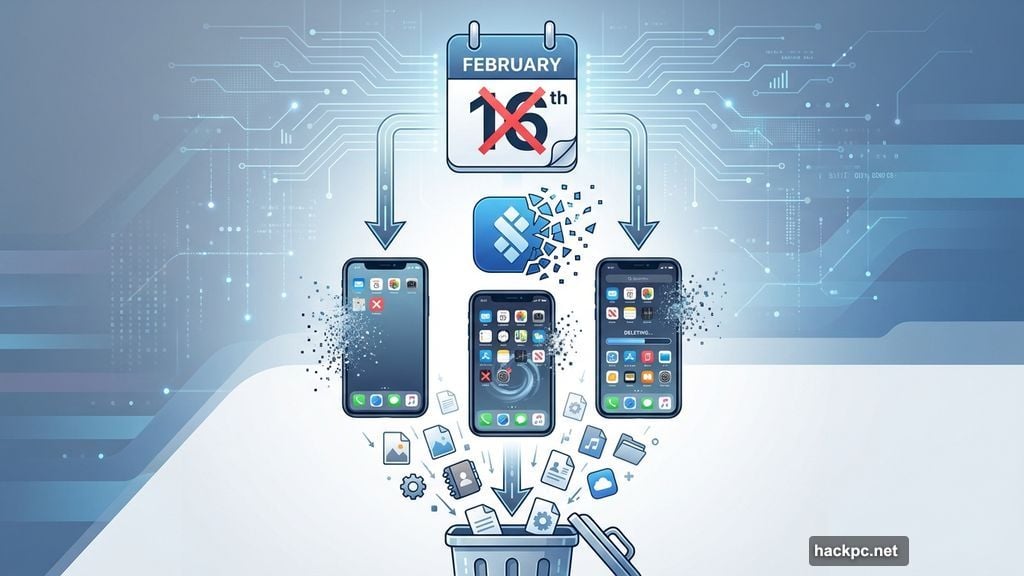
Setapp Mobile’s shutdown creates immediate problems for anyone who used it. All apps vanish from devices on February 16th. No grace period. No data export tools built into the platform.
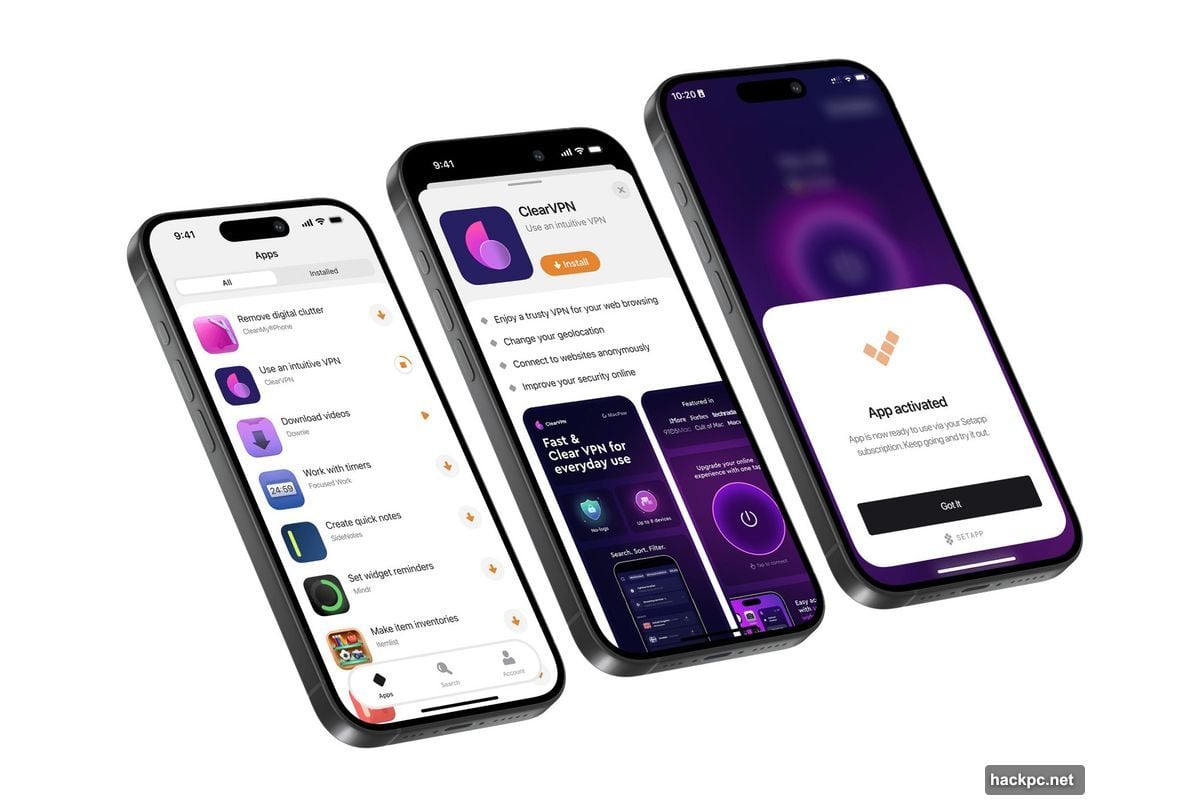
MacPaw’s support page warns users to “transfer your data in advance.” But that assumes apps provide export features. Many don’t. So user data from notes apps, productivity tools, or gaming progress could disappear permanently.
This raises a bigger question about alternative app stores. If platforms can shut down overnight and take your apps with them, why risk using them? The App Store might be expensive and restrictive. But at least it’s stable.
The Few Survivors Struggle
Only a handful of alternative iOS stores remain operational in the EU. AltStore PAL continues running on a donation model. Epic Games Store persists because Epic has deep pockets and a grudge against Apple.
Yet none of these platforms gained meaningful traction. Most iPhone users never installed a single third-party store. The friction Apple built into the process worked exactly as intended.
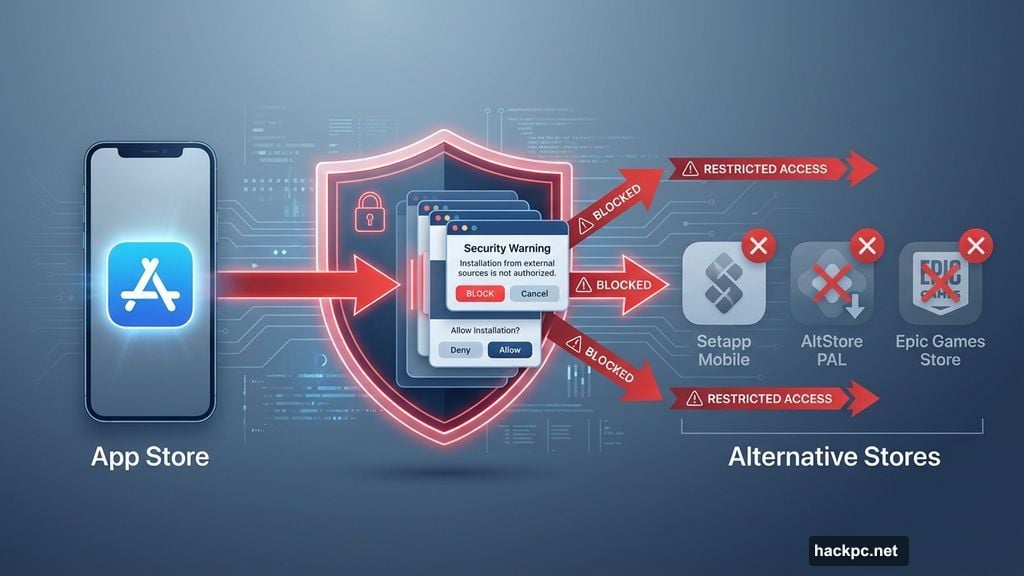
Installing an app through AltStore PAL requires enabling developer mode. Users must click through multiple security warnings. Each app needs explicit permission. The process feels deliberately designed to make people give up.
Epic Games Store benefits from Fortnite’s popularity. But even that massive draw couldn’t convert millions of users. Most Fortnite players on iOS just… stopped playing when Apple banned the app. They didn’t hunt for alternative stores.
MacPaw Moves On
Despite the Setapp Mobile failure, MacPaw isn’t giving up on innovation. The company announced plans to launch Eney, an AI assistant for macOS. They’re also expanding Setapp Desktop, their Mac app subscription service.
That makes sense. macOS already allows third-party software installation without Apple’s permission. The desktop version of Setapp thrives because it operates in a genuinely open ecosystem.
The contrast between Setapp Desktop’s success and Setapp Mobile’s failure highlights everything wrong with iOS app distribution. Same company. Same business model. Completely different outcomes based solely on platform restrictions.
Apple Won Without Fighting
Here’s what frustrates me most about this situation. Apple didn’t need to directly block Setapp Mobile. They just made the environment hostile enough that MacPaw couldn’t justify continuing.
The EU forced Apple to allow competition. But regulators can’t force Apple to make competition easy or profitable. So Apple complied with the letter of the law while violating its spirit.
Meanwhile, developers waste resources building alternative stores that inevitably fail. Users lose apps and data when platforms shut down. The only winner? Apple, whose App Store monopoly strengthens with each failed competitor.
The DMA was supposed to open iOS. Instead, it created an expensive graveyard for ambitious projects that briefly imagined a world where Apple didn’t control everything. Setapp Mobile is just the latest casualty.



Comments (0)