
Google just opened the gates. Flow, its AI video generator, was exclusive to premium subscribers. Now anyone with a Workspace business, education, or enterprise plan can create AI videos from text prompts or images.
The shift matters. Until now, only Google AI Pro and AI Ultra subscribers could access Flow. That locked out millions of Workspace users who already pay for Google’s productivity tools. But starting this week, those barriers disappeared.
Veo 3.1 Powers Eight-Second Magic Clips
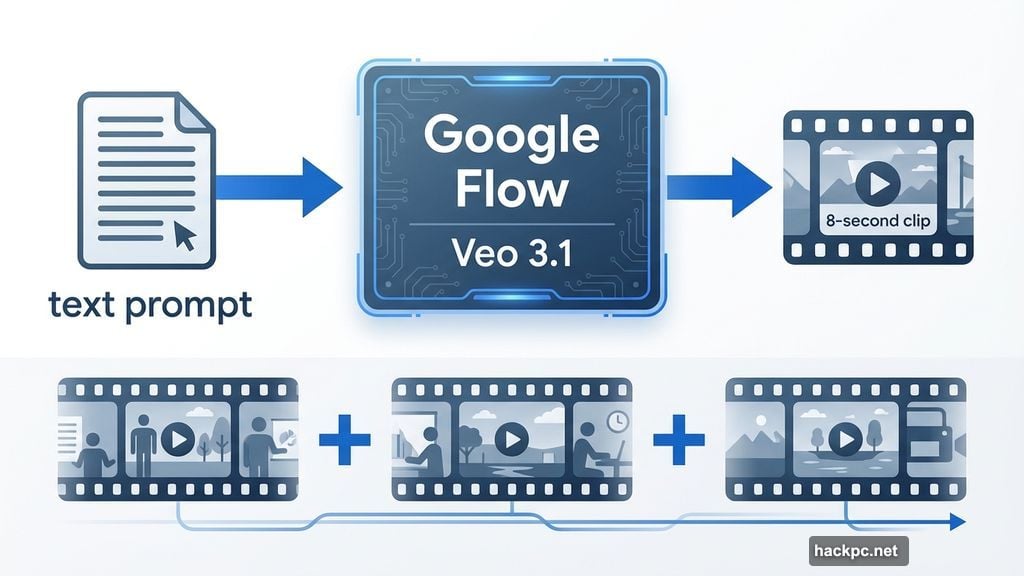
Flow runs on Google’s Veo 3.1 model. You type a prompt or upload images. The system generates eight-second video clips in response.
Eight seconds sounds limiting. But Flow lets you chain clips together into longer sequences. Plus, you get editing tools that traditional video software charges hundreds of dollars for.
Want to change the lighting in a scene? Adjust the camera angle? Insert or remove objects? Flow handles all of it through simple prompts. No timeline scrubbing. No keyframe animation. Just describe what you want changed.
The tool added vertical video support this week. That’s huge for social media creators who live on TikTok, Instagram Reels, and YouTube Shorts. Horizontal video dominated AI generation until now.
Audio and Images Join Forces
Google integrated audio generation across Flow late last year. The feature works everywhere now. Reference image prompts generate matching audio. Scene transitions get soundtracked automatically. Clip extensions include audio that matches the visual tone.
That audio integration separates Flow from competitors. Most AI video tools force you to add sound separately in editing software. Flow generates video and audio together from a single prompt.
Google also baked its Nano Banana Pro image generator into Flow. You can create characters or scene elements, then immediately turn them into video clips. The workflow eliminates jumping between different AI tools.

Workspace Integration Changes the Game
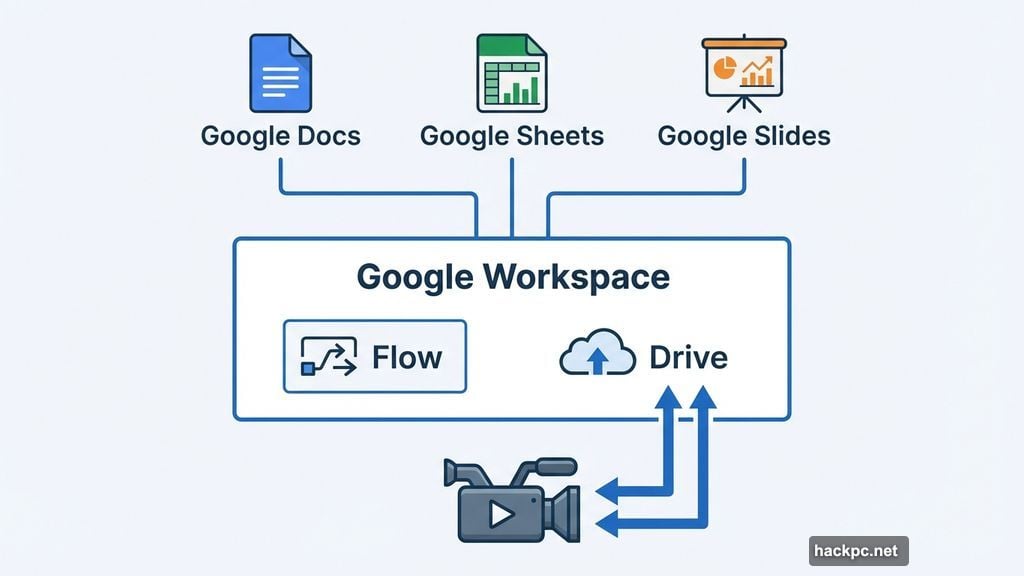
Here’s what makes this expansion significant. Workspace users already collaborate through Google Docs, Sheets, and Slides. Now they can generate and share AI videos using the same account and billing structure.
Businesses don’t need separate subscriptions for video generation. Education institutions can give students access without additional licensing headaches. Enterprise teams can prototype video content without procurement delays.
Flow sits inside the Google ecosystem. That means videos save to Drive automatically. Sharing permissions mirror your existing Workspace setup. Version history tracks changes like any other Google file.
The Competition Just Got Tighter
OpenAI offers Sora. Meta built its own video generator. Runway dominates the creative professional space. But none of them integrate into a productivity suite used by billions of people.
Google’s advantage isn’t the technology. Veo 3.1 produces solid results, but competitors match or exceed its quality. The real edge comes from distribution and integration.
Workspace has over 3 billion users globally. Even a small percentage using Flow represents massive adoption. Plus, those users already trust Google with their business data and workflows.
The Catch You Should Know
Flow still carries Google AI’s standard limitations. Generated videos include watermarks. Usage caps exist depending on your Workspace plan tier. The tool requires stable internet for cloud processing.
Quality varies wildly based on prompt complexity. Simple scenes work great. Complex interactions between multiple characters or objects often produce weird artifacts. Hands remain a consistent problem, just like static AI image generators.
You can’t remove the AI-generated label from videos. That matters for businesses concerned about transparency or regulations around synthetic media. Plus, commercial use depends on your specific Workspace license terms.
Eight-second clips force a specific editing style. Long-form content requires stitching dozens of segments. That workflow suits some projects but frustrates others expecting minute-long generations from single prompts.
Who Wins With Workspace Access
Marketing teams can prototype video ads without hiring production companies. Teachers can create educational content customized for their curriculum. Small businesses can generate product demos on shoestring budgets.
But the biggest winners might be internal communicators. Companies struggle to make engaging internal videos about policy changes, training programs, or culture initiatives. Flow lets anyone create watchable content without video production skills.
The tool democratizes video creation. Whether that’s good depends on how people use it. We’re about to find out as millions of Workspace users get their hands on AI video generation for the first time.



Comments (0)