

Tax season sneaks up fast. You probably filed your 2024 return nine months ago. Now it’s time to do it all over again.
The good news? Most deadlines stay the same. But a few states break from tradition. Plus, disaster victims in Alaska and Washington get extra time. Let’s cut through the confusion and nail down every date you need.
Filing Opens Monday, January 26
The IRS starts accepting 2025 tax returns on Monday. That’s your earliest shot at filing.
Got a refund coming? File immediately. There’s zero reason to wait. The sooner you submit, the sooner money hits your account.
However, you can’t just fire off your return whenever you feel like it. The IRS won’t process anything before Jan. 26. So if you finish your taxes this weekend, you’ll sit in a queue until Monday morning.
Most refunds arrive within two to three weeks of acceptance. But some taxpayers wait longer.
Special Rules for Tax Credit Claims
Claiming the Earned Income Tax Credit or Child Tax Credit? Expect delays.
The IRS adds extra verification steps for these credits. So even if you file electronically with direct deposit, your refund won’t arrive until March 3 at the earliest.

That’s nearly six weeks after filing opens. Why the wait? Congress required the IRS to hold these refunds while they verify eligibility. It’s designed to prevent fraud. But it punishes honest taxpayers who need money most.
Plus, that March 3 date assumes everything goes smoothly. If the IRS flags anything for review, you’ll wait even longer.
April 15 Deadline Applies to Everyone
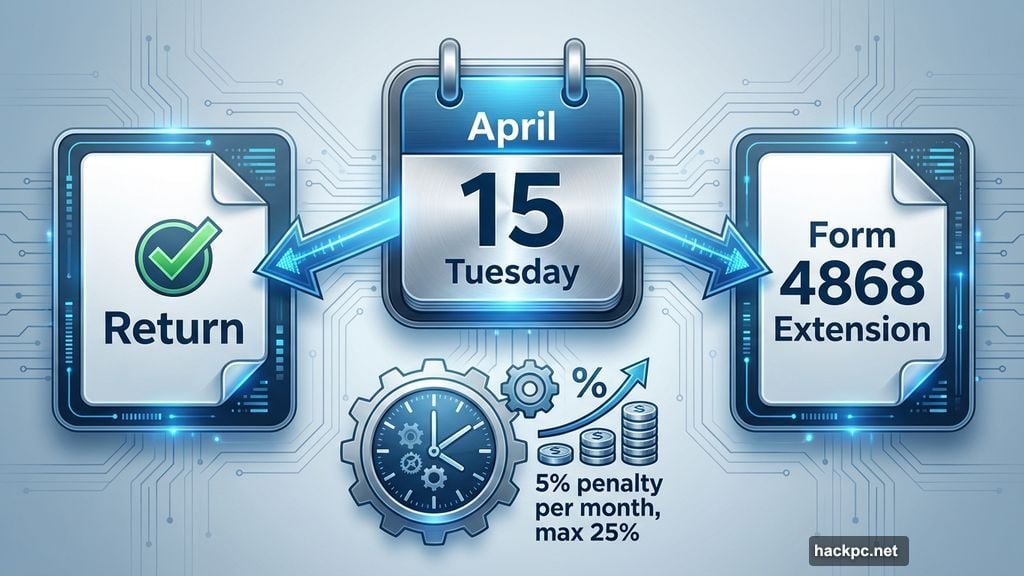
Your 2025 tax return must reach the IRS by April 15. Miss that deadline and you’ll face penalties if you owe money.
No state holidays interfere this year. So taxpayers in all 50 states share the same federal deadline. Simple enough.
But here’s the catch. April 15 falls on a Tuesday this year. That means if you wait until the last minute, you can’t blame a weekend. You’ve got the full workweek to finish and submit.
File after April 15 without an extension? The IRS charges a failure-to-file penalty. It starts at 5% of unpaid taxes per month, maxing out at 25%. Even worse, interest compounds daily on any balance due.
Extension Requests Due April 15 Too
Need more time? File Form 4868 by April 15.
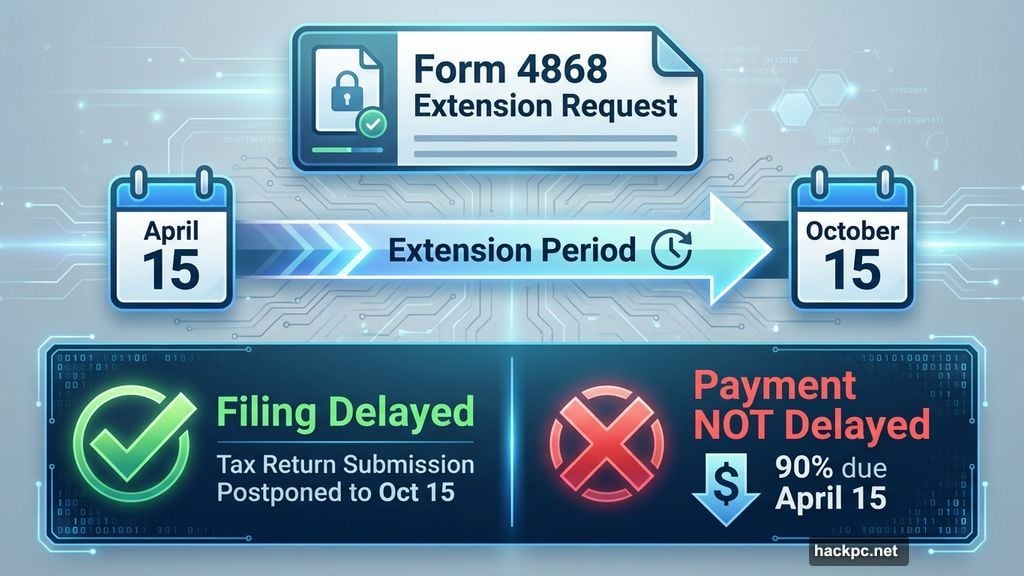
This extension pushes your filing deadline to October 15. Anyone can request it. The IRS approves automatically. No explanation required.
However, extensions only delay filing. They don’t delay payment. If you owe taxes, you must pay an estimated amount by April 15.
Pay less than 90% of your final tax bill? Penalties and interest start accruing immediately. So extensions work great if you need time to organize paperwork. But they don’t help if you can’t afford to pay.
Five States Break the April 15 Pattern
Most states align their income tax deadlines with the federal date. But five states do their own thing.
Delaware and Iowa both give residents until April 30. That’s an extra two weeks beyond the federal deadline. Louisiana pushes even further to May 15. Hawaii lands in the middle at April 20. And Virginia splits the difference with May 1.
Remember, these extended deadlines only apply to state taxes. You still owe the IRS your federal return by April 15. So residents in these states juggle two separate deadlines.
Moreover, eight states don’t collect income tax at all. Alaska, Florida, Nevada, South Dakota, Tennessee, Texas and Wyoming residents skip state returns entirely. Washington taxes only high-income capital gains.
Natural Disaster Extensions Add Complexity
Two regions got automatic filing extensions this year. Both stem from natural disasters.
Washington state residents affected by December 2024 storms, flooding or mudslides have until May 1 to file federal taxes. That covers a significant chunk of the state. Check IRS announcements to see if your county qualifies.
Meanwhile, parts of Alaska damaged by Typhoon Halong also get a May 1 deadline. This applies specifically to Lower Kuskokwim Regional Educational Attendance Area, Lower Yukon Regional Educational Attendance Area and Northwest Arctic Borough.
These extensions apply to both filing and payment. So affected taxpayers can hold off on everything until May without penalties.
Start Gathering Documents Now
Tax software makes filing easier than ever. CNET’s best tax software picks can walk you through every step. But software can’t help if you’re missing essential documents.
W-2 forms from employers should arrive by January 31. Self-employed workers need 1099 forms, also due January 31. Investment income requires 1099-B, 1099-DIV or 1099-INT forms. And if you made major life changes, you’ll need documentation for those too.
Bought a house? Sold stocks? Had a baby? Changed jobs? Each triggers different tax implications. Gather proof now rather than scrambling in April.
Electronic filing with direct deposit gets you the fastest refund. Paper returns take months to process. So unless you have a specific reason to mail your return, stick with e-filing.
My Advice: File Early, Expect Delays
I’ve covered taxes for 20 years. And my recommendation stays consistent. File as early as possible if you’re getting a refund. Every day you wait is a day without your money.
But temper your expectations this year. IRS staffing remains below historical levels. Processing delays hit harder than they should. So even if you file Monday, don’t expect your refund to arrive instantly.
Moreover, double-check everything before submitting. A single typo can trigger manual review. That turns a two-week wait into a two-month nightmare. Take an extra hour to verify names, Social Security numbers and bank account details.
The tax code didn’t get simpler this year. Deadlines haven’t changed. But proper planning makes the whole process less painful. Mark April 15 on your calendar. Gather your documents. And file when you’re ready, not when you’re desperate.




Comments (0)