
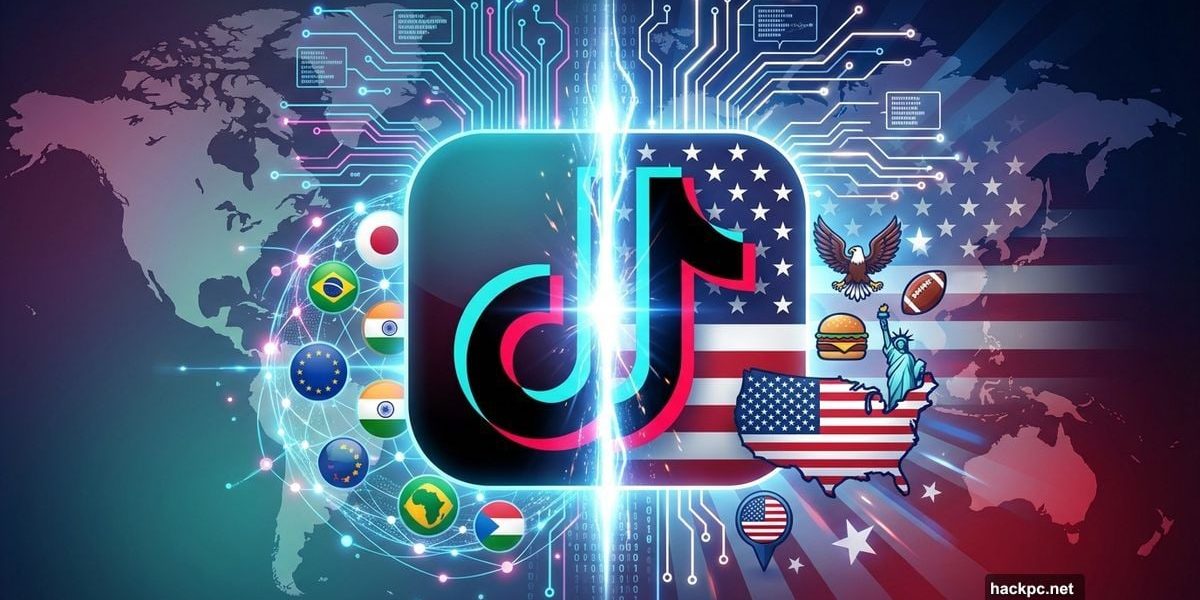
TikTok survived the ban. But the algorithm that made it addictive? That’s getting a total makeover.
After years of threats, delays, and political drama, TikTok finally secured its future in the US on Friday. A new joint venture takes over American operations, splitting the US app from ByteDance’s global empire. For 200 million US users, that means the app stays on your phone. But the content you see? That’s another story.
The Deal That Saved TikTok
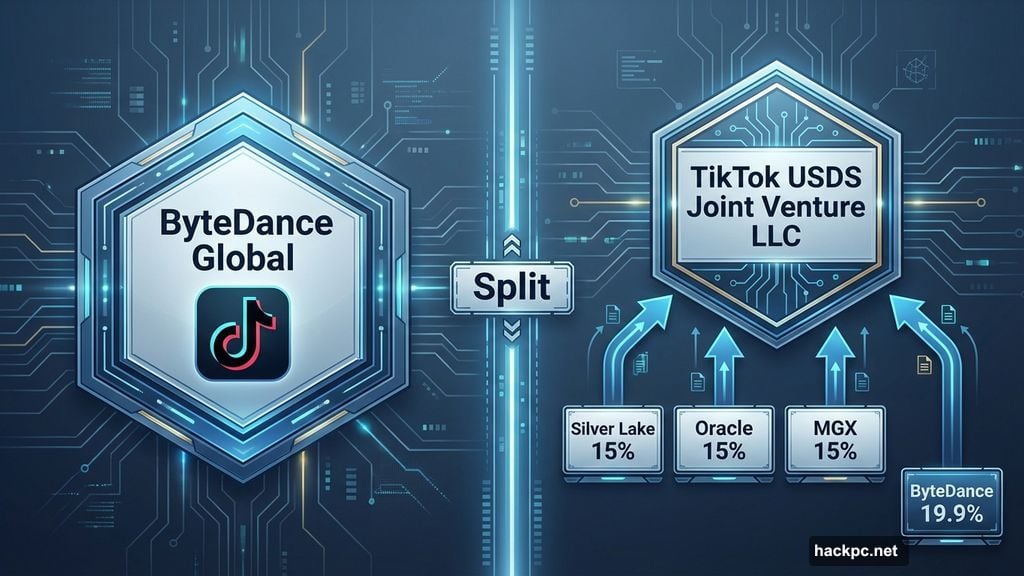
TikTok USDS Joint Venture LLC now runs the show in America. The company announced the deal moments before the White House deadline expired, ending a saga that started during Trump’s first presidency.
Adam Presser leads the new venture as CEO. He previously ran TikTok’s data security efforts. Meanwhile, Shou Chew, CEO of international operations, sits on the board. Three investors each hold 15% stakes: Silver Lake, Oracle, and MGX.
Oracle plays a crucial role. The company protects US user data and manages the retrained algorithm. ByteDance keeps just 19.9% ownership, addressing national security concerns that sparked this whole mess.
President Trump celebrated the deal on Truth Social. He thanked China’s President Xi Jinping for approving it. “He could have gone the other way, but didn’t, and is appreciated for his decision,” Trump wrote.
Your Feed Won’t Feel the Same
Here’s where things get interesting for actual users. The deal preserves TikTok’s global connections. You’ll still watch viral European trends. Creators worldwide can still reach American audiences. So far, so good.
But TikTok’s algorithm is getting completely retrained on US data only. That fundamentally changes what the app shows you.
“TikTok’s power lies in its content graph—an algorithm that learns from thousands of user signals to deliver hyper-relevant, highly addictive videos,” said Kelsey Chickering, principal analyst at Forrester. “With a US joint venture retraining that algorithm on domestic data, the experience will change.”
Think about what made TikTok special. The algorithm surfaced content from everywhere, crossing borders and cultures effortlessly. A trend in Seoul could reach Seattle overnight. That global flavor defined the platform.
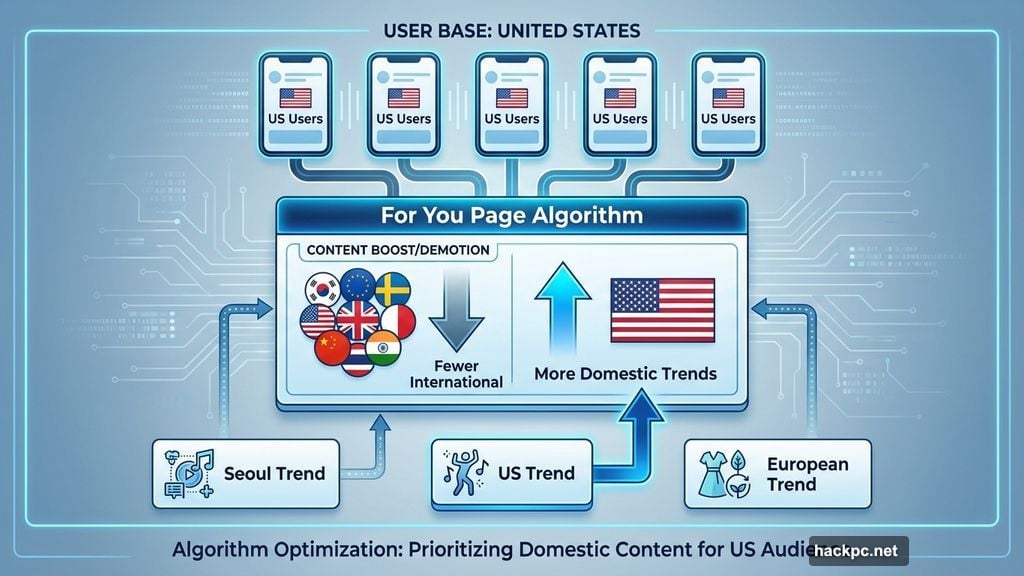
Now? The algorithm learns from American users only. So your feed will skew heavily toward US-centric content, even though international videos technically remain accessible.
The Algorithm Rewrite Nobody Asked For

Retraining an algorithm isn’t flipping a switch. TikTok didn’t respond to questions about timeline or implementation details. But based on how these systems work, changes will roll out gradually over weeks or months.
Early on, you might notice subtle shifts. Fewer international creators in recommendations. More domestic trends dominating your For You page. Different content patterns emerging as the algorithm adjusts to purely American engagement data.
Chickering warns about potential pitfalls. “TikTok’s US algorithm will now be trained on US data, which means what trends—and what dominates feeds—will feel distinctly American. Global content will still appear, but its ranking will change.”
Plus, content moderation decisions loom large. Elon Musk’s Twitter takeover showed what happens when algorithmic changes alienate users. With Instagram Reels hungry to steal TikTok refugees, the company can’t afford major mistakes.
“It remains to be seen how new leadership will wield this power and whether moderation policies will evolve,” Chickering noted.
What This Means for Creators
American creators keep global reach, according to TikTok. The company promised that US users get “a global TikTok experience, ensuring US creators can be discovered and businesses can operate on a global scale.”
But creators who built audiences by tapping into international trends face uncertainty. If the algorithm prioritizes domestic content, will niche global topics still break through? Will cultural crossover moments happen as frequently?
Nobody knows yet. TikTok hasn’t detailed how it balances global interoperability with US-specific algorithm training. That tension between connection and separation will define the platform’s evolution.
The Real Test Starts Now
TikTok avoided the ban. That’s the headline. But saving the app and preserving what made it great are different challenges.
The original TikTok algorithm was borderless by design. It created unexpected connections between cultures, communities, and content types. That randomness, that global chaos, made scrolling endlessly entertaining.
A US-only trained algorithm sounds safer politically. But it risks making TikTok feel like every other American social platform—predictable, domestic, less surprising.
Whether that matters to you depends on what you loved about TikTok in the first place. If you came for American creators and trends, you’ll probably be fine. If you treasured the weird global mashup, prepare for disappointment.
The next few months will reveal which version of TikTok survives: the global discovery engine or the Americanized content feed. For now, at least you can still open the app without wondering if today’s the day it disappears.



Comments (0)