
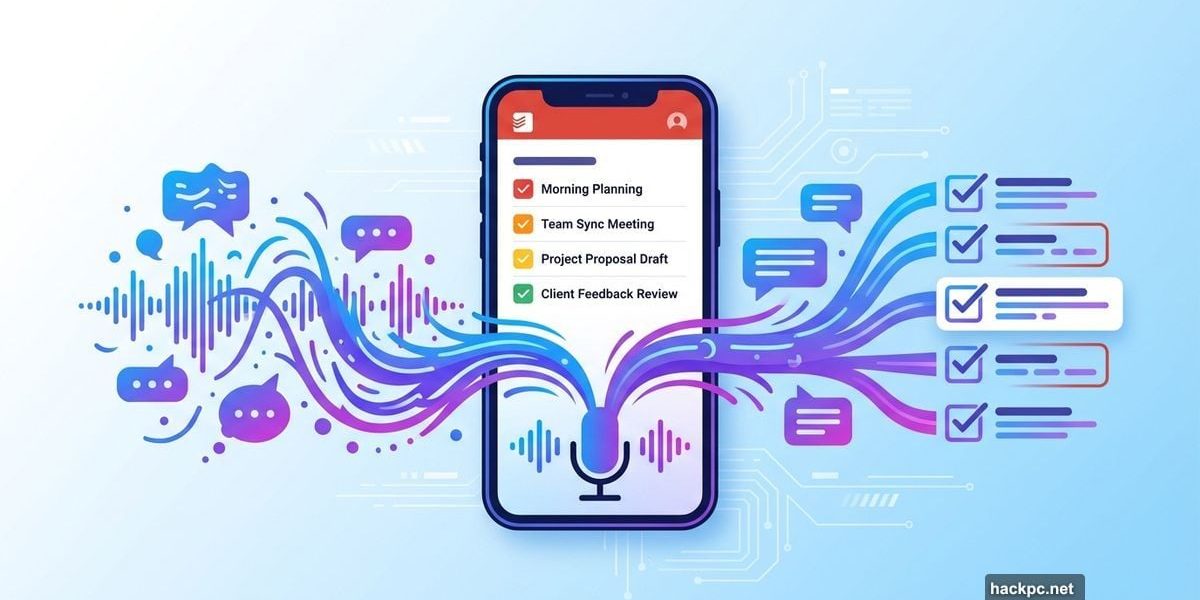
Need to remember something while juggling groceries? Todoist just made that easier.
The popular to-do app launched Todoist Ramble, an AI feature that converts messy, stream-of-consciousness speech into structured tasks. No typing required. Just tap, talk, and watch your to-do list populate in real time.
This addresses a real problem. We think of tasks constantly while moving around. But stopping to type them out? That’s friction most people skip. So those ideas evaporate.
How Ramble Actually Works
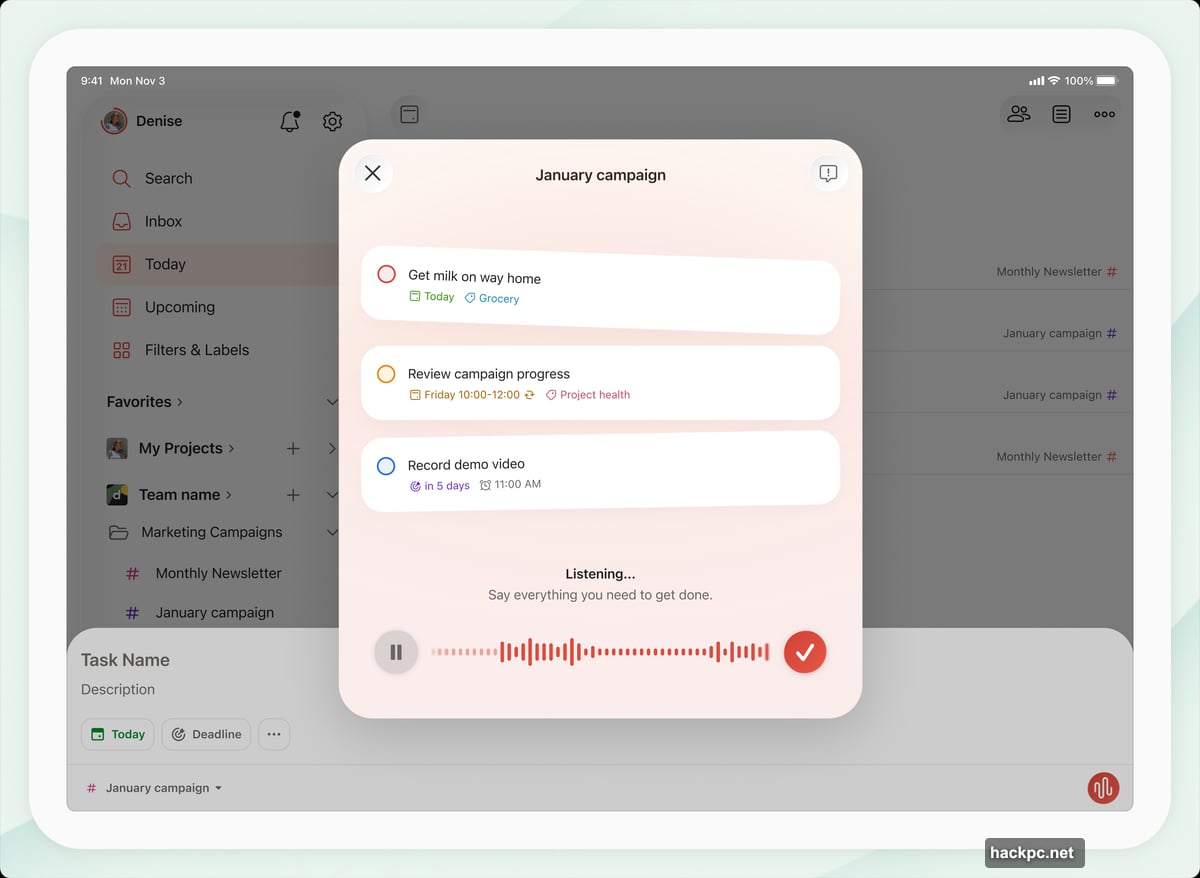
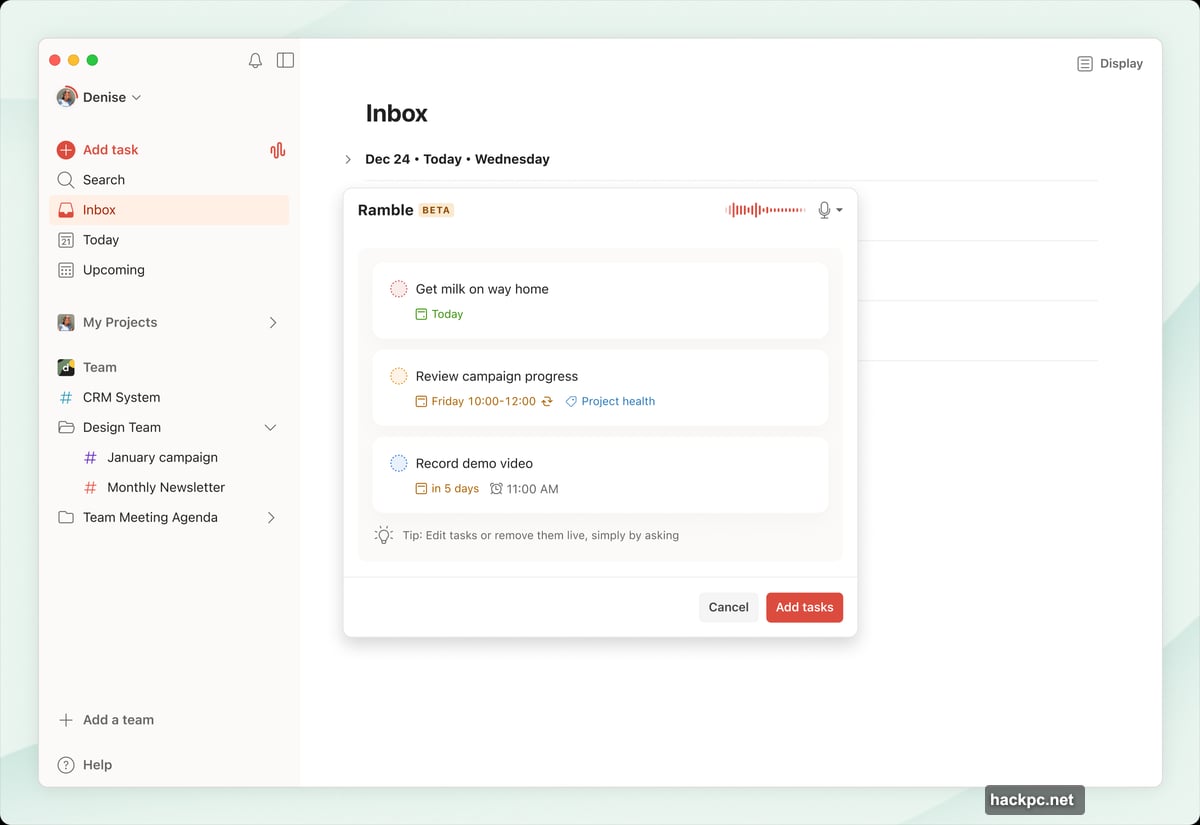
Open Todoist. Tap the Ramble icon. Start talking.
The AI captures everything. Deadlines, priorities, task duration, who should handle what. It even responds to verbal edits mid-sentence.
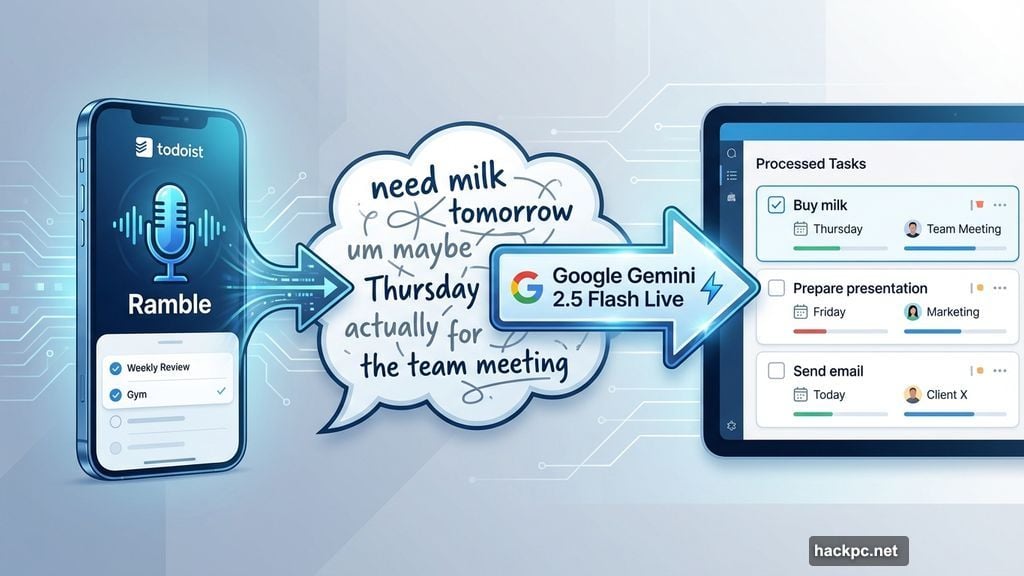
Say “Actually, make that Thursday” or “that’s all” to guide the AI as you speak. The app updates live, organizing your rambling thoughts into actionable items.
Behind the scenes, Ramble runs on Google’s Gemini 2.5 Flash Live model through Vertex AI. Your audio streams to the backend, gets transcribed instantly, and the model extracts task details on the fly.
Plus, Doist doesn’t store your audio or use it for AI training. The company maintains SOC2 Type II certification for security. So your verbal brain dumps stay private.
The Smart Ring Competition
Todoist isn’t alone in attacking speech-to-task conversion. Hardware makers are flooding this space.
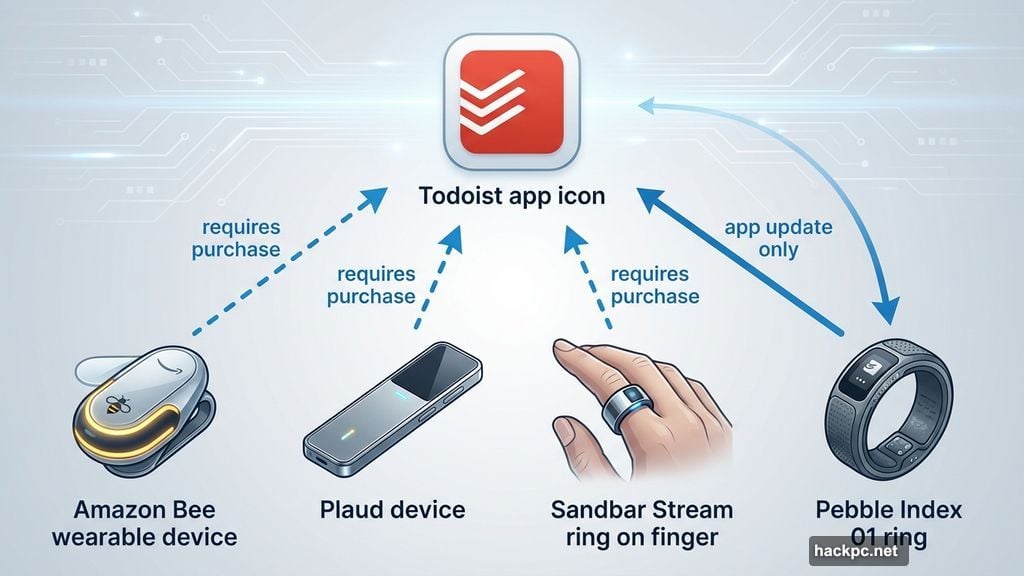
Amazon’s Bee wearable transcribes speech into notes and suggested to-dos. Plaud devices capture meeting notes with highlight extraction. Then there’s the growing smart ring category.
Sandbar’s Stream ring and Pebble’s upcoming Index 01 ring both let you press your index finger to add tasks or notes through companion apps. These devices promise even less friction than pulling out your phone.
But here’s the catch. Hardware costs money. Smart rings and AI wearables require separate purchases, charging, and integration with your existing workflow.
Todoist Ramble lives in an app you probably already use. No extra device. No battery management. Just a feature update.
Early Testing Shows Real Adoption
Doist beta tested Ramble with 150,000 active users before launch. The results tell an interesting story.
Within three weeks, roughly 76,000 testers completed about 290,000 Ramble sessions across desktop and mobile. That’s significant engagement for a brand new feature.
Task creation success jumped from 40% in October to 62% by December. So the AI got noticeably better at understanding messy human speech during testing.
More importantly, Ramble drove conversions. New users on the entry-level plan upgraded at five times their previous rate after using the feature. That suggests it provides genuine value, not just novelty appeal.
Who Gets Access and How Much It Costs
Todoist Ramble launches today across iOS, Android, desktop, and web. It supports 38 languages right out of the gate.
Free Beginner plan users can access Ramble with limited monthly sessions. Pro and Business paid subscribers get unlimited sessions.
For quick access, iOS users can add Home Screen or Lock Screen shortcuts. Android users get app shortcuts, widgets, and quick settings tiles. So you can activate Ramble without even opening the full app.
This accessibility matters. The whole point is reducing friction between thought and capture. Every extra tap or screen adds chances you’ll forget what you meant to add.
The Bigger Picture on AI Task Management
Voice-to-task features represent a shift in how we interact with productivity tools. Instead of adapting our thoughts to rigid input fields, AI adapts unstructured speech to structured data.
That’s genuinely useful. Most of us don’t think in perfect bullet points with neat categories. We ramble. We change our minds mid-sentence. We forget details then remember them later.
Tools like Ramble meet us where we actually think, not where software traditionally required us to operate. So the cognitive overhead of task capture drops dramatically.
But there’s a question worth asking. Do we really need AI-powered everything? Or are we solving problems we don’t actually have?
I’ve used voice input for years without AI processing. Basic speech-to-text works fine for most tasks. So the value here depends on whether the AI organization actually saves time versus just typing naturally.
Based on the beta results, it seems to provide real value for enough users to drive upgrades. That’s a good sign. But your mileage may vary depending on how you naturally organize thoughts.
The feature launches free with limits, so testing it costs nothing. Try it. See if your rambling thoughts become actionable tasks more easily than before.




Comments (0)