

ExpressVPN stopped being just a VPN. The company rolled out ExpressAI and ExpressMailGuard alongside major changes to its password manager and identity tools.
These aren’t minor updates. ExpressVPN is positioning itself as a full privacy suite. Instead of cramming everything into one app, each service now lives separately with focused functionality.
The big news? ExpressAI promises something ChatGPT and other AI tools can’t: mathematical guarantees that nobody sees your conversations. Not even ExpressVPN itself.
Your AI Chats Are Getting Harvested
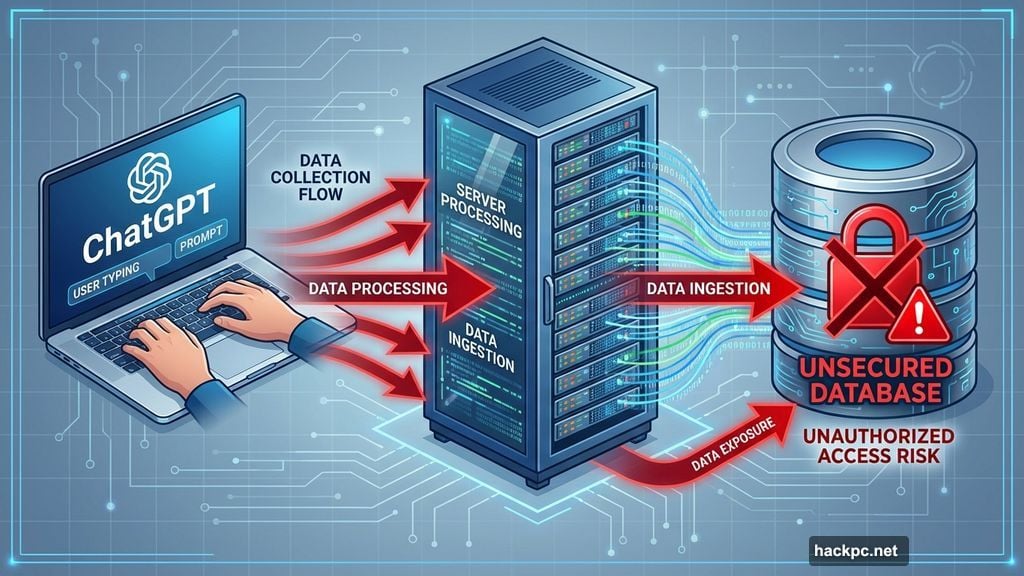
ChatGPT and similar AI tools collect everything you share. Every conversation, uploaded file, and image gets stored. Plus, they grab data about your account, device, and network.
This data trains their models. It also tailors responses to your patterns. Sounds helpful until you realize the privacy cost.
Sharing confidential files or personal information with these AI platforms is risky. Your data flows through their servers unencrypted. Moreover, you have no control over what happens to it later.
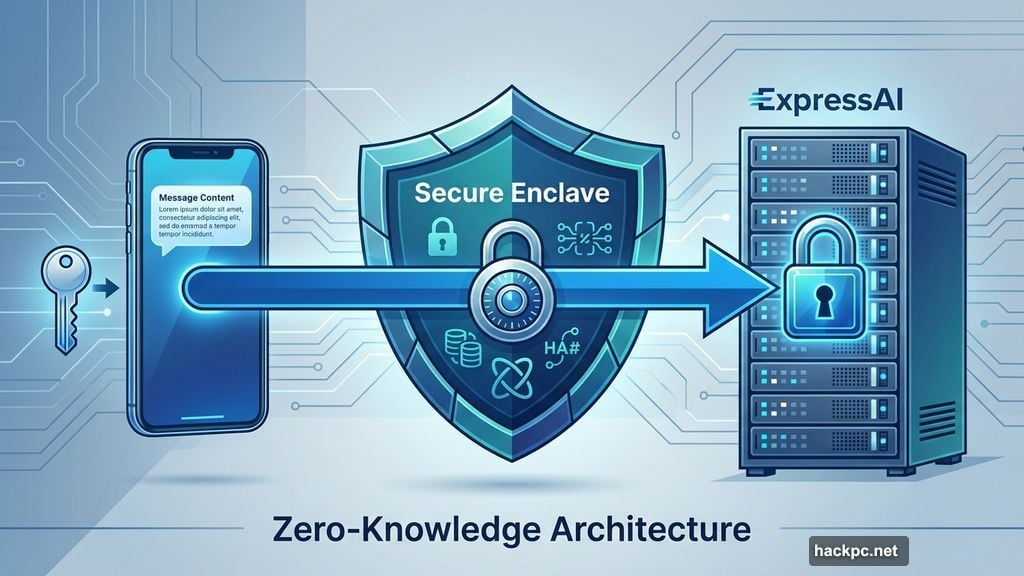
ExpressAI fixes this problem with end-to-end encryption through what the company calls a “secure enclave.” Your inputs get encrypted before they leave your device. So neither ExpressVPN nor its infrastructure providers can decrypt your data.
Pete Membrey, ExpressVPN’s chief engineering officer, explained it’s not a promise about data collection. Instead, it’s a mathematical guarantee. Only you hold the decryption keys.
Zero-Knowledge AI Actually Means Something
ExpressAI runs on a zero-knowledge architecture. Files process in memory only and never touch a hard drive. Plus, messages can auto-delete based on your preferences.
The model never trains on user inputs either. Your questions stay completely private even from the AI system itself.
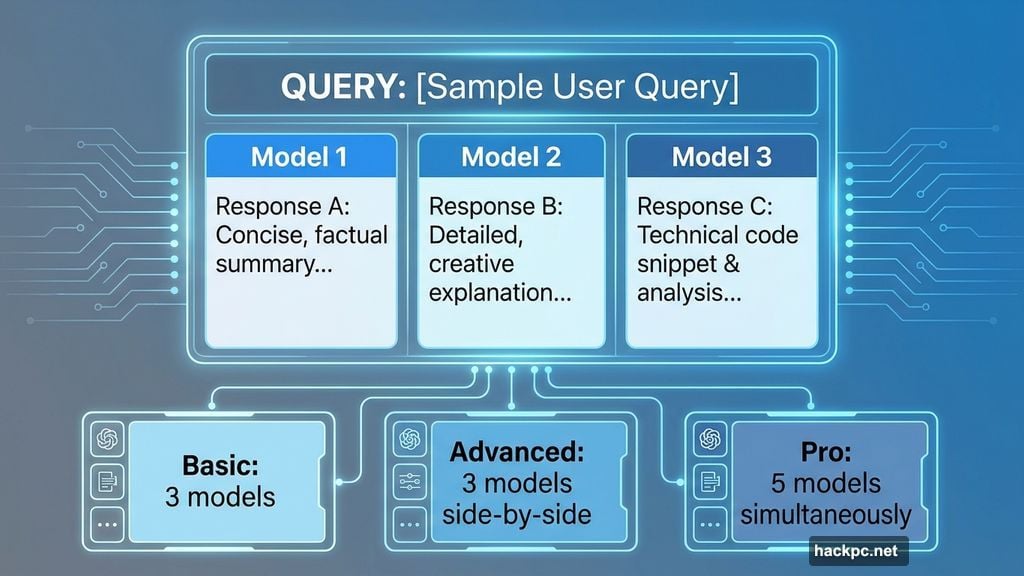
Basic users get access to ExpressAI’s own model output. However, Advanced subscribers can compare three different language models side-by-side. Pro users can compare five models simultaneously.
This comparison feature is surprisingly useful. Different AI models often provide varying perspectives or additional context on the same query. So seeing multiple outputs helps you get fuller answers.
Basic users face some restrictions: 5MB file upload limit and 50 inputs daily. Advanced users get 10MB uploads and 150 daily inputs. Pro users receive 50MB uploads and 500 daily inputs.
The company plans to release ExpressAI later this year. But the privacy architecture already looks solid based on what they’ve revealed.
Email Aliases Without the Hassle
ExpressMailGuard tackles a different privacy problem: your email address lives everywhere. You’ve probably shared it with hundreds of companies over the years.
Many of those companies sell or share your address with data brokers. Eventually, it appears in data breaches. Then thousands of entities you’ve never heard of start filling your inbox with spam and phishing attempts.
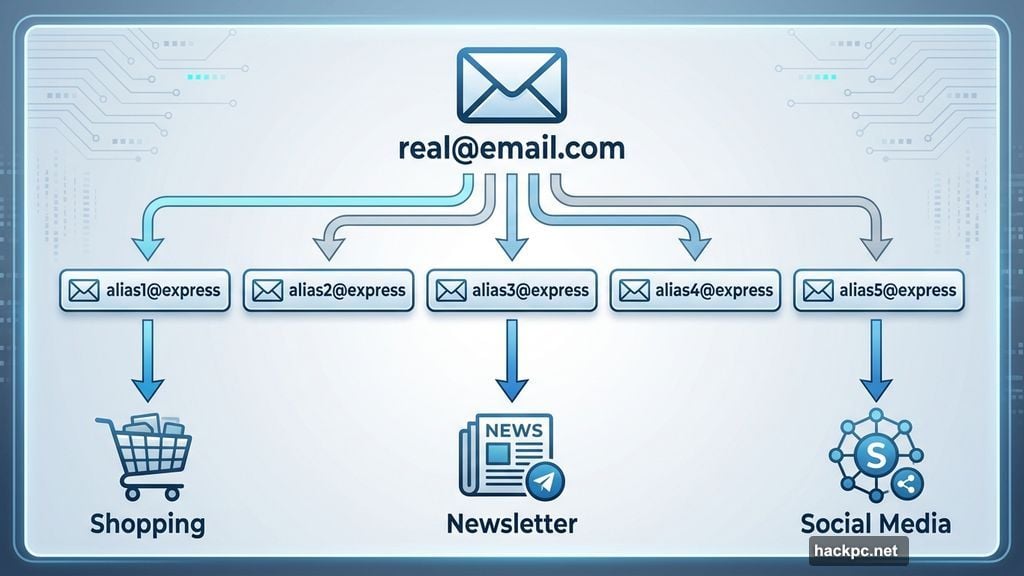
ExpressMailGuard lets you create disposable email aliases. When you sign up for services online, you use an alias instead of your real address.
Messages sent to that alias automatically forward to your primary inbox. But the sender never sees your actual email address. This works similarly to Apple’s Hide My Email feature.
The key difference? You can create unlimited aliases regardless of which plan you choose. So every online account can have its own unique alias.
Custom forwarding rules let you route specific aliases to different inboxes. Plus, you can disable aliases instantly if spam starts coming through. The company is also working on PGP encryption for incoming mail.
ExpressMailGuard hits a sweet spot between competitors. Proton Mail offers excellent privacy but limits you to one primary address. Surfshark’s Alternative ID restricts you to a set number of aliases. ExpressMailGuard gives you unlimited aliases that work with any email provider.
Password Manager Gets Room to Breathe
ExpressKeys is now a standalone app instead of living inside the VPN client. This separation lets engineers develop the password manager independently and ship features faster.
The redesigned app works across iOS, Android, and browser extensions. Your credentials sync across devices automatically.
Separating Keys from the VPN makes sense. Password managers and VPNs serve different purposes. Plus, cramming too many features into one app creates a cluttered experience.
ExpressVPN launched Keys in 2023. It showed promise then but felt limited. Now as a dedicated app, Keys can compete seriously with established password managers like 1Password and Bitwarden.
Identity Defender Moves Out Too
Identity Defender becomes its own standalone app on February 26. The functionality stays mostly the same: dark web monitoring, ID theft insurance, change of address alerts, SSN monitoring, data removal, and credit scanning.
However, these features remain exclusive to Advanced and Pro plans. Basic subscribers won’t get Identity Defender access at all.
This restriction feels limiting given that many Identity Defender features are available free from other sources. Credit monitoring, dark web scanning, and change of address alerts all exist as standalone free services.
Identity Defender adds convenience by bundling everything together. But it’s not a must-have feature for most users.
Prices Stay Flat Despite New Features
ExpressVPN avoided the obvious trap: raising prices when adding services. The three-tier pricing structure remains unchanged.
Basic costs $13 monthly, $52.39 for 15 months, or $68.40 for 28 months. This tier includes the VPN with 10 simultaneous connections, basic ad-blocking, and limited ExpressAI and ExpressMailGuard access.
Advanced costs $14 monthly, $62.89 for 15 months, or $88 for 28 months. You get 12 VPN connections, advanced DNS filtering, ExpressKeys, and more ExpressAI and ExpressMailGuard functionality.
Pro costs $20 monthly, $94.39 for 15 months, or $146.80 for 28 months. This includes 14 VPN connections and full access to all features across the entire suite.
A Valentine’s Day sale is running now with modest discounts on annual and two-year plans. The company frames this as “up to 81% savings” but that’s misleading math.
The 81% figure assumes you’re paying the Basic monthly price ($13) for 28 months straight. That totals $363.72. But nobody actually does that.
The real savings? About $29 off the normal two-year price. That’s 30% off, which is still decent. Just not as dramatic as the marketing suggests.
Annual and two-year plans renew at $100, $120, or $200 per year depending on tier. These renewal prices kick in after your initial discounted term ends.
ExpressVPN Needs This Shift
Top VPN competitors already offer bundled services. NordVPN includes a password manager and data breach scanner. Surfshark bundles Alternative ID and antivirus. Proton offers encrypted email, calendar, and cloud storage alongside its VPN.
ExpressVPN fell behind in this bundling race. The company charged premium prices but only delivered a VPN with basic extras.
These new additions help ExpressVPN catch up. ExpressAI and ExpressMailGuard both solve real privacy problems that VPNs alone can’t fix.
Moreover, splitting services into separate apps makes each one better. Engineers can iterate faster. Users get cleaner interfaces. Updates ship without affecting unrelated features.
ExpressVPN remains CNET’s top-rated VPN for core performance. Fast speeds, reliable connections, and strong encryption make it excellent for its primary purpose.
Now it’s becoming a legitimate privacy suite instead of just an expensive VPN. The pricing makes more sense when you’re getting four or five tools instead of one.
ExpressAI has real potential if the privacy guarantees hold up. Most people don’t realize how much data they’re feeding to ChatGPT and similar tools. A truly private AI platform fills an obvious gap in the market.
ExpressMailGuard solves email privacy problems that have existed for decades. Unlimited aliases give you granular control over who gets access to your real address.
These aren’t gimmicky add-ons. They’re useful tools that complement what a VPN already does. Plus, they work together to create a more comprehensive privacy strategy.
Whether ExpressVPN can execute on this vision remains to be seen. But the direction is right. Privacy-conscious users need more than just encrypted internet connections. They need tools that protect their data across multiple vectors.
ExpressVPN is building those tools. And keeping prices flat while doing it.



Comments (0)