
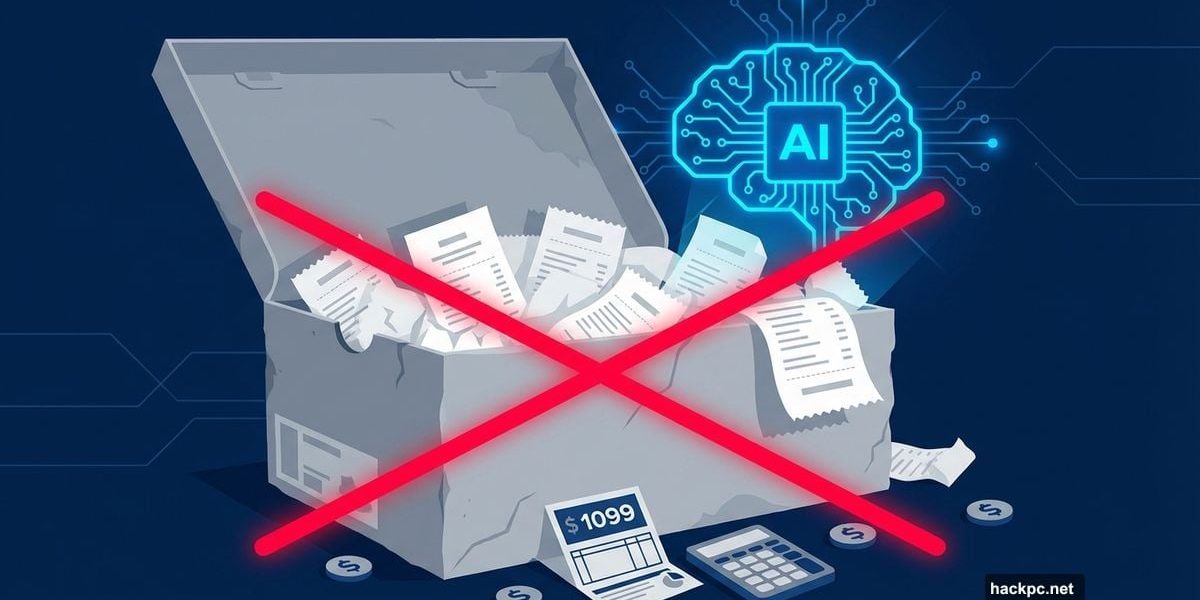
Tax season used to mean drowning in paper receipts and manual data entry. That era just ended.
AI-powered automation now handles the grunt work—scanning forms, categorizing expenses, and cross-checking numbers in minutes instead of hours. But this shift brings more than just speed. It’s transforming who can access sophisticated tax strategies and raising serious questions about privacy and algorithmic bias.
Let’s break down what’s actually changing and what you need to know.
The Manual Tax Process Just Got Obsolete
Traditional tax prep eats up massive amounts of time. Manual data entry alone takes hours, since most people type around 40 words per minute with 92% accuracy.
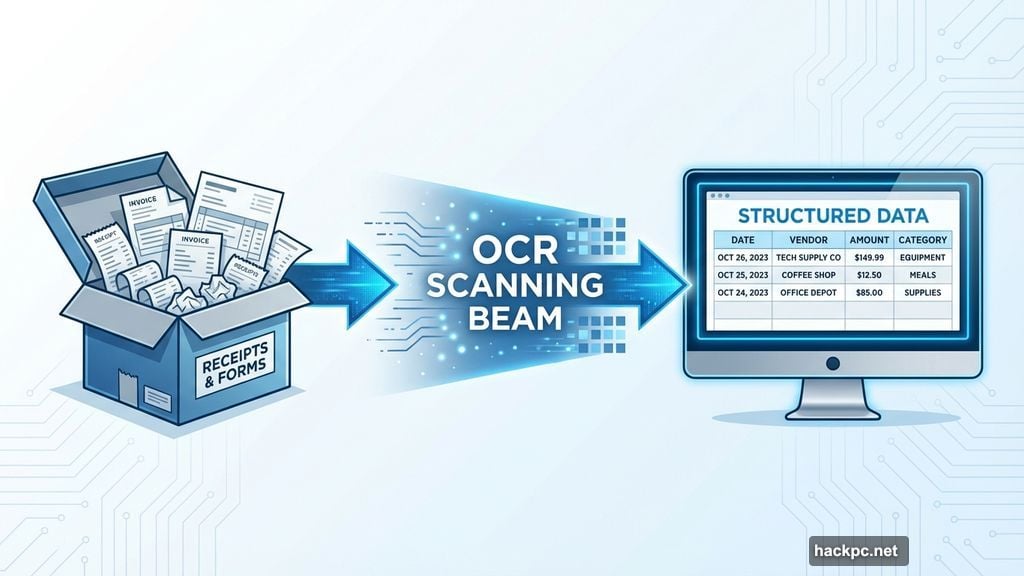
AI flips this equation. Optical character recognition (OCR) combined with natural language processing scans typed or handwritten forms in seconds. What once required hours of typing and verification now happens almost instantly.
Cross-referencing takes another chunk of time in manual filing. Comparing figures across multiple forms and prior years adds roughly 20 minutes per document. AI automation cuts this to minutes by recognizing patterns and spotting inconsistencies automatically.
The overall difference? Manual tax prep can stretch from days to weeks as returns pass through multiple hands. AI-powered systems compress this timeline to hours or days maximum.
Smart Categorization Saves Real Money
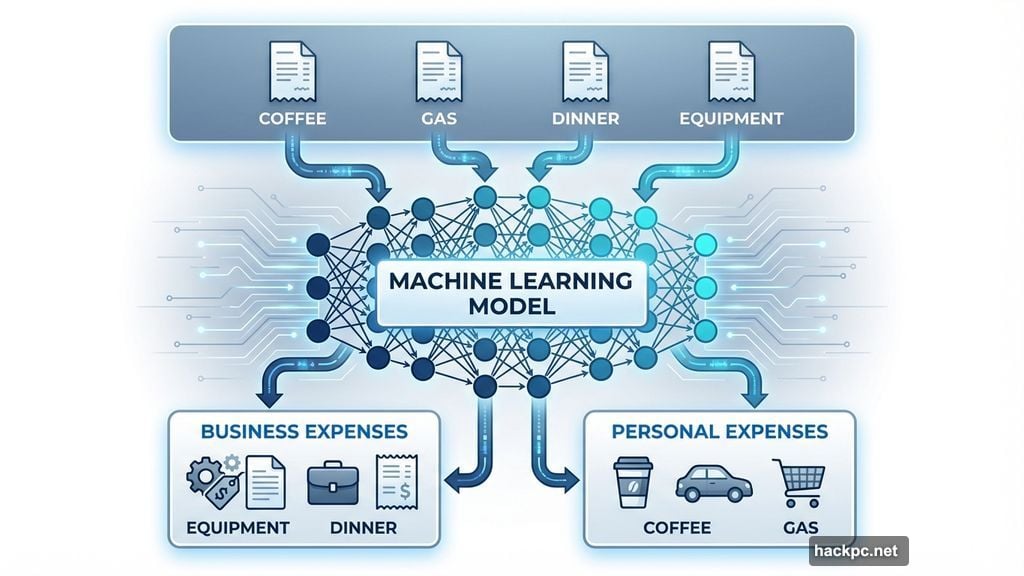
Machine learning models now categorize income and expenses based on transaction patterns. The software learns from your inputs and improves over time.
This matters especially for 1099 contractors and gig workers who juggle business and personal expenses. AI systems track spending by category and use context to identify legitimate business deductions.
H&R Block’s Self-Employed package walks filers through targeted questions to find industry-specific deductions. The system actively looks for ways to offset 1099 income and boost your refund.
“If you plug in data, most systems are going to give you general feedback,” said Bill Park, CEO of tax intelligence platform TaxHakr. “It potentially gets people thinking about things they may have missed.”
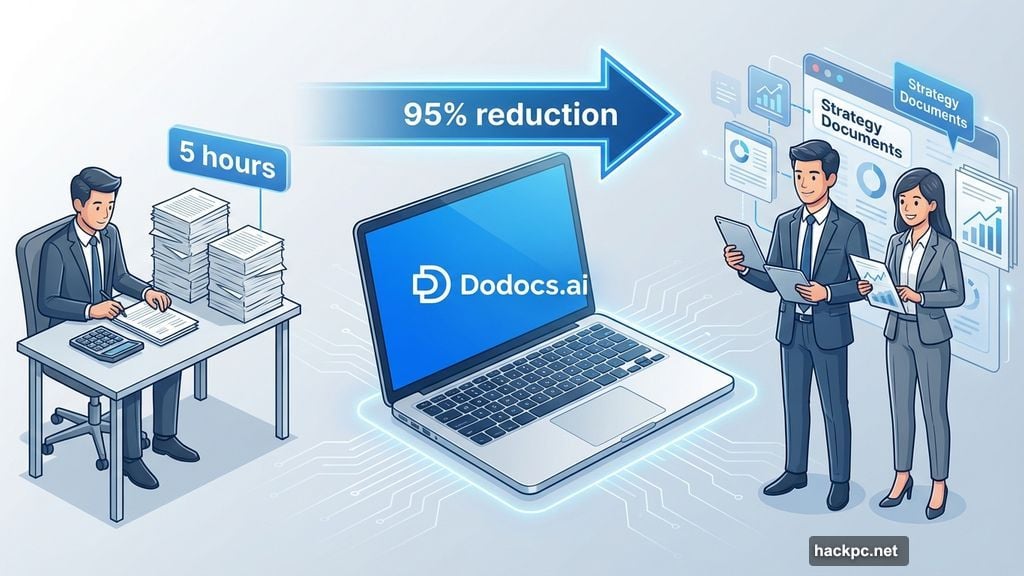
Tax Pros Save 5 Hours Weekly
Thomson Reuters predicts AI saves tax professionals 5 hours per week. That translates to roughly $24,000 in annual value per preparer.
Current AI tax prep tools from cloud platform Dodocs.ai claim to reduce data entry time by 95% while hitting 99.5% accuracy. Those numbers matter because they free up CPAs to focus on strategy instead of paperwork.
Tax code research that used to require manual searches through dense regulatory text now delivers answers in seconds. Even experienced accountants need to look up details due to the tax code’s complexity and constant changes.
The Trump administration’s One Big Beautiful Bill added new wrinkles that make automated research even more valuable. Rules shift fast enough that human memory can’t keep pace.
Tax Strategy Opens Up for Everyone
AI automation doesn’t just speed up filing. It democratizes access to sophisticated tax planning.
Before AI, complex tax strategies belonged to wealthy clients who could afford high-priced advisors. Middle-class and low-income workers filed basic returns and missed deductions they didn’t know existed.
Now AI tools suggest strategic moves like ramping up FSA or HSA contributions, timing charitable donations, or restructuring business expenses. The software spots patterns that signal potential savings.
“In the bookkeeping portion of our business, we see 100% of our clients overpaying on taxes,” Park said. AI can help small businesses and gig workers structure filings to keep more money.
The Privacy Problem Nobody’s Solving
Tax prep handles incredibly sensitive personal and financial data. Most AI tax software follows security protocols similar to banks and fintech companies.
But there’s a deeper concern: using your personal data to train AI systems. The 2022 White House Blueprint for an AI Bill of Rights recommended developers seek consent for data use.
The current Trump administration shifted policy to reduce barriers for AI companies. That doesn’t ban data privacy protections, but it doesn’t require them either.
You might be training the AI model with your tax information without knowing it. And there’s no clear way to opt out while still using the service.
Algorithmic Bias Creates Audit Risk
Stanford Institute for Economic Policy Research found in 2023 that Black taxpayers face audits three to five times more often than other groups. That’s a pattern problem.
AI algorithms learn from past inputs and repeat patterns. If IRS AI software follows historically biased audit patterns, it perpetuates discrimination at scale.
The consequences hit harder than just inconvenience. Audits cost time and money, especially for taxpayers who can’t afford representation.
Technology experts call this AI’s “black box” problem. We can’t see exactly how AI makes complex decisions, just like we can’t fully explain human intuition.
“This quality makes it difficult to fix deep learning systems when they produce unwanted outcomes,” writes Samir Rawashdeh, associate professor at University of Michigan-Dearborn.
Human Oversight Still Matters
AI makes tax prep faster and potentially more accurate. But keeping humans in the loop remains critical.
“Automated tax filing is cool, but if you’re automating bad information, you’re just doing it faster without better results,” Park said.
Human CPAs interpret ambiguous tax codes and analyze complex scenarios that trip up AI. They maximize deductions while minimizing audit risk through judgment AI can’t replicate.
Testing reveals bugs in AI systems, but it can’t reveal knowledge gaps. Like humans, AI doesn’t know what it doesn’t know. That’s where experienced tax professionals add irreplaceable value.
What This Means for Your Next Filing
AI won’t replace your tax preparer. Instead, it creates a powerful partnership between automation and human expertise.
The technology excels at data extraction, pattern recognition, and compliance checking. Tax professionals bring decades of training and experience that handle edge cases and strategic planning.
For DIY filers, AI-powered tax software like TurboTax and H&R Block makes filing easier and potentially more accurate. The systems guide you through deductions you might miss and flag potential errors before submission.
For those working with tax pros, expect faster turnaround times and more time spent on strategic advice rather than data entry. Your CPA can focus on reducing your tax liability instead of typing numbers.
The shoebox method finally died. What replaced it works faster and catches more deductions, but it demands new vigilance about data privacy and algorithmic fairness.
Choose software from established providers with clear privacy policies. If you’re in a demographic group facing higher audit rates, consider working with a human tax professional who can review AI suggestions before filing.
Tax season just got smarter. Make sure you stay smart about how you use these new tools.




Comments (0)