
I wanted a simple writing machine. Instead, I got another part-time job troubleshooting my own computer.
After two years gathering dust, my 2019 Dell XPS 15 seemed ready for retirement. Windows crawled despite the Core i7 and 32GB of RAM. Updates failed constantly. The fan screamed at idle like a jet engine warming up.
So I installed Ubuntu. Again.
This wasn’t my first rodeo with Linux. Between 2006 and 2019, I spent 13 years living in Ubuntu across three different laptops. Sure, Wi-Fi didn’t work out of the box on that first ThinkPad X40. But I enjoyed the tinkering back then.
Now? I just needed something that worked.
The Honeymoon Lasted About 48 Hours
Installation went smoothly enough. The Ubuntu interface looks prettier than I remembered. Everything seemed fine.
Then the problems started piling up.
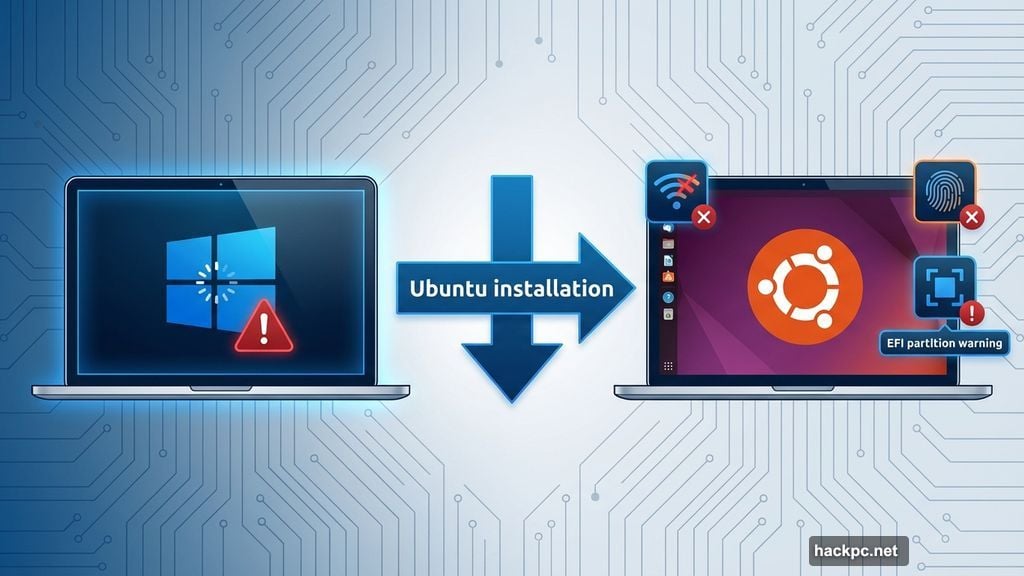
First, the fingerprint reader stopped working. Minor annoyance. I moved on.
Next, Ubuntu refused to install updates because of an EFI partition issue specific to XPS 15 models. I eventually forced the updates through by deleting files. But I’m pretty sure I created a time bomb somewhere in that process.
Also, Ubuntu wouldn’t mount my Windows partition for the first month. Then it suddenly worked for no apparent reason. No explanation. No error messages. Just… started working.
My colleague Stevie had similar frustrations. They rage quit and went to bed after Ubuntu refused to acknowledge a second SSD. Another colleague, Nathan, couldn’t get his mouse clicks to register. Plus, he faced option paralysis choosing between four bootloaders and 13 desktop environments.
Software Installation Became a Guessing Game
Several apps failed to install. Silently. No error messages. Nothing.
I’d click install in the Ubuntu App Center. The progress bar would fill. Then… nothing happened. The app never appeared.
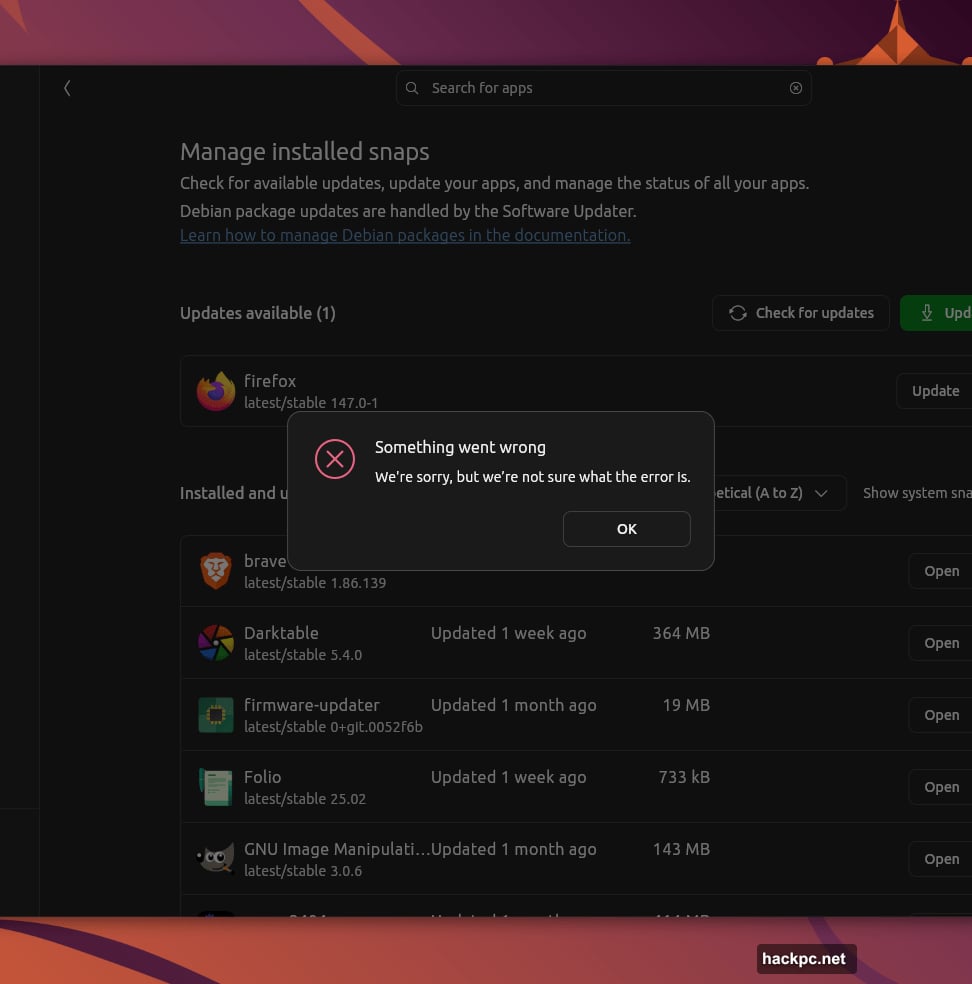
Turns out I had to open the terminal and install from the command line to see what went wrong. Even when it wasn’t failing quietly, Ubuntu threw truly useless errors that meant nothing without extensive Googling.
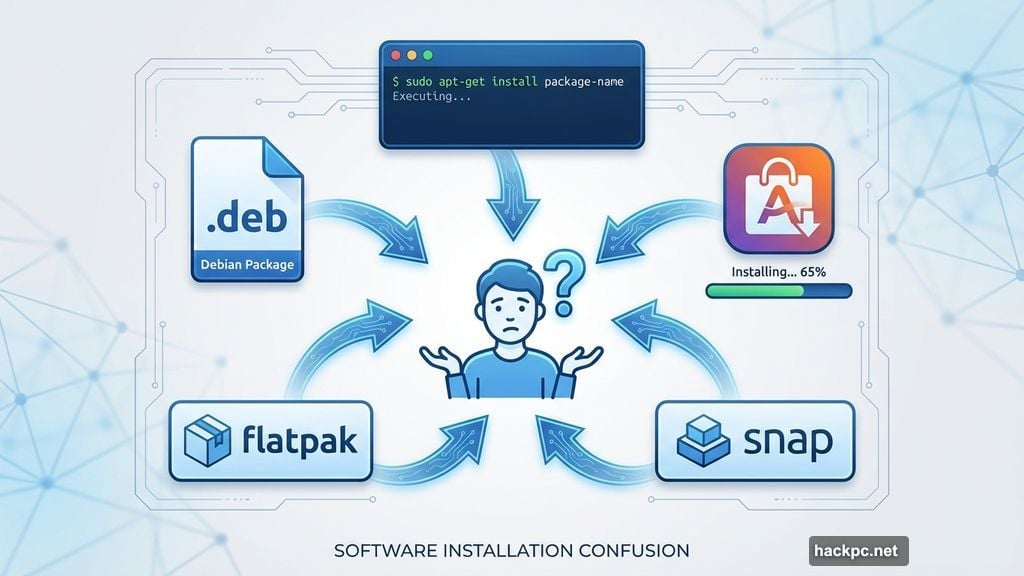
Installing software on Linux somehow got more confusing than it was 20 years ago. Back then, you used apt-get from the terminal. Now you’ve got the App Center, snap packages, .deb files, and flatpaks. Which one works? Who knows until you try.
Gaming Works. Sort Of
Getting Steam running took hours and required installing outdated 32-bit libraries. It crashed twice during setup.
Once it finally worked, Steam games refused to recognize my audio interface. They only played through the laptop’s built-in speakers. Not the USB interface sitting right there, fully recognized by the system.
Yes, Linux is now arguably the best platform for PC gaming. But that statement comes with a million asterisks. The experience still isn’t as smooth as just using a console or Windows.
Music Production Hit Different Walls
I got Bitwig installed and running. It recognized my audio interface, which Steam couldn’t manage. Small victory.
But it acted fickle about MIDI controllers. Some worked. Others didn’t. No clear pattern to which ones. Plus, Bitwig crashed on first launch.
The bigger problem? I missed my favorite soft synths and effects. Arturia’s Pigments remains Windows and Mac only. Same with dozens of other VSTs I rely on for music production.
Sure, Bitwig’s native instruments are solid. Reaper is another viable option. But “viable” isn’t the same as “ideal.” I was compromising constantly.
Small Annoyances Became Big Frustrations
Sleep mode broke multiple things. If the laptop went to sleep while plugged in, it refused to reconnect to my external hard drive. It also stopped recognizing the SD card reader.
The only fix? Reboot the entire system.
Also, Ubuntu won’t wake on input from Bluetooth mouse or keyboard. I had to open the laptop lid to wake it when connected to my dock and external monitor. Every. Single. Time.
These aren’t showstoppers individually. But they add up. Death by a thousand paper cuts.
Linux Can Do Everything Now. But Should It?
For basic web browsing and writing, Ubuntu ran perfectly. Firefox worked flawlessly. Wi-Fi connected without issues. The XPS ran faster and quieter than it ever did with Windows.
I used Ubuntu as my primary work machine for a few days. Everything was fine. But most of my job happens in a web browser.
It’s everything else that falls apart.
I can game on Linux, but my Switch or PS4 offers a smoother experience. I can make music in Bitwig, but Ableton on macOS supports all my plugins and crashes less. GIMP and Darktable provide solid image editing. But they’re nowhere near as powerful as Lightroom and Photoshop.
Linux can do all the things now. Sometimes better than Windows. But for every task, there’s usually a better option elsewhere.
The Real Issue Nobody Mentions
Linux hasn’t completely overcome its fiddly nature. And I don’t want to waste time troubleshooting anymore.
Twenty years ago, tweaking my Ubuntu desktop was a hobby. I’d spend hours crafting the perfect note-taking workflow, meticulously customizing every aspect of my system.
Now that tinkering gets in the way of actual hobbies. I rediscovered my love of making music. I want to spend time producing tracks, not diagnosing why my MIDI controller suddenly stopped working.
The problem with Linux’s infinite customizability is you’re building a house of cards. One tiny change in some seemingly inconsequential library brings the whole system crashing down.
I don’t want another hobby. I need an operating system that stays out of my way.
Going Back Was the Wrong Move
My XPS now runs faster with Ubuntu than it ever did with Windows. That’s undeniably true. But speed means nothing when basic features randomly break.
Ubuntu works great if you stick to simple tasks. Web browsing, word processing, basic productivity. Perfect.
But the moment you need specialized software or hardware to cooperate reliably, the cracks appear. Steam takes hours to configure. Music production becomes a compromise. Photo editing lacks professional-grade tools.
Linux has improved dramatically since 2006. Even since 2019. But it still demands more patience and technical knowledge than I’m willing to invest.
I wanted a simple writing machine. Instead, I got another part-time job troubleshooting my own computer.
The XPS is going back in the closet. Some experiments aren’t worth continuing.


Comments (0)