
YouTube Music quietly killed free lyrics access. Now you get five views before hitting a paywall demanding $11 monthly.
Sounds ridiculous? It gets worse. Spotify announced the same move Friday. Plus, Apple Music already restricts lyrics to Premium subscribers. So this isn’t one company testing limits—it’s an industry-wide cash grab on a feature that should be basic.
Let’s break down what’s happening and why streaming services think they can charge you for words anyone can Google for free.
The Five-View Limit Nobody Asked For
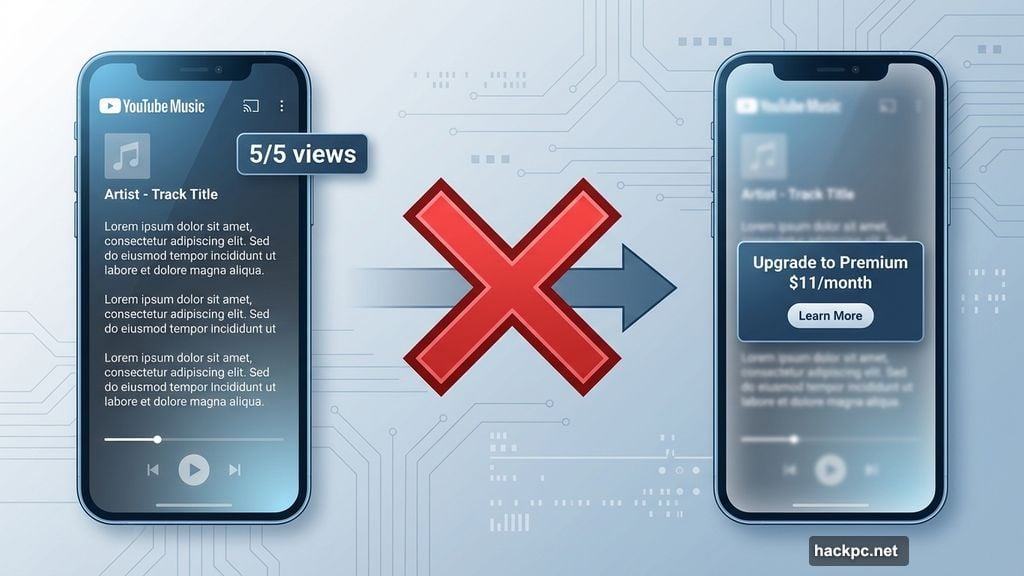
YouTube Music’s new system works like this: Free users get exactly five lyrics views. On your sixth attempt, only the first two lines appear. Everything else? Blocked behind an upgrade prompt.
That upgrade costs $11 per month for YouTube Music Premium. You get ad-free listening, offline downloads, and background playback. But the real question is whether anyone wanted lyrics paywalled in the first place.
Reports suggest YouTube tested this feature months ago. However, the company hasn’t confirmed when testing started or when the change rolls out globally. Some users already hit the limit. Others still see free lyrics without restrictions.
Nobody knows when the five-view counter resets either. Daily? Weekly? Monthly? YouTube hasn’t clarified that crucial detail.
Spotify Joins the Lyrics Lockdown
Spotify announced Friday it’s moving lyrics behind Premium too—but only in specific scenarios. Free users lose lyric access for songs downloaded offline. That’s right. Download a track for offline listening? No lyrics for you unless you pay.
Meanwhile, Spotify launched About the Song, a new beta feature providing track trivia and background information. Nice addition. But it feels hollow when basic lyrics get restricted simultaneously.
Apple Music already went this route. Their time-synced karaoke-style lyrics? Premium subscribers only. So three major streaming platforms now treat song words as premium content worth charging for.
Why This Feels Like a Money Grab
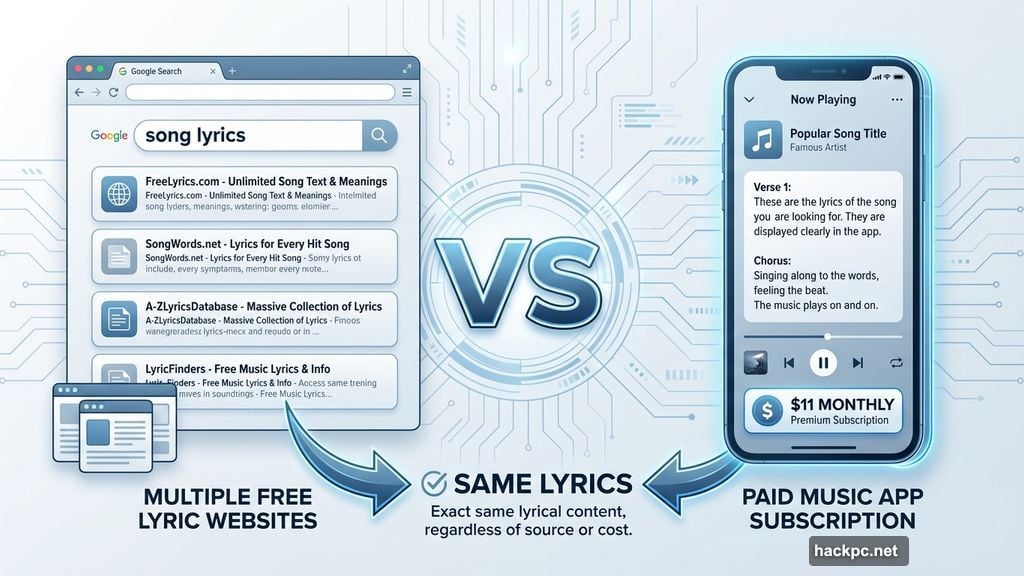
Here’s the problem: Lyrics aren’t proprietary content platforms create. They’re widely available online for free through countless lyric websites. A quick Google search delivers instant results without paywalls.
So what exactly are you paying for? The convenience of seeing lyrics inside your music app instead of switching to a browser. That’s it. You’re spending $11 monthly for mild convenience.
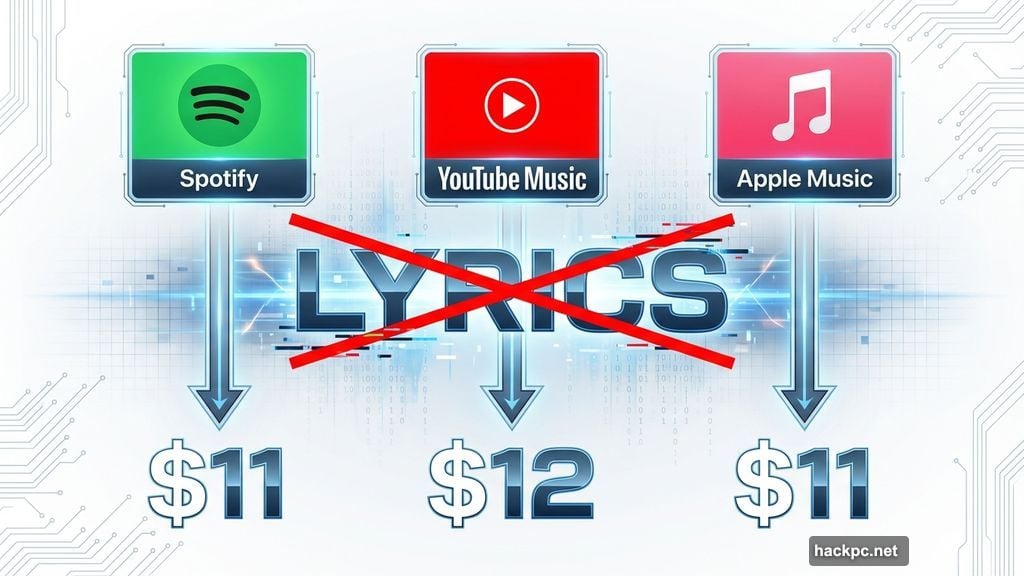
Streaming services already collect subscription fees from millions of users. YouTube Music Premium costs $11 per month. Spotify Premium runs $12 monthly. Apple Music charges $11 for individual plans. These companies generate billions annually from subscriptions alone.
Yet they’re nickel-and-diming users over lyrics. It’s not about covering costs or licensing fees. It’s about testing how much inconvenience drives conversions to premium tiers.
What Makes This Different From Other Paywalls
Some premium features make sense. Ad-free listening? Fair. Higher audio quality? Reasonable. Offline downloads? Understandable.
But lyrics? They’re essentially metadata. Song information that enhances listening but doesn’t require complex infrastructure or ongoing costs to provide. Blocking them feels petty rather than strategic.
Moreover, the five-view limit creates bizarre friction. Imagine discovering a new artist and wanting to understand their lyrics. You check five songs. Then the app blocks you from reading words to a sixth track until you pay. That’s not value—it’s artificial scarcity.
Other industries tried similar tactics. Remember when airlines charged for seat selection? Or when hotels added “resort fees” for basic amenities? Consumers pushed back against those nickel-and-dime strategies. Streaming services are betting music fans won’t.
Your Alternatives Still Exist
Good news: You don’t have to accept this. Plenty of free lyric websites exist that streaming platforms can’t paywall.
Genius.com remains the gold standard for lyrics plus annotations explaining meanings. Azlyrics.com provides clean, ad-supported lyrics for millions of songs. Musixmatch offers lyrics with community translations in multiple languages.
These sites work perfectly on mobile browsers. Sure, switching between your music app and browser adds a step. But that mild inconvenience beats paying $132 yearly just to read song words.
Some third-party apps integrate lyrics directly with streaming services. Check your app store for lyric apps that sync with your music library. Many offer free tiers with basic functionality.
Browser extensions also exist for desktop listening. Install one, and lyrics appear automatically without leaving your streaming platform. Most extensions pull from free lyric databases, costing nothing.
The Bigger Pattern Worth Watching
This isn’t really about lyrics. It’s about testing boundaries on what counts as “premium.”
Streaming platforms operate on thin margins despite massive user bases. They pay substantial licensing fees to record labels and artists. So executives constantly search for ways to boost revenue without raising base subscription prices.
The strategy? Take features that were free, rebrand them as premium perks, and see if users tolerate it. If most people upgrade or don’t complain loudly, the change sticks. If backlash hits hard, they can always revert and claim it was just a test.
We’ve seen this playbook before. Netflix split DVD and streaming services in 2011, causing customer outrage and quick reversal. Gaming companies added loot boxes until regulatory pressure forced changes. Social media platforms tested algorithmic feeds despite user preference for chronological posts.
Sometimes consumer pushback works. Sometimes companies push through anyway. The outcome depends on how strongly users resist.
What You Should Actually Do
Don’t upgrade just for lyrics. That’s exactly what these platforms want. Instead, use free alternatives and signal you won’t pay for basic features.
If enough users ignore the paywall and stick with free options, streaming services get a clear message: This monetization strategy doesn’t work. But if millions convert to premium because lyrics became slightly less convenient, expect more features to disappear behind paywalls.
Vote with your wallet. Or in this case, vote by keeping your wallet closed. Free lyrics exist everywhere online. Use them. Don’t reward companies for creating artificial problems then charging for solutions.
The streaming music industry already makes billions from subscriptions and ads. They don’t need your $11 to display song words. They just want it. Whether they get it depends entirely on whether users collectively say no.


Comments (0)