

OpenAI flipped the switch. ChatGPT now serves ads to free users. That changes everything.
For years, ChatGPT felt like a public utility. Free access to cutting-edge AI felt almost too good to be true. Turns out it was. Now ads clutter the experience unless you pay up.
But here’s the twist. If you’re ready to open your wallet, ChatGPT isn’t your only option anymore. The AI landscape exploded with competitors. Some offer better deals. Others provide features ChatGPT can’t match.
Let’s break down what $8 to $300 a month actually buys you across today’s top chatbots.
The New ChatGPT Pricing Reality
OpenAI launched three paid tiers. Each serves different needs and budgets.
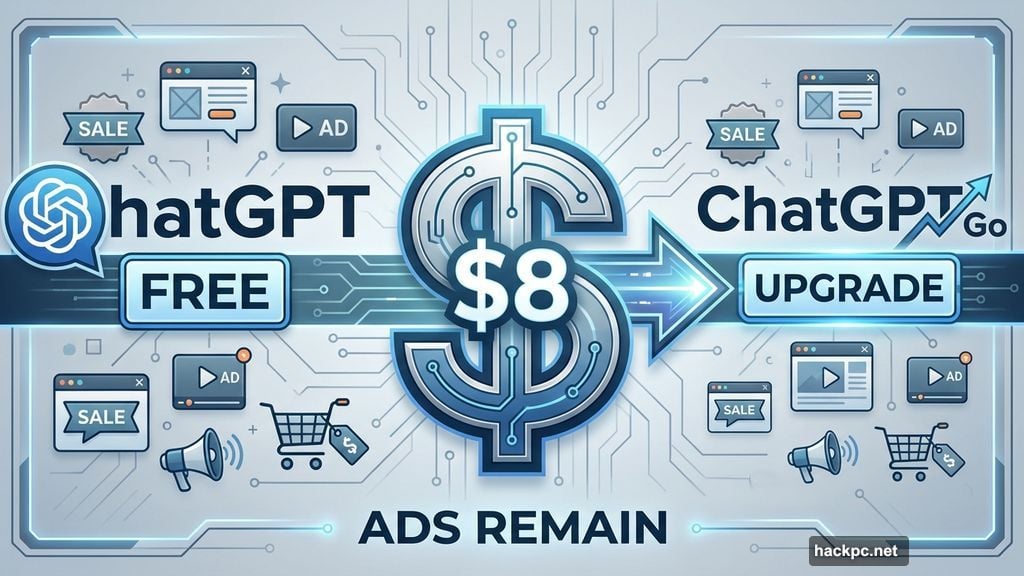
ChatGPT Go costs $8 monthly. You get higher message limits and better model access. But ads still appear. That’s right. You pay $8 and still see advertisements. Not exactly a compelling upgrade.
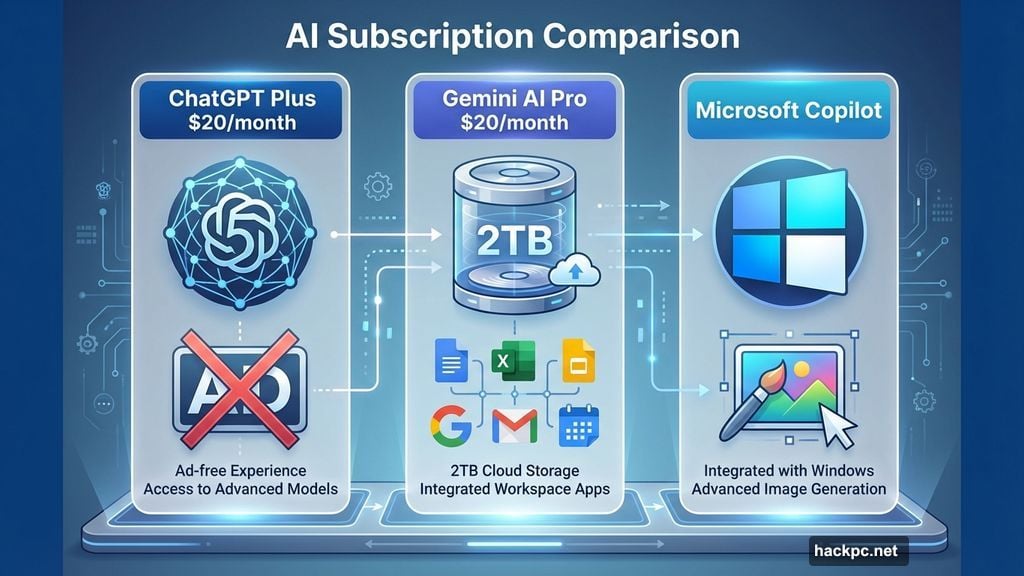
ChatGPT Plus runs $20 monthly. This tier finally removes ads. You unlock GPT-5 access, advanced voice mode with video, and limited Sora video generation. Plus subscribers get the ChatGPT agent and higher limits across messaging and uploads.
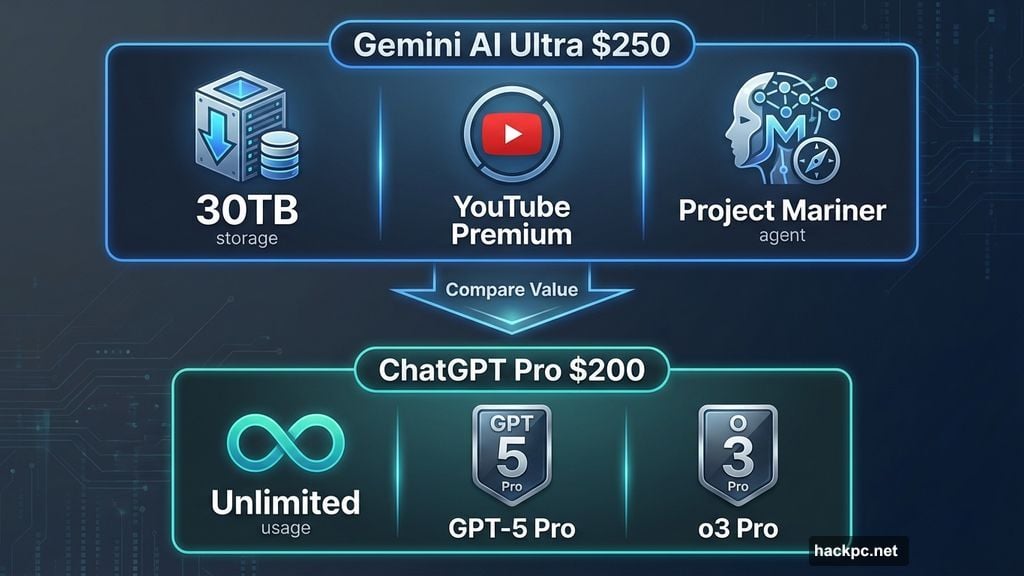
ChatGPT Pro demands $200 monthly. That’s serious money. In exchange, you receive unlimited everything. Unlimited messages, uploads, image generation. You also get GPT-5 Pro and o3 Pro models with significantly more computing power for complex tasks.
Most people won’t need Pro. Plus makes sense if you use ChatGPT daily. But Go feels like a half-measure that nobody asked for.
Google Gemini Bundles More Than Just AI
Google built Gemini into its entire ecosystem. That integration creates real value beyond just chatbot capabilities.
Gemini Plus costs $8 monthly. You get 200GB cloud storage plus extended access to Gemini 3 Pro models. For people already paying for Google storage, this tier essentially throws in better AI for free. Google currently offers 50% off the first two months.
Gemini AI Pro runs $20 monthly or $200 yearly. This tier provides 2TB storage across Photos, Drive and Gmail. You unlock Gemini across Workspace apps, the Flow filmmaking tool, and advanced models in Search’s AI Mode. Plus, you receive a 10% credit on Google Store purchases.
Gemini AI Ultra hits $250 monthly. Storage jumps to 30TB. Limits increase across every feature. You get YouTube Premium bundled in, plus early access to Project Mariner agentic prototype.
Here’s the kicker. Gemini’s free tier remains surprisingly capable. Most casual users won’t hit its limits. But Google power users who already live in Workspace might find the Pro plan compelling.
Microsoft Copilot Leans Into Its Strengths
Microsoft preinstalled Copilot on millions of Windows machines. That accessibility matters more than most people realize.
Copilot runs on ChatGPT’s underlying models but feels different. The image generation consistently produces more interesting results than competitors. During testing, Copilot created distinct visuals while ChatGPT and Gemini often generated similar outputs.
Copilot Personal costs $10 monthly or $100 yearly. You get higher limits and Microsoft 365 app integration. Access to Deep Research models and Actions feature that fills forms and assists with shopping.
Copilot Family runs $13 monthly or $130 yearly. Same features as Personal but covers multiple users.
Copilot Premium demands $20 monthly or $200 yearly. This unlocks the full feature set across Microsoft’s ecosystem. However, some advanced features like Copilot Notebooks require a business subscription.
For Windows users already invested in Microsoft’s ecosystem, Copilot makes obvious sense. The tight integration with Office apps creates genuine productivity gains.
Perplexity Dominates Research Tasks
Perplexity built its reputation on superior research capabilities. The free version limits you to three Pro searches daily. That’s enough for casual exploration but not serious work.
Perplexity Pro costs $20 monthly or $200 yearly. Unlimited Pro Searches and file uploads. Access to advanced models beyond the standard “best” option. Image generation unlocked. More file uploads per Space.
Pro subscribers also receive Comet Plus. That’s Perplexity’s AI-powered web browser with research tools baked directly into browsing. For people who spend hours researching topics, this integration saves real time.
Perplexity Max runs $200 monthly or $2,000 yearly. Even higher limits across all features. Priority processing during peak times. Early access to experimental features.
Max pricing targets enterprise users and power researchers. Most individuals won’t need this tier. But Pro makes sense for anyone hitting daily limits on the free plan.
Claude Keeps Limits Frustratingly Vague
Anthropic’s Claude topped our recent chatbot rankings. But its pricing page raises more questions than it answers.
Claude Pro costs $20 monthly or $200 yearly. You get 5x more usage during peak hours versus free tier. But Anthropic doesn’t clearly define “usage.” If you send messages of roughly 200 sentences at 15-20 words each, expect about 45 messages every 5 hours.
Pro unlocks Claude Code, unlimited Projects, Research mode access, and more model options. But those vague limits feel frustrating compared to competitors’ clearer boundaries.
Claude Max runs between $100-200 monthly per person. Even higher usage limits. Increased output across all tasks. Priority access during traffic spikes. Early feature access.
Max targets Claude power users willing to pay premium prices. Most people should try Pro first to see if they hit those mysterious limits.
Grok Charges Premium Prices
X’s Grok costs significantly more than competitors. Whether that premium is justified depends on your specific needs.
SuperGrok demands $30 monthly or $300 yearly. Extended access to Grok 3 and 4. Token limits jump to 128,000. Priority voice access. Imagine image model included. Access to Ani and Valentine AI companions.
SuperGrok Heavy runs $300 monthly or $3,000 yearly. Preview access to Grok 4 Heavy. Extended Grok 4 access. Unlimited Grok 3 usage. Higher token counts. Early feature access.
Those prices dwarf competition. Unless you’re deeply embedded in X’s ecosystem or need Grok’s specific capabilities, cheaper alternatives make more sense.
The Free Plans Still Work for Most People
Here’s what nobody wants to admit. Free chatbot plans remain surprisingly capable for casual use.
ChatGPT’s free tier handles basic text generation and simple queries. Gemini provides solid performance without spending a dime. Claude’s free version offers reasonable limits for occasional users.
You only need paid plans if you regularly hit usage limits. Or if you need advanced features like unlimited image generation, priority processing, or professional integrations.
Before upgrading, track your actual usage for a week. Count how many queries you send. Note when you hit limits. Most people discover they don’t need premium tiers nearly as often as they thought.
Which Plan Actually Makes Sense
Start with your specific needs. Not what sounds impressive in feature lists.
For Google users: Gemini Plus or Pro bundles cloud storage you’d pay for anyway. The AI becomes essentially free when you factor in storage costs.
For Windows users: Copilot integrates deeply with tools you already use daily. That tight connection creates real efficiency gains.
For researchers: Perplexity Pro eliminates frustrating daily search limits and adds browser integration that competitors lack.
For power users: Claude Pro or ChatGPT Plus provide sufficient capabilities for demanding work without breaking budgets.
For enterprises: The $200+ tiers target teams with specific needs. Individual users rarely justify these costs.
Most people should start with the $20 tier from their preferred platform. Use it for a month. Track whether you regularly hit limits or use advanced features. Downgrade if you don’t need it. Upgrade if you consistently max out capabilities.
Ads might push people toward paid plans. But don’t let that pressure you into overspending. Free tiers still handle most tasks just fine.



Comments (0)