
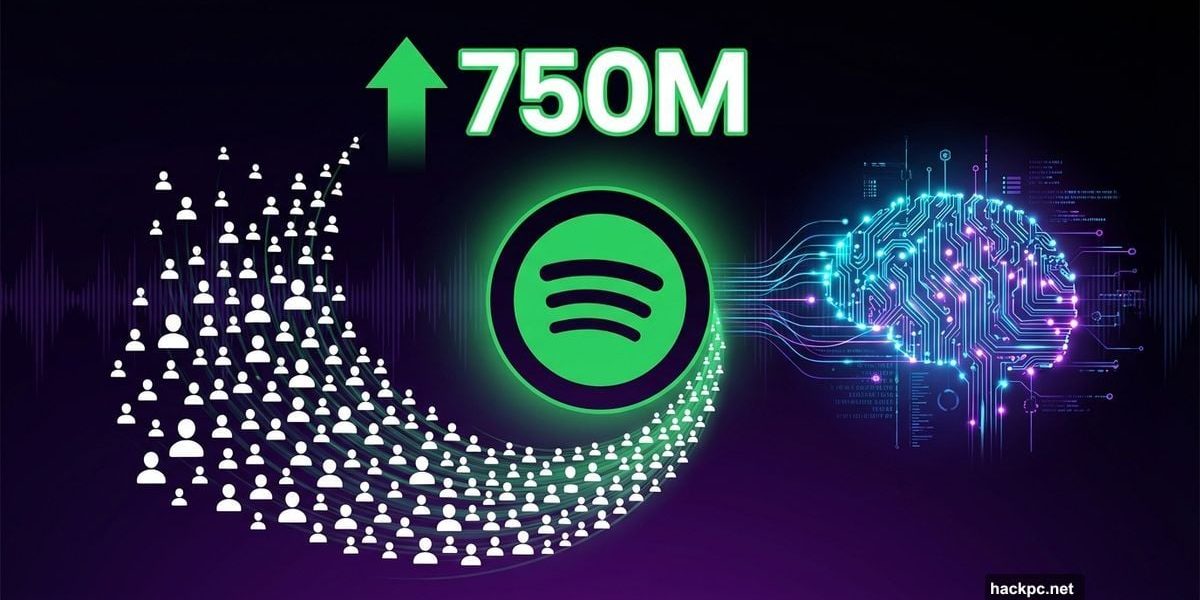
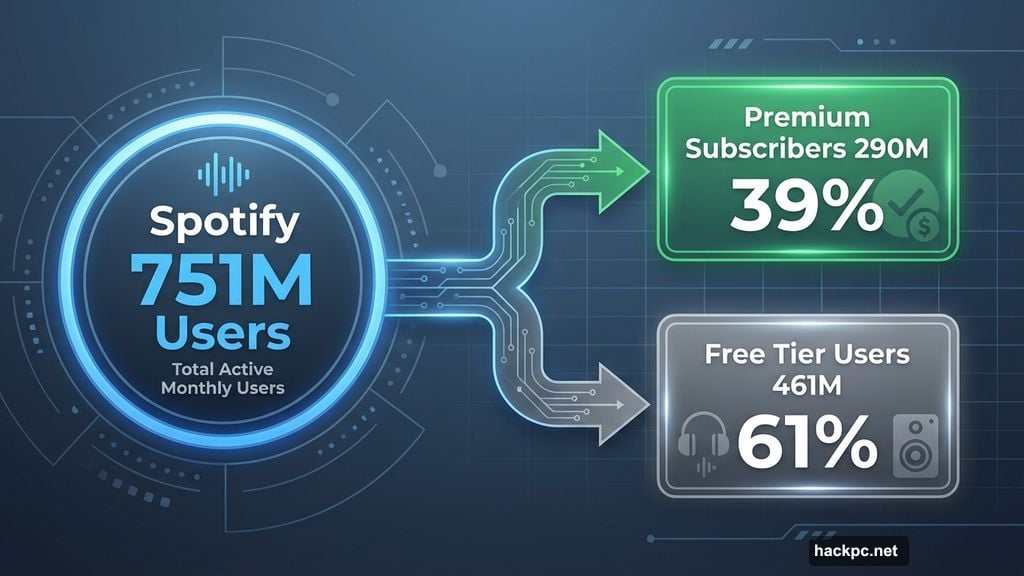
Spotify just posted record numbers. The streaming giant reached 751 million monthly users in Q4 2025. That’s an 11 percent jump from last year.
More impressive? Premium subscribers climbed to 290 million. That’s up 10 percent year-over-year, from 263 million. These aren’t small gains for a company already dominating music streaming.
So what changed? Spotify credits AI integration for much of this growth. But the details reveal a more complex story about how streaming platforms compete in 2025.
The Numbers Behind Spotify’s Surge
Let’s break down where these users actually live. Europe leads with 36 percent of premium subscribers. North America follows at 25 percent. The rest spreads across Latin America, Asia, and other regions.
But monthly active users tell only part of the story. The gap between total users and paying subscribers remains huge. 751 million total users minus 290 million premium subscribers leaves 461 million on the free tier.
That’s a 61 percent free user rate. Most people still won’t pay for ad-free music. Yet Spotify keeps growing both segments, which matters for long-term sustainability.
Plus, December’s Spotify Wrapped engaged over 300 million users. People shared their year-end music stats 630 million times across 56 languages. That’s free marketing money can’t buy.
AI Integration Made the Difference
Spotify’s Co-CEO Gustav Söderström made bold claims about artificial intelligence. “We consider ourselves the R&D department for the music industry,” he said in the earnings statement.
The company positions itself as the fast mover on new technology. They argue their job involves understanding tech quickly and capturing its potential. And they’ve done this repeatedly over the years.
However, here’s where things get interesting. In late 2025, Spotify announced plans to remove AI “slop” from its platform. They promised “artist-first AI music products” instead.
The specifics stayed vague. Nobody knows exactly what “artist-first” means in practice. Will AI-generated music face restrictions? Or will Spotify just curate it differently?
Meanwhile, competitors like Apple Music and YouTube Music also push AI features. Spotify’s advantage comes from implementing faster, not necessarily better. Speed wins in streaming wars.
What Changed From Q3 to Q4
Third quarter 2025 showed 713 million monthly users. Fourth quarter jumped to 751 million. That’s 38 million new users in just three months.
Premium subscribers grew from roughly 270 million to 290 million in the same period. So about 20 million people upgraded to paid plans. The rest joined the free tier.
This growth pattern suggests Spotify’s AI features attracted users. But most still resist paying. The company needs to convert more free users to premium eventually.
Moreover, the music industry benefits when platforms like Spotify succeed. More users means more streams. More streams mean more royalty payments to artists and labels.
Yet artist payment rates remain controversial. Spotify pays roughly $0.003 to $0.005 per stream. That’s pennies unless you rack up millions of plays. Most artists struggle to earn meaningful income from streaming alone.
The Streaming Wars Heat Up
Spotify faces serious competition in 2025. Apple Music has over 100 million subscribers. Amazon Music exceeds 100 million. YouTube Music keeps growing too.
But Spotify maintains its lead with 290 million premium subscribers. Nobody else comes close yet. Their secret weapon? Data and personalization.
The platform knows what you listen to, when, and how often. That data powers recommendations that keep users engaged. Plus, features like Discover Weekly and Daily Mixes feel personal.
AI makes these features smarter. The algorithms learn your taste faster. They surface new artists you’ll probably like. This creates a stickiness other platforms struggle to match.
However, this raises privacy concerns. Spotify collects massive amounts of listening data. They claim it improves the experience. But some users worry about how much the company knows.
Europe Leads, But For How Long?
Europe’s 36 percent premium subscriber share leads globally. North America’s 25 percent comes second. Why does Europe dominate?
Music streaming gained traction earlier in Europe. Cultural factors play a role too. Europeans adopt subscription services faster than other regions.
But North America represents Spotify’s biggest revenue opportunity. Premium subscriptions cost more in the US and Canada. So even though Europe has more subscribers, North America might generate similar revenue.
Plus, Asia’s streaming market remains largely untapped. China has its own platforms like Tencent Music. But India, Southeast Asia, and Japan offer growth potential.
Spotify expanded into India years ago. Yet adoption stayed slow due to low subscription prices and competition from YouTube. Cracking Asia requires patience and localized strategies.
Wrapped Drove Massive Engagement
December’s Spotify Wrapped campaign crushed previous years. Over 300 million users engaged with their personalized year-end summaries.
People shared Wrapped results 630 million times across 56 languages. That’s organic reach most marketing campaigns dream about. Users essentially advertised Spotify for free.
Why does Wrapped work so well? It taps into social sharing psychology. People enjoy showing off their music taste. The colorful graphics make great social media content.
Moreover, Wrapped creates FOMO (fear of missing out). If your friends post their results, you want to see yours too. This drives engagement and app opens in December.
Competitors tried copying Wrapped. Apple Music released Replay. YouTube Music has Recap. But Spotify’s version remains the most popular and most shared.
AI Slop Cleanup Remains Vague
Spotify promised to remove AI “slop” from the platform. But what counts as slop?
The company never defined it clearly. Presumably, they mean low-quality AI-generated music flooding the platform. Artists and labels complained about this problem for months.
Fake artists with AI-generated tracks earn streams by gaming Spotify’s algorithms. They stuff playlists with generic background music. This diverts royalties from real artists.
However, Spotify’s solution stays unclear. Will they ban all AI music? Or just poorly made tracks? How do they verify which music uses AI?
The “artist-first” approach sounds good. But implementation matters more than promises. Artists need concrete policies that protect their earnings and visibility.
The Royalty Payment Problem Persists
Spotify’s growth helps the music industry overall. But individual artist payments remain tiny.
At $0.003 to $0.005 per stream, you need millions of plays to earn meaningful money. Most independent artists never reach that threshold.
Meanwhile, major labels negotiate better deals. They get higher per-stream rates. This creates a two-tier system favoring established artists and label-backed musicians.
Plus, Spotify Premium’s higher payouts don’t compensate for decades of declining music sales. Streaming replaced album purchases but pays far less.
Some artists pull their catalogs from Spotify in protest. Others embrace the platform reluctantly because it’s where listeners are. There’s no easy alternative.
What Comes Next for Spotify
Spotify’s 751 million users represent massive scale. But the company still isn’t consistently profitable. Operating costs remain high.
AI integration should reduce some costs. Automated curation requires fewer human curators. Personalization algorithms reduce marketing spend by keeping users engaged.
However, content costs keep rising. Record labels demand higher royalty rates. Podcast exclusive deals drain cash. Spotify pays millions to lock in popular shows.
The balancing act between growth and profitability continues. Investors want both. Spotify delivers growth but struggles with consistent profits.
Plus, competition won’t ease. Apple, Amazon, and Google have deeper pockets. They can afford to subsidize music streaming with profits from other businesses.
My Take: Growth Hides Deeper Issues
Spotify’s user numbers look impressive. But dig deeper and problems emerge.
The 61 percent free user rate means most people won’t pay. Converting them to premium requires better value propositions. Current features don’t convince most users to upgrade.
Moreover, the AI strategy raises questions. Removing “slop” sounds great. But vague policies create uncertainty for creators. Artists need clear rules about AI usage.
Plus, royalty payments remain unfairly low. Spotify’s growth benefits the platform more than most artists. That’s unsustainable long-term. Musicians won’t create content if they can’t earn living wages.
Wrapped proves Spotify understands user engagement. They excel at creating shareable moments. But flashy campaigns can’t replace fair compensation for creators.
So yes, 750 million users is impressive. But success requires solving fundamental fairness issues. Otherwise, this growth won’t benefit the music community that makes Spotify possible.



Comments (0)