
Music streaming has never been better. Services are packed with lossless audio, audiobooks, podcasts, and catalogs stretching past 100 million tracks each.
But picking the right one still takes some thought. Price, sound quality, ecosystem fit, and extra features all matter. So let’s break down everything you need to know to find your perfect match.
Spotify Still Leads the Pack
If you want one answer, here it is: Spotify Premium is the best streaming service for most people.
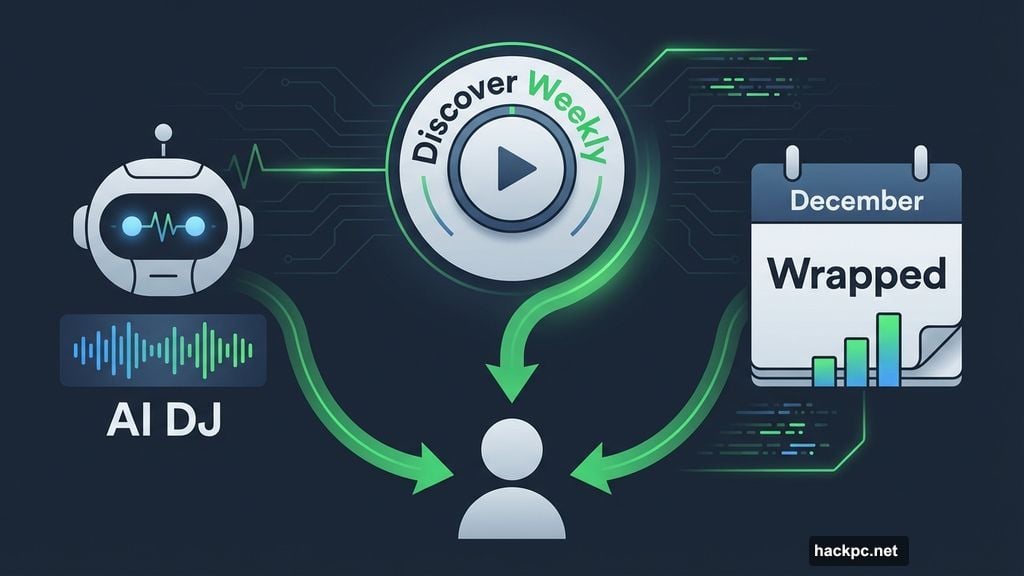
At $13 a month, you get lossless audio at no extra charge, a genuinely great free tier, and features like Spotify Connect that make pairing with speakers and devices effortless. Plus, Discover Weekly and the AI DJ are genuinely fun ways to find new music.
The annual Spotify Wrapped tradition has become a cultural moment. And now the service offers on-demand stats year-round, not just in December. Spotify also includes 15 hours of audiobook listening per month, making it a real all-in-one entertainment platform.
The downsides? Ads on the free tier can feel repetitive. And if you never touch audiobooks, you’re paying for something you don’t use. But for sheer versatility across devices and platforms, nothing else comes close.
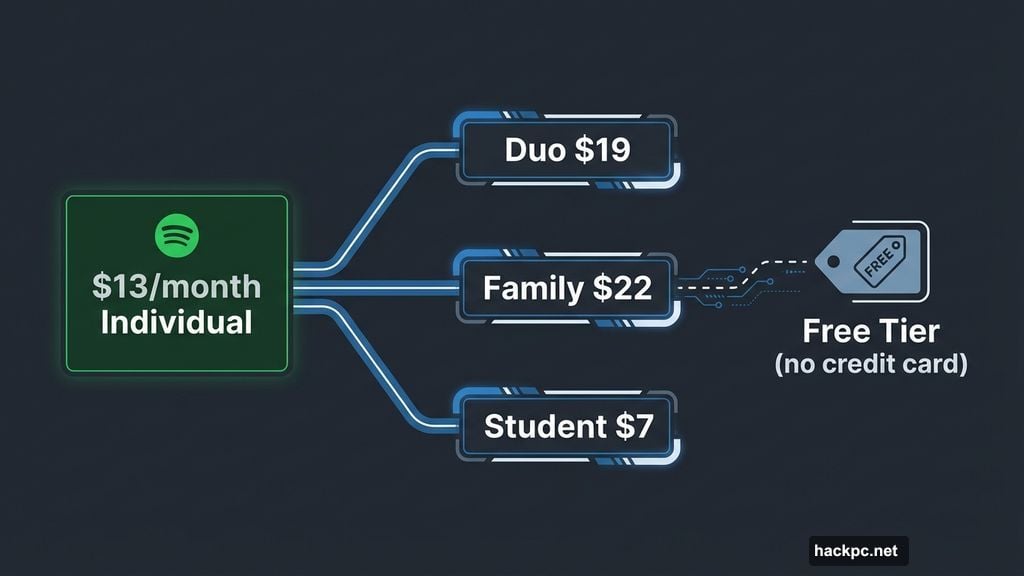
Pricing: Individual $13/month, Duo $19, Family $22. Student rate is $7. Free tier available without a credit card.
Apple Music: The Best Runner-Up
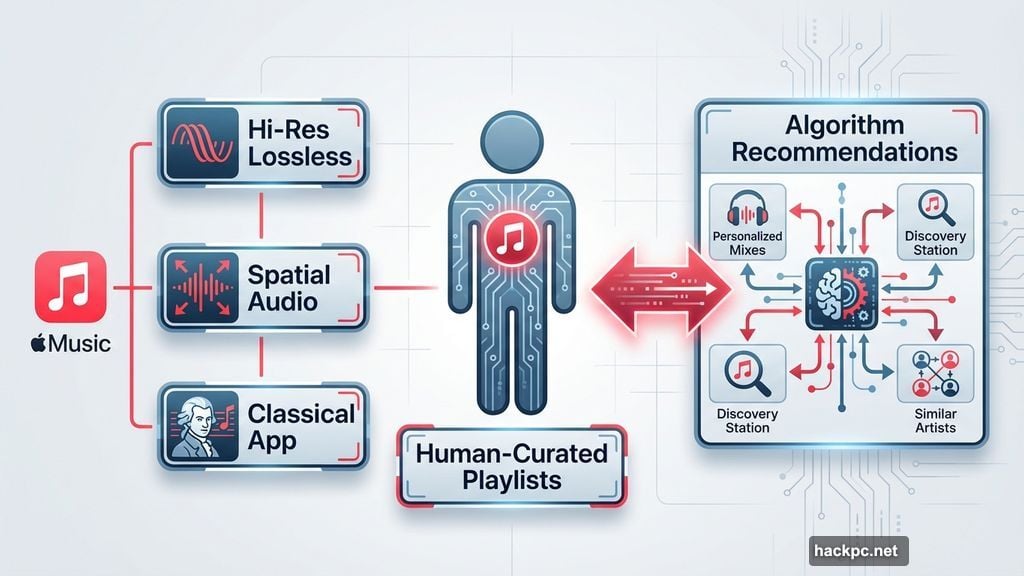
Apple Music costs $11 a month and punches well above its weight on sound quality. You get hi-res lossless audio, spatial audio mixes, and access to the dedicated classical music app, all at no extra charge.
The catalog hits 100 million tracks, and Apple pairs algorithm-driven recommendations with human-curated playlists from actual musicians and tastemakers. That personal touch matters more than people realize.
So why doesn’t Apple Music top the list? Honestly, it’s less fun than Spotify. The interface feels a bit stiff, and sharing playlists or discovering community features isn’t as smooth. Also, it works best inside the Apple ecosystem. Android and PC users get a functional but less seamless experience.
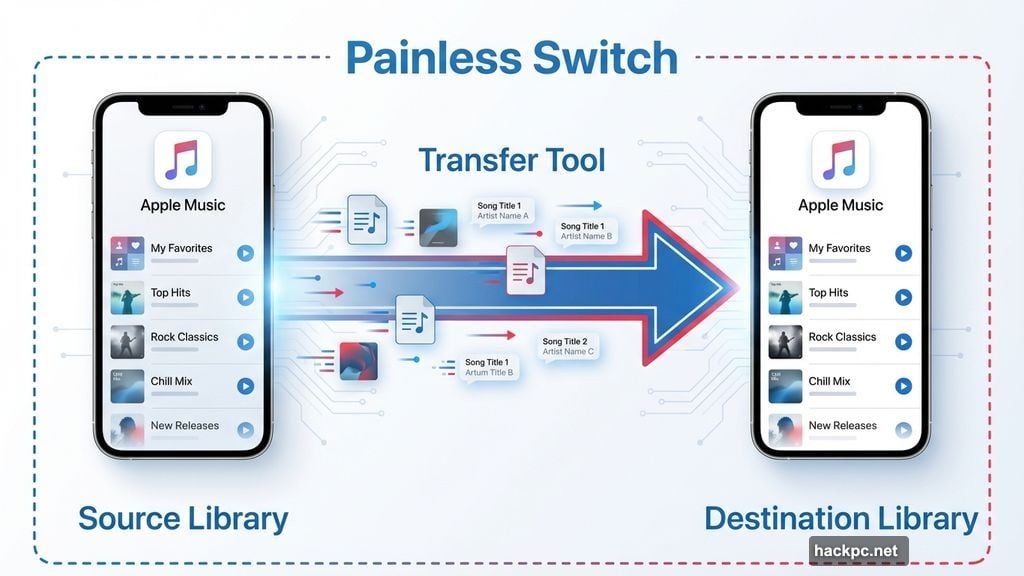
That said, Apple recently released a tool to transfer your Spotify library over to Apple Music. If you’re ready to switch, the process is painless.
Pricing: Student $6, Individual $11, Family $17. Free trial is 90 days, the longest of any service.
Tidal: The Audiophile’s Everyday Driver
Tidal used to feel like a premium service with a premium price to match. Not anymore. The service dropped its expensive Hi-Fi Plus tier and now offers an all-inclusive plan at just $11 a month.
Everyone gets hi-res audio. No tiered system, no hidden upgrades. And Tidal is actively replacing its old proprietary MQA files with hi-res FLAC, which means better compatibility with the gear you already own.
The catalog sits at 110 million tracks, the largest claimed number among major services. Tidal also leans heavily into artist profiles, record reviews, and concert livestreams. If music culture matters as much as music itself, this service delivers.
The interface isn’t quite as intuitive as Spotify’s, and the catalog can feel thinner in niche genres. But for urban music fans and serious listeners who don’t want to pay a premium, Tidal hits a sweet spot few services can match.
Pricing: Student $5.50, Individual $11, Family $17.
Amazon Music Unlimited: Smart Choice for Prime Members
If you already pay for Amazon Prime, Music Unlimited costs $11 a month as an add-on. Without Prime, it’s $12. Either way, you’re getting hi-res audio, Dolby Atmos spatial mixes, and a catalog of over 100 million tracks.
Amazon also bundles one audiobook per month with the Unlimited plan. So if you’re the type who listens to one book every few weeks, this is a genuinely compelling deal.
The interface has improved a lot. Playlists, genres, and podcasts all live on the main page now, and lyrics pop up automatically on the now-playing screen. Sony 360 Reality Audio support is also included, which sounds excellent on compatible headphones.
The main limitation? Artist profiles skip biographies entirely, which makes discovering new musicians feel a bit cold. And the music locker feature that Amazon once offered is long gone. But for Prime households, this is an easy upsell that delivers real value.
Pricing: Prime members $12, non-Prime $13, Family $22. 90-day free trial available.
Qobuz: Built for People Who Love Owning Music
Qobuz occupies a unique corner of the streaming world. Yes, it’s a full streaming service. But it also runs its own hi-res download store, letting you actually buy albums in 24-bit quality.
The Studio Premier plan costs $13 a month or $130 yearly. Sublime Plus runs $180 annually and comes with a discount on store purchases. Students get an exceptional deal at just $5 a month.
Sound quality is the headline here. Qobuz streams 24-bit audio without requiring any specialized decoder hardware. Just plug in a good pair of headphones and listen. The catalog reaches 100 million tracks, and based on testing, it handles obscure and independent artists surprisingly well.
The 2025 addition of Qobuz Connect lets you stream directly from the app to compatible hi-fi systems, bringing it in line with Tidal and Spotify’s similar features. The one gap? No spatial or Dolby Atmos audio. But for purists who prefer clean stereo in the highest resolution possible, that’s probably not a dealbreaker.
Pricing: Student $5, Studio Premier $13/month or $130/year, Family $22.
YouTube Music: The Best Option for Android Users
YouTube Music launched as Google Play Music’s replacement, and it’s grown into a solid service in its own right. At $11 a month, you get access to over 100 million tracks and a genuinely useful music locker that lets you upload your own files alongside the streaming catalog.
The ability to turn YouTube music clips into playlists is a neat trick that no other service offers. Radio stations are well-curated and update regularly. And now Apple HomePod users can set YouTube Music as their default, alongside Google’s Nest devices.
The audio quality tops out at 256Kbps AAC, which is the lowest ceiling among the major paid services. Most people won’t notice on Bluetooth speakers or phone earbuds. But if you’re listening on a decent home audio setup, the difference from lossless can be audible.
YouTube Premium at $14 a month includes YouTube Music for free, which makes it a strong bundle option if you already watch a lot of YouTube without ads.
Pricing: Student $5.50, Individual $11, Family $17.
Deezer: The Easiest Way to Switch Services
Deezer doesn’t always get the attention it deserves. The French service has operated in the US since 2016, built a catalog of 120 million tracks (the largest claimed number of any service), and offers hi-res audio on its $12 Premium plan.
The standout feature is library migration. Deezer lets new users transfer their playlists and libraries from competing services for free, using a tool called Tune My Music. That’s genuinely useful if you’ve spent years building playlists somewhere else and don’t want to start over.
A free mobile tier is available with ads, which gives you a no-cost entry point before committing. The main challenge is that competition at this price point is fierce, and Deezer lacks some of the community and discovery features that make Spotify sticky.
Pricing: Premium $12/month. Free tier available.
How These Services Actually Stack Up
Here’s a quick summary of the critical specs:
Catalog size: All services offer 100+ million tracks. Deezer claims 120 million, Tidal claims 110 million.
Lossless audio: Amazon Music, Apple Music, Qobuz, Tidal, and Spotify all offer hi-res lossless streaming. YouTube Music tops out at 256Kbps.
Free tiers: Spotify, Amazon (with ads), YouTube Music, and Deezer all offer free options. Apple Music, Tidal, and Qobuz do not.
Audiobooks: Spotify includes 15 hours monthly. Amazon includes one title per month. Others don’t offer this feature.
Music purchasing: Qobuz has the only dedicated download store. Apple Music and YouTube Music offer music lockers for files you already own.
Family plans: All services offer family pricing, ranging from $17 to $22 per month for up to six users.
Do You Actually Need Spatial Audio?
Spatial audio and Dolby Atmos music gets a lot of attention. But let’s be honest about what it means in practice.
Stereo music has existed since the 1950s. The global catalog of stereo recordings dwarfs what’s available in Atmos formats by a massive margin. Unless you have a dedicated Dolby Atmos home theater setup or headphones with head-tracking, the differences are often subtle.
That said, a well-mixed Atmos track on good equipment can be genuinely impressive. Think of it like a theme park ride. Fun when you experience it, but not something you need every single day. Apple Music and Amazon Music both include Atmos at no extra charge, so there’s no penalty for having it available.
Switching Between Services Without Losing Everything
Switching streaming services used to mean rebuilding playlists from scratch. Now you have options.
Deezer offers free library conversion for new users through Tune My Music. Apple has a built-in tool for importing Spotify libraries directly. For broader cross-service migration, Soundiiz charges $4.50 a month but handles transfers between almost any combination of platforms. Cancel once the transfer is done and you’re good.
YouTube Music is worth considering if you have a personal collection of MP3s or purchased digital albums. The music locker feature lets you upload those files and mix them seamlessly with the streaming catalog. Apple Music does the same thing, though organizing a large personal library can get time-consuming.
Which Service Should You Choose?
The answer really does depend on what you care about most.
For most people, Spotify is the right call. It works everywhere, sounds great with lossless now included, and has the best ecosystem of community features and device integration. The free tier is genuinely useful too.
If you’re deep in Apple’s world, Apple Music at $11 a month is a smarter choice. The sound quality is excellent, the spatial audio is a bonus, and the 90-day free trial gives you plenty of time to decide.
Audiophiles who want to own their music should give Qobuz a serious look. The combination of hi-res streaming and a proper download store is something no other service offers.
And if you’re already an Amazon Prime member, adding Music Unlimited for $11 a month is a no-brainer. Especially if you can make use of that monthly audiobook credit.
Whatever you choose, the quality floor has never been higher. Pick one, try the free trial, and trust your ears.



Comments (0)