
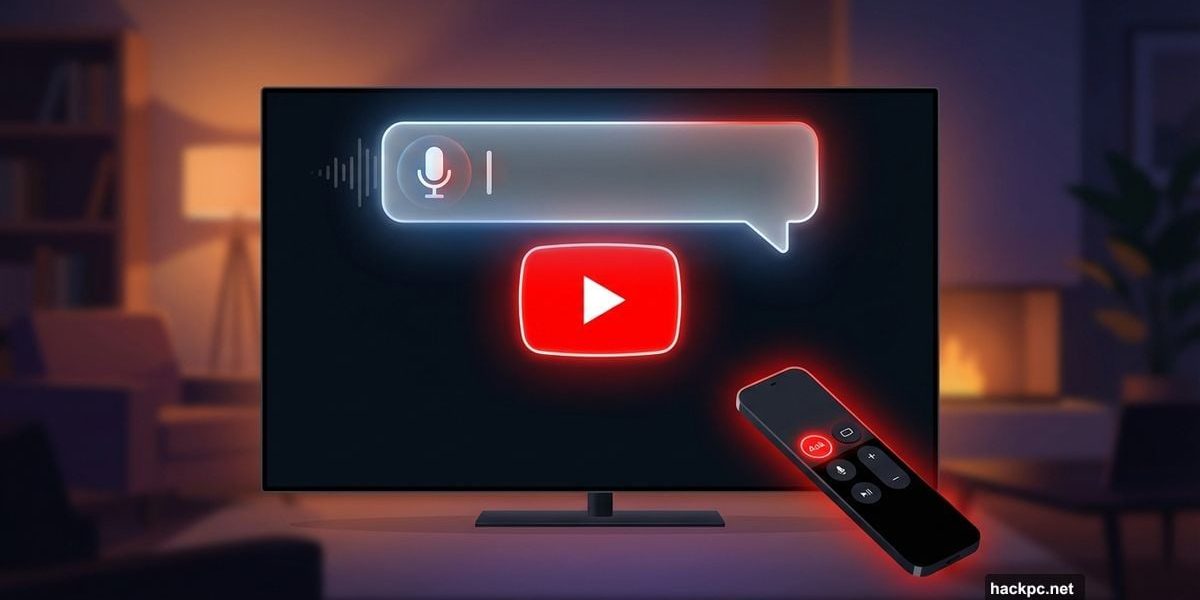
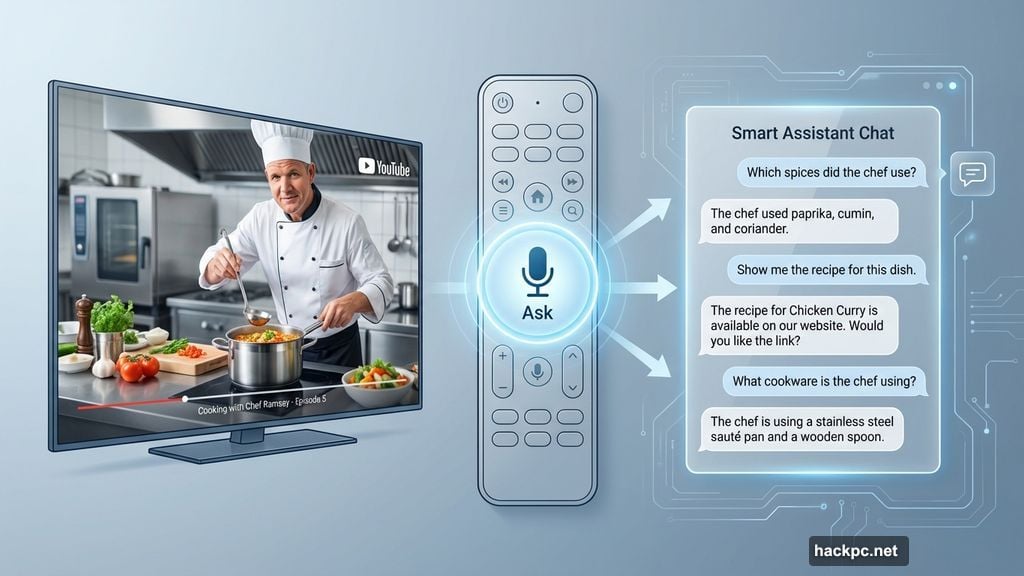
Picture this: you’re watching a cooking video on your TV, and you can’t quite catch which spices the chef used. Instead of grabbing your phone to search, you just press a button on your remote and ask. That’s exactly what YouTube is testing right now.
YouTube just expanded its conversational AI tool to smart TVs, gaming consoles, and streaming devices. Previously, the feature only worked on mobile and web. Now it’s coming to the biggest screen in your home, and the timing makes a lot of sense.
YouTube on TV Is Bigger Than Ever
Here’s why this move matters. A Nielsen report from April 2025 found that YouTube now accounts for 12.4% of total television audience time. That puts it ahead of major platforms like Disney and Netflix. So when YouTube builds new features, the TV experience is increasingly where those features need to land.

The conversational AI tool originally launched in 2024 to help viewers explore content more deeply. The TV expansion is a natural next step given how the viewing habits of Americans have shifted toward the big screen.
How the Feature Works on TV
Using it is pretty simple. Eligible users see an “Ask” button appear on their TV screen while watching a video. Tap it, and the AI assistant pops up without interrupting the video.
From there, you have two options. The assistant suggests questions based on what you’re watching. Or you can press the microphone button on your remote and ask anything related to the video in your own words.
So if you’re watching a music documentary, you might ask about the history behind a particular song. Or while watching a travel vlog, you could ask about visa requirements for that destination. The answers come instantly, and you never have to leave the video or open another app.
Right now, the feature is available to a select group of users over 18. It supports five languages: English, Hindi, Spanish, Portuguese, and Korean.
Smart TV AI Is Getting Competitive
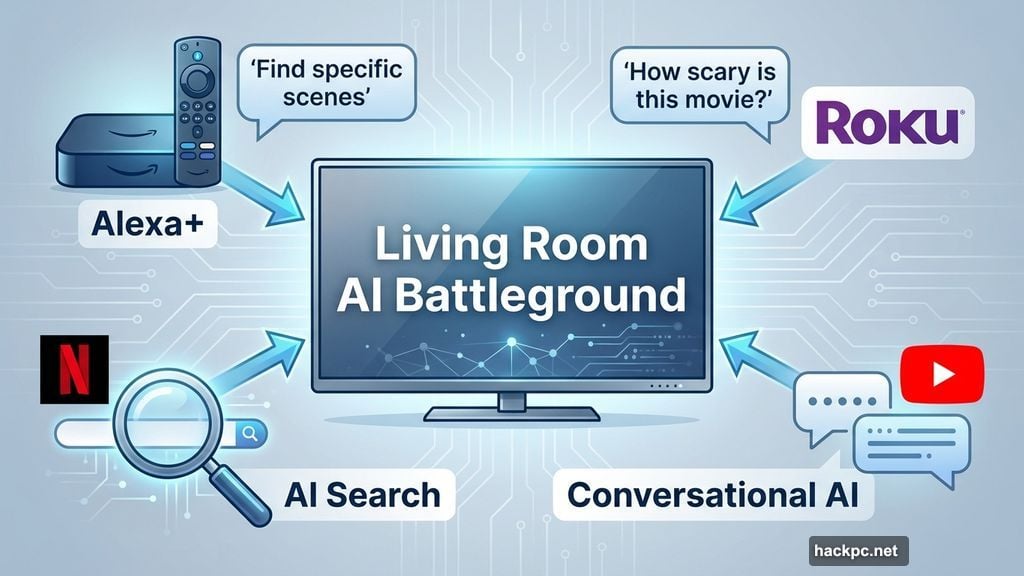
YouTube isn’t alone in pushing conversational AI to the living room. Several big names are moving fast in this space.
Amazon rolled out Alexa+ on Fire TV devices, letting users have natural conversations with their TV. You can ask Alexa+ for personalized content recommendations, hunt down specific scenes in movies, or get background info on actors and filming locations.
Roku upgraded its AI voice assistant to handle open-ended questions like “How scary is this movie?” or “What’s it actually about?” And Netflix is reportedly testing its own AI-powered search experience too.
The living room is quickly becoming the next major battleground for AI assistants.
YouTube’s Broader AI Push
The conversational AI expansion is just one piece of a larger strategy YouTube is rolling out. The platform recently launched a feature that automatically upgrades lower-resolution videos to full HD, which is a nice bonus for TV viewers in particular.
Plus, YouTube added a comments summarizer that helps you quickly catch up on what people are saying about a video. An AI-driven search results carousel gives smarter recommendations when you’re looking for something new to watch.
Creators are getting AI tools too. YouTube announced that creators will soon be able to make Shorts using AI-generated versions of their own likeness. And last week, YouTube launched a dedicated app for Apple Vision Pro, bringing content to a fully immersive virtual theater environment.
It’s clear YouTube is treating AI as a foundational layer across the entire platform, not just a single flashy feature.
Worth Getting Excited About?
Honestly, the TV version of this feature is the one that makes the most intuitive sense. When you’re watching on your phone, searching for more information is pretty easy already. But on the couch, with a remote in hand, that friction is real. Having an AI assistant built directly into your viewing experience feels genuinely useful here.
The feature is still experimental and limited to certain users for now. But if YouTube rolls it out broadly, it could meaningfully change how people interact with video content at home. Asking questions about what you’re watching, without ever leaving the experience, is a small change that might feel surprisingly big in practice.
Keep an eye on the Ask button next time you fire up YouTube on your TV. It might become one of those features you wonder how you lived without.



Comments (0)