
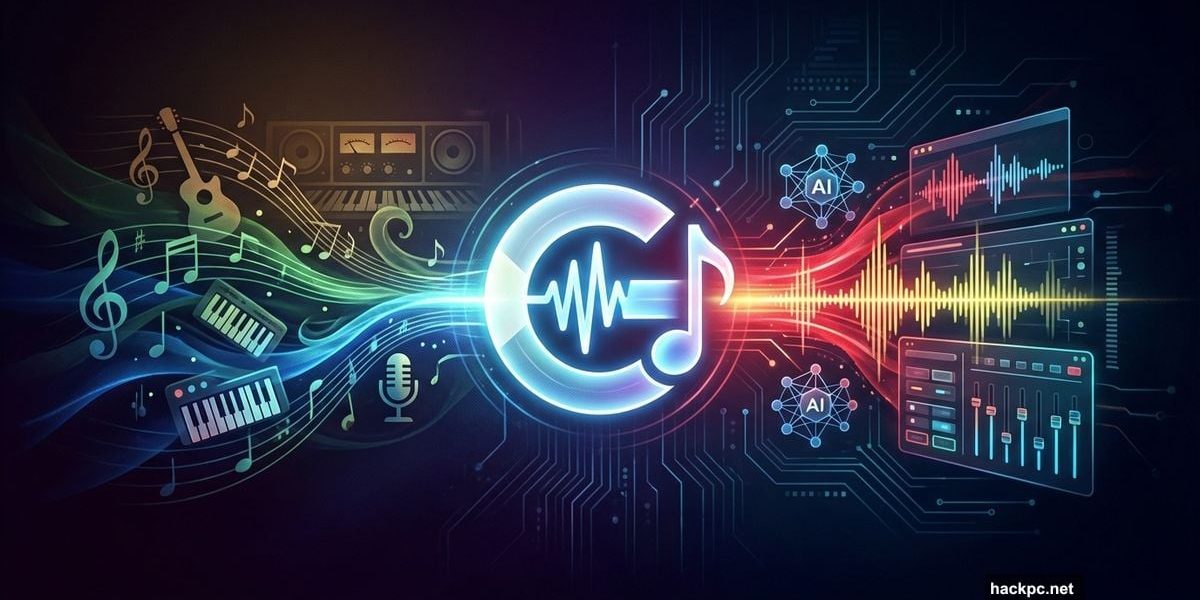
Creating a custom song used to take years of practice and expensive studio time. Now, it takes a single sentence.
Google Labs just brought generative AI music tool ProducerAI into its growing ecosystem. Plus, the platform comes with heavy backing from chart-topping hitmakers The Chainsmokers.
The move signals a massive shift in how we create audio. So let’s look at how this technology works, and why it has the entire music industry on edge.
DeepMind’s Lyria 3 Model Powers The Platform
ProducerAI isn’t just a basic digital soundboard. Instead, it runs on Google DeepMind’s advanced Lyria 3 music-generation model.
You simply type natural language requests into the prompt box. For instance, you can ask it to “make a lofi beat.” Then, the AI instantly turns your text inputs into high-quality audio outputs.
Google recently added these Lyria 3 capabilities to its flagship Gemini app. But ProducerAI offers a deeper experience. Elias Roman, Google Labs’ senior product director, calls the tool a true “collaboration partner” rather than a simple utility.
In fact, Roman uses it constantly in his daily life. He experiments with new genre blends, creates custom workout soundtracks, and even generates personalized birthday songs for his friends.
Human Creativity Meets Generative AI Tools
Professional artists are already pushing this technology to its limits. Take three-time Grammy-winning rapper Wyclef Jean, for example.
He recently used the Lyria 3 model and Google’s Music AI Sandbox for his track “Back From Abu Dhabi.” Specifically, he needed to know how a flute would sound in his mix. So he used Google’s tools to generate and add the instrument instantly.
But this process requires genuine artistry. Jeff Chang, a product director at Google DeepMind, notes that musicians aren’t just clicking a button a hundred times. Instead, it involves careful curation and thoughtful editing.
As Jean points out, humans still hold the ultimate advantage in music creation. AI possesses infinite information and technical skill. However, humans have a soul. Therefore, human emotion remains the most crucial ingredient in any hit song.
Copyright Lawsuits Shake The Music Industry
Not everyone is celebrating this technological leap. In fact, many prominent musicians strongly oppose these AI training methods.
Why? Most generative AI tools train on copyrighted data without artist consent. So, superstars like Billie Eilish, Katy Perry, and Jon Bon Jovi signed a massive 2024 open letter. They demanded that tech companies stop undermining human creativity.
The legal battles are already getting brutal. Recently, a group of music publishers sued AI company Anthropic for $3 billion. They claim the company illegally downloaded over 20,000 copyrighted songs, sheet music, and lyrics.
Plus, Anthropic already faced a $1.5 billion settlement for pirating books for AI training. However, the legal landscape remains murky. Federal judge William Alsup recently ruled that training AI on copyrighted data is legal, even though outright pirating is not.
Synthetic Music Generates Massive Record Deals
Despite the raging controversy, AI continues to rack up massive wins in the industry. Some legacy artists use it strictly for audio cleanup and restoration.
For example, Paul McCartney used AI noise reduction technology to clean up a low-quality John Lennon demo. Consequently, the resulting Beatles track, “Now and Then,” won a Grammy in 2025.
Meanwhile, fully synthetic music is topping Billboard and Spotify charts. Platforms like Suno are making everyday people incredibly rich.
Take Telisha Jones, a 31-year-old from Mississippi. She used Suno to turn her poetry into a viral R&B song called “How Was I Supposed to Know.” As a result, she signed a staggering $3 million record deal with Hallwood Media.
The line between human and machine music is officially blurred forever. Google’s integration of ProducerAI simply accelerates an inevitable shift in how art gets made.
You can fight the technology, or you can learn to wield it. But ignoring it is no longer a viable career strategy. So, try experimenting with these tools yourself. Treat AI as a quirky bandmate rather than a replacement, because the artists who adapt will ultimately define the next generation of sound.



Comments (0)