
Hachette just made publishing history. For the first time, a major traditional publisher has publicly pulled an already-released book over suspected AI-generated content.
The novel in question is Shy Girl, a horror story by Mia Ballard. And its collapse from celebrated debut to canceled title happened remarkably fast.
From Internet Sensation to Publishing Disaster
Ballard’s book had a genuinely exciting origin story. She self-published Shy Girl in February 2025, and it quickly caught fire online. Readers loved it. Hachette’s science fiction and fantasy imprint Orbit loved it too, signing the book for a traditional UK release in November 2025.
A US debut was set for spring 2026. It looked like a dream come true for a self-published author.
Then everything fell apart.
The New York Times Changed Everything
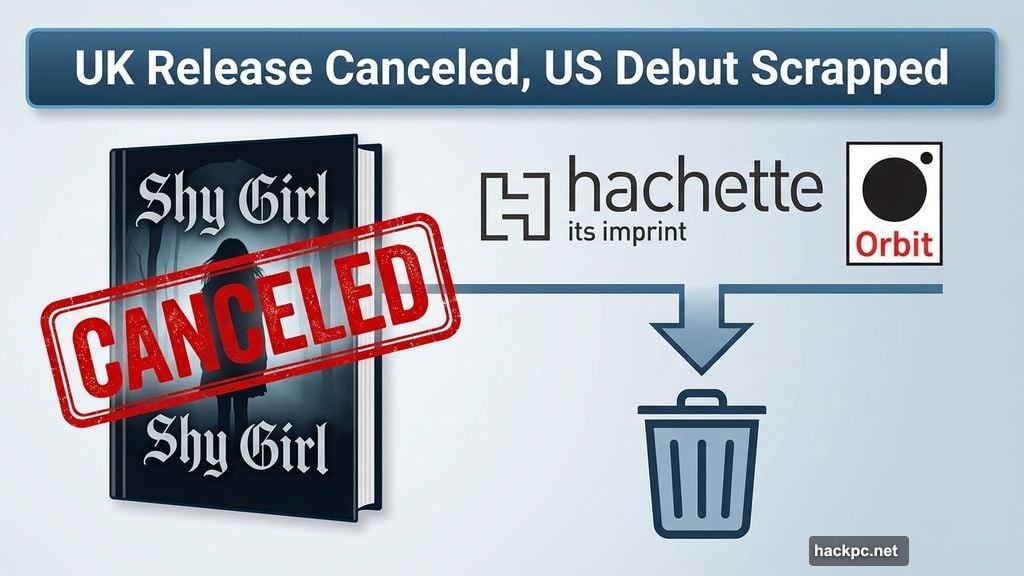
The New York Times published evidence suggesting generative AI played a significant role in writing Shy Girl. Hachette responded swiftly, canceling the planned US release and scrubbing the book from its website entirely.
“Hachette remains committed to protecting original creative expression and storytelling,” the publisher said in a statement to the Times.
Authors working with Hachette are required to disclose any AI involvement in their manuscripts. That disclosure policy now sits at the center of this controversy.
What the Evidence Actually Shows
Readers had been raising red flags for months before the Times story dropped. The concerns weren’t vague feelings. They were specific and documented.
YouTuber frankie’s shelf posted a detailed video analysis of the novel’s text. The video flagged linguistic patterns commonly associated with AI writing. It also highlighted some eyebrow-raising word repetition. The word “edge” appears 84 times throughout the book. “Sharp” shows up 159 times. Both words often appear in ways that feel abstract or disconnected from context.
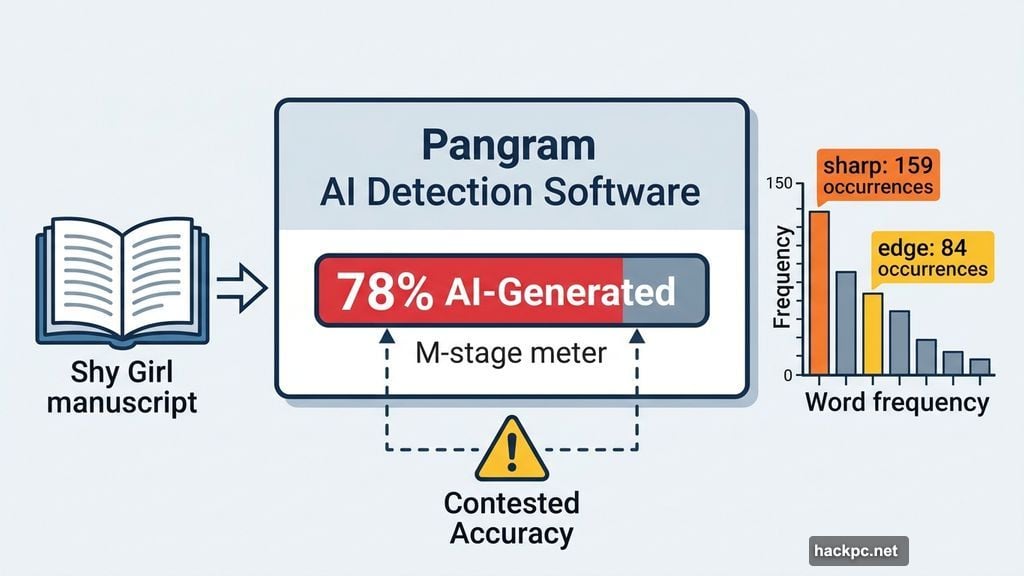
Then in January, Max Spero, founder and CEO of AI detection company Pangram, ran the full text of Shy Girl through his software. His conclusion? The novel tested as 78% AI-generated.
That’s a striking number. But AI detection tools aren’t perfect, and their results remain contested in court and publishing circles alike.
Ballard Says She Didn’t Do It
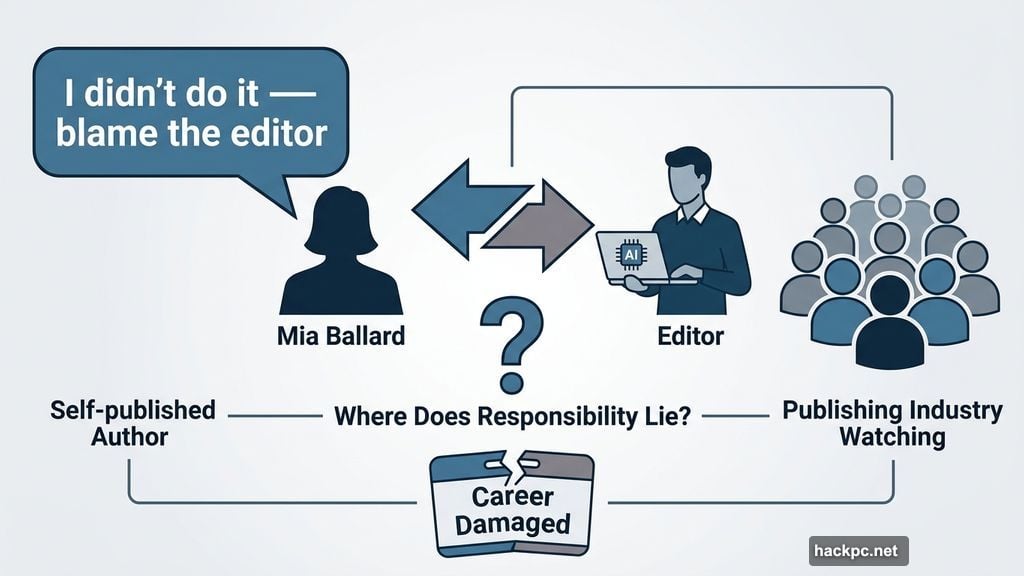
Mia Ballard has pushed back hard against the accusations. She doesn’t deny that AI-generated content appears in the manuscript. Instead, she points the finger at an editor who worked on the book.
“My name is ruined for something I didn’t even personally do,” Ballard wrote in an email to the New York Times.
It’s a painful situation, regardless of where the truth lands. If Ballard is telling the truth, she’s a first-time author whose career may be permanently damaged by someone else’s choices. If the situation is more complicated than that, the publishing industry is watching closely.
Why This Moment Matters for Publishing
This isn’t just one book’s story. Shy Girl’s cancellation represents something bigger happening across the entire publishing world right now.
AI-generated content has already flooded the self-publishing market. Amazon and other platforms have struggled to keep up with the volume of AI-written books hitting their stores. Traditional publishers like Hachette have held a harder line, requiring disclosure and promising to protect what they call original creative expression.
But Shy Girl shows how tricky enforcement actually is. A book can pass through editorial review, win over a respected publisher, and reach bookstore shelves before anyone catches what might be hiding inside the prose. Detection tools exist, but they’re imperfect. The linguistic fingerprints of AI writing are subtle enough that even careful editors can miss them.
And when a writer claims their editor introduced the problem, who bears responsibility? Publishing contracts, editorial relationships, and creative ownership all get tangled up in that question.
The honest answer is that the industry doesn’t have clean solutions yet. Hachette moved decisively here, but mostly because external journalists and readers did the investigative work first.
What happens in cases where nobody checks? That’s the question publishers everywhere should be asking themselves right now.


Comments (0)