
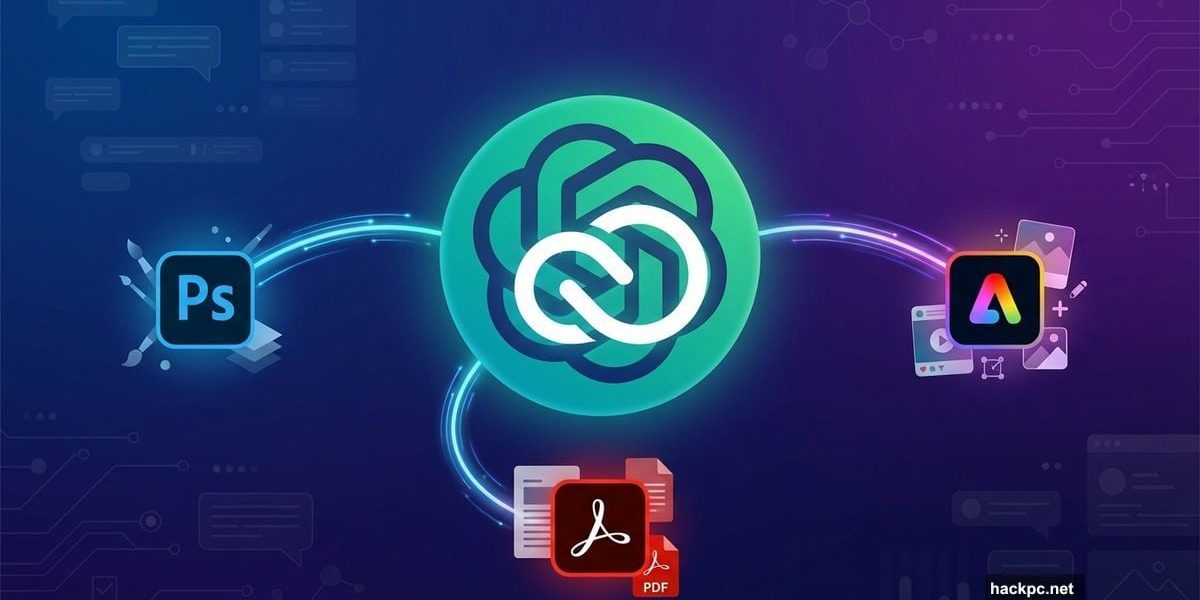
Adobe dropped a bombshell today. You can now use Photoshop, Acrobat, and Adobe Express directly inside ChatGPT.
No switching apps. No downloading software. Just ask ChatGPT to edit an image or create a PDF, and it happens right there in the chat window. Plus, it’s completely free to use through OpenAI’s website.
This changes how millions of people will interact with professional creative tools. But it also raises questions about Adobe’s strategy and what happens when AI companies start absorbing traditional software.
How It Actually Works
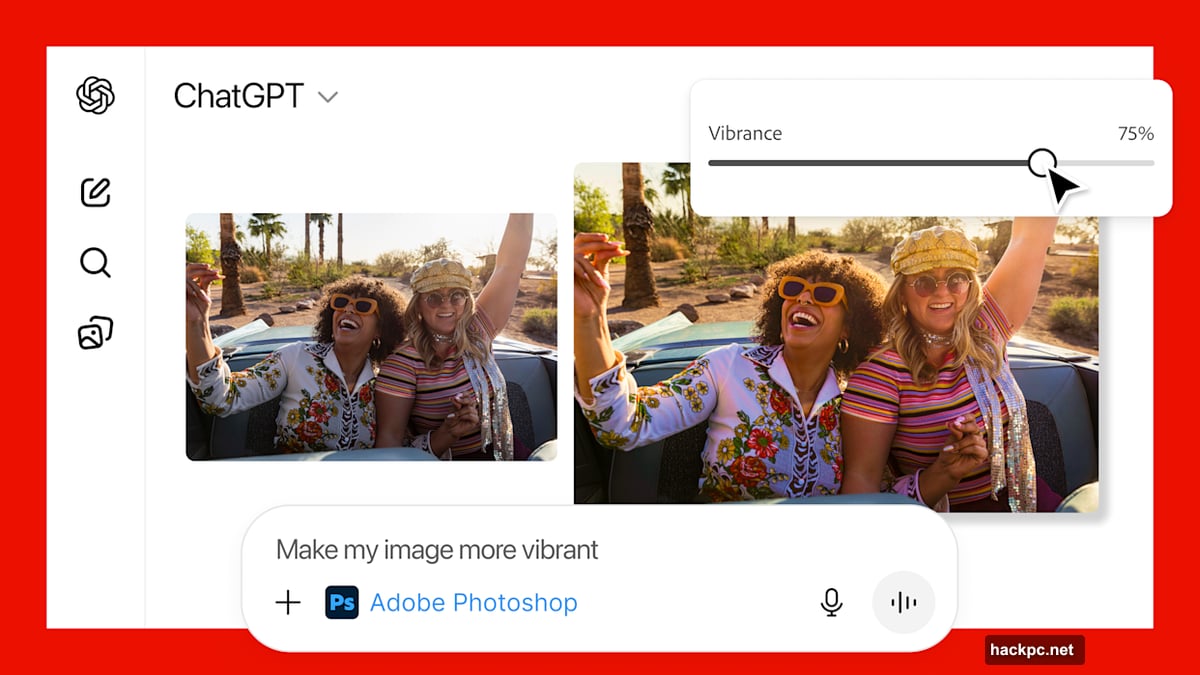
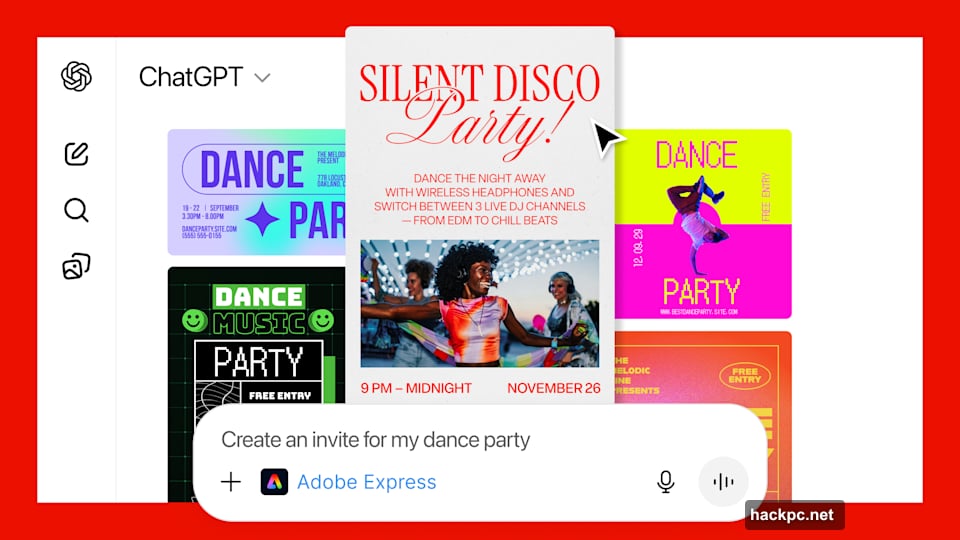
The integration is surprisingly simple. Just mention Photoshop, Acrobat, or Adobe Express in your ChatGPT prompt. Or select them from the plus menu before typing.
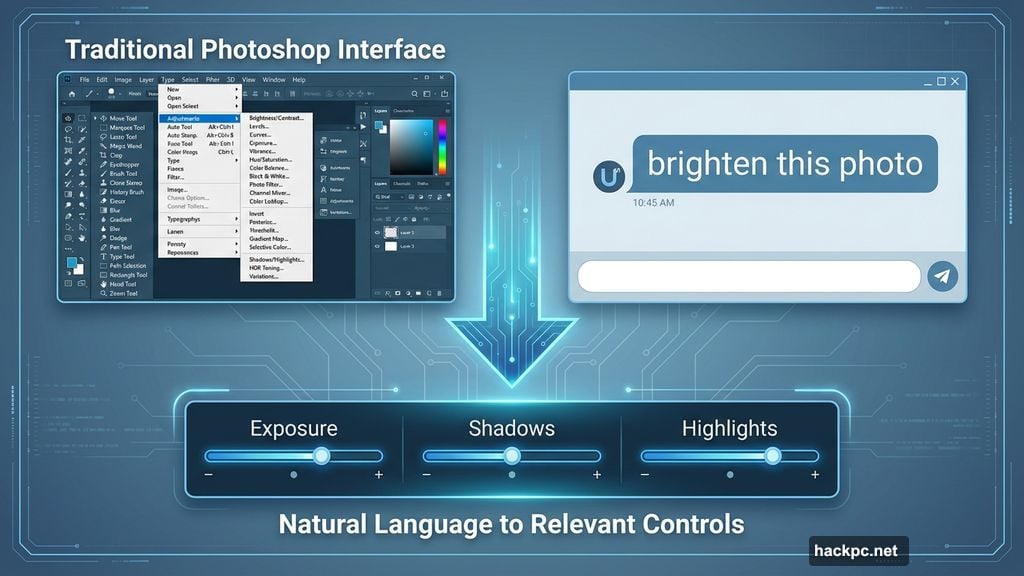
Want to brighten a photo? ChatGPT displays relevant Photoshop sliders for exposure, shadows, and highlights. Need to add a vintage effect? The interface adjusts to show dithering and tri-tone options instead.
For Acrobat and Adobe Express, you’ll need to sign into your Adobe account first. Then you can generate PDFs, create invitations, or design graphics through natural conversation with ChatGPT.
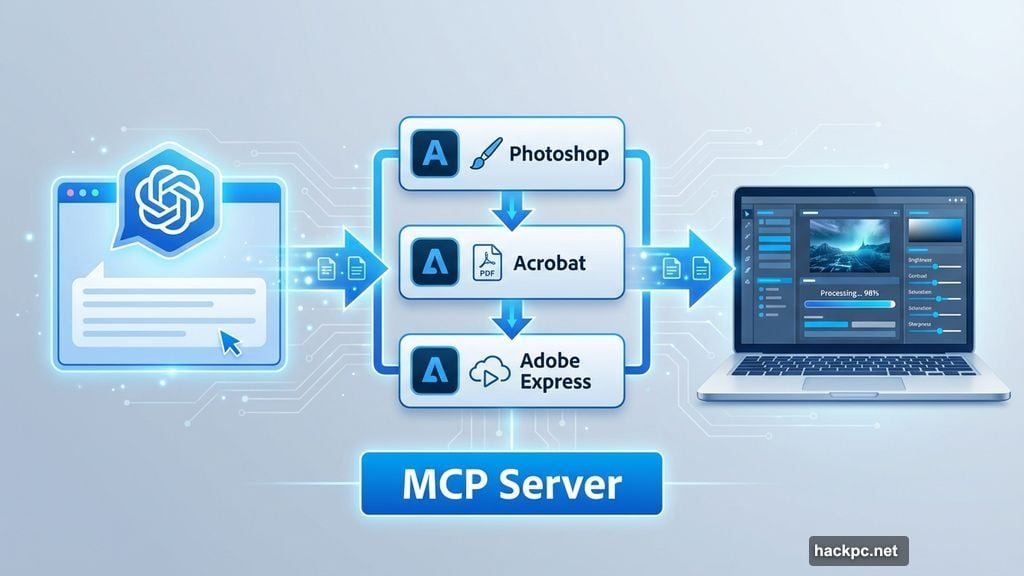
The technical magic happens through something called an MCP server. Adobe built modular tools that ChatGPT can access and combine based on your request.
“We build the Lego blocks, which are the MCP tools, and we create detailed instructions, and then ChatGPT figures out what it wants to do,” explains Aubrey Cattell, Adobe’s vice-president of developer platform and partner ecosystem.
Adobe Software Without the Complexity
Here’s what makes this interesting. Adobe apps are notoriously complicated.
Photoshop offers dozens of ways to accomplish the same task. Menus nest inside menus. Features hide behind cryptic icons. Most users only scratch the surface of what’s possible because the learning curve is so steep.
ChatGPT strips that complexity away. You describe what you want in plain English. The AI figures out which tools to use and presents only the relevant controls.
Need more power? The full web versions of Photoshop, Acrobat, and Adobe Express are one click away. But for quick edits and simple projects, the ChatGPT interface removes most of the friction.
However, there’s a catch. The system isn’t deterministic. Sometimes ChatGPT interprets your request differently than you intended. Adobe continues refining how natural language maps to specific tools and outcomes.
OpenAI’s Operating System Dream
This partnership represents OpenAI’s biggest win yet in transforming ChatGPT into an operating system for apps.
Back in October, OpenAI announced integrations with Spotify and Canva. Now Adobe joins that ecosystem. With over 800 million ChatGPT users, this creates a massive new distribution channel for software companies.
But the strategy cuts both ways. OpenAI offers its own image generation through DALL-E. ChatGPT can already create visuals without Adobe’s help. So why would Adobe hand over access to its crown jewel applications?
Cattell doesn’t see it as a threat. “A couple weeks back, OpenAI dropped Apps SDK as a new paradigm for accessing ChatGPT. We saw there was a natural fit in the work we were doing with our applications.”
Translation: Adobe views ChatGPT as another platform to reach users, similar to how apps work on Windows or macOS. The company bets that users who start with simple ChatGPT edits will eventually graduate to full Adobe subscriptions for serious work.
What This Means for Creative Professionals
For casual users, this integration is pure win. Quick photo edits no longer require installing heavyweight software or learning complex interfaces.
For professionals, the calculation is trickier. ChatGPT offers convenience but limited control. Fine-tuning requires jumping to the full Adobe apps anyway.
Still, the integration could change workflows. Imagine roughing out designs in ChatGPT, then switching to Photoshop only for final polish. That’s faster than starting from scratch in Photoshop every time.
Adobe promises to expand what’s available inside ChatGPT. But Cattell emphasized the company’s standalone apps will remain the destination for power users who need “more precision and control.”
The Bigger Picture
This partnership reveals how AI is reshaping software distribution and usage.
Traditional software requires installation, updates, and learning curves. AI interfaces abstract all that away. You describe what you want, and the software appears when needed.
For Adobe, this solves a major problem. Photoshop intimidates newcomers. Many potential customers never try it because the barrier to entry feels too high. ChatGPT lowers that barrier dramatically.
For OpenAI, Adobe validates the vision of ChatGPT as a universal interface layer. If Adobe is willing to integrate its most valuable products, other software makers will follow.
But here’s what concerns me. This model centralizes control with whoever owns the AI interface. OpenAI becomes a gatekeeper between users and the software they want to access. That’s a lot of power concentrated in one company’s hands.
Plus, the more tasks ChatGPT handles, the less likely users are to pay for standalone subscriptions. Adobe says the integration will drive people to its full apps. Maybe. Or maybe most users decide ChatGPT’s capabilities are good enough.
Either way, creative software just took its first real step toward becoming a feature inside an AI chatbot rather than a destination itself. Whether that’s progress or a cautionary tale depends entirely on who you ask.


Comments (0)