
Adobe just pulled off a spectacular U-turn. The company planned to kill Adobe Animate on March 1, 2026. Then customers erupted. Now Adobe’s keeping the software alive in “maintenance mode” instead.
What happened here reveals something bigger than one software product. It shows how companies miscalculate the value of legacy tools when they’re chasing shiny AI features. Plus, it demonstrates that customer backlash still works when it’s loud enough.
The Original Plan Was a Disaster
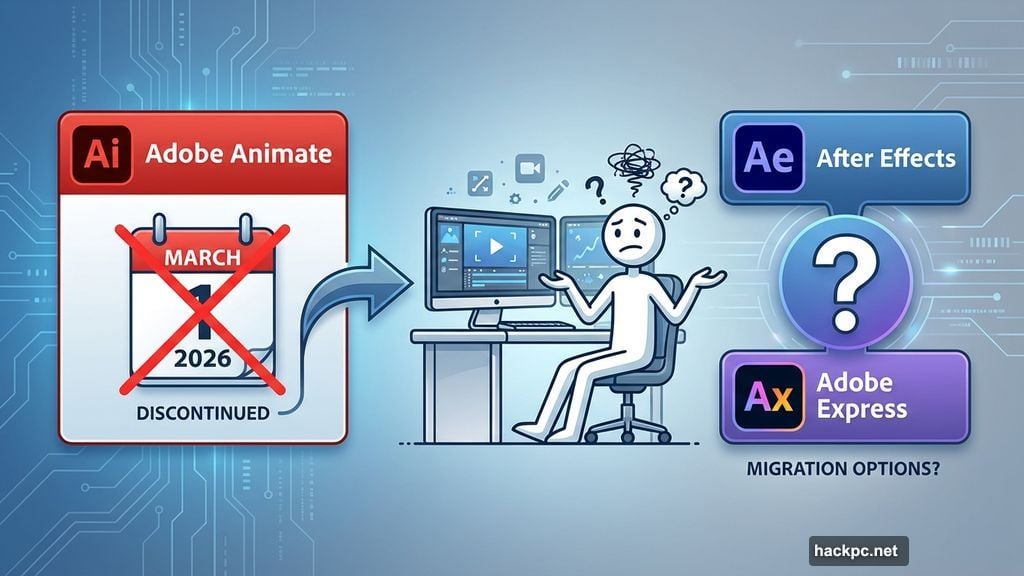
Adobe dropped the news on Monday. Animate would shut down in less than a month. Enterprise customers got three years of support. Everyone else got one year. Then you’re on your own.
The justification? Pure corporate speak. Adobe claimed that “new platforms and paradigms emerge that better serve the needs of the users.” Translation: We want to focus on AI, and Animate doesn’t fit that vision.
But here’s the problem. Adobe couldn’t even recommend a proper replacement. Instead, they suggested customers cobble together a solution using After Effects for keyframe animation and Adobe Express for simple effects. That’s like telling a carpenter to replace their table saw with a butter knife and a prayer.
Customers saw through it immediately. One user posted on X asking Adobe to at least open source the software. The replies piled up fast. “This is legit gonna ruin my life,” wrote one animator. Another asked, “Literally what the hell are they doing? Animate is the reason a good chunk of Adobe users even subscribe in the first place.”
Why Animate Actually Matters
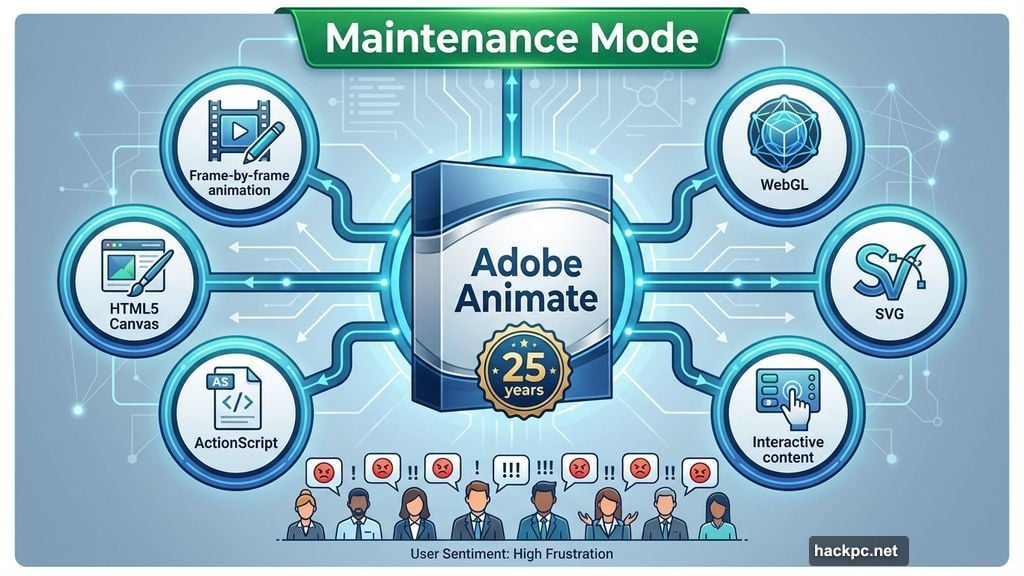
Adobe Animate has been around for over 25 years. It started life as Macromedia Flash before Adobe acquired it. For 2D animators, web designers, and game developers, it’s been essential infrastructure.
The software does things other Adobe products can’t match. It handles frame-by-frame animation. It exports to HTML5 Canvas, WebGL, and SVG formats. It supports ActionScript for interactive content. That’s not functionality you can just patch together from other tools.
Moreover, educational institutions built entire curriculums around Animate. One student tweeted that they’d just finished a whole semester learning the software. Now what? Start over with different tools that work differently?
The discontinuation felt like abandonment. Adobe collected subscription fees for years while the software served its purpose. Then, when it stopped aligning with corporate AI priorities, they tried to pull the plug with minimal notice.
The Backlash Changed Everything
By Wednesday, Adobe reversed course completely. The company posted an update saying Animate would continue for both current and new customers. No discontinuation. No removal of access. No hard deadline.
Instead, they’re putting it in “maintenance mode.” That means security patches and bug fixes but no new features. It’s not ideal, but it’s worlds better than shutdown.
Maintenance mode applies to everyone—individual users, small businesses, and enterprises. The software remains available for purchase at the standard pricing: $34.49 monthly, $22.99 with annual commitment, or $263.88 prepaid yearly.
This reversal happened fast. Two days from announcement to complete policy change. That’s unusual for a company Adobe’s size. Typically, corporate decisions take weeks or months to unwind. So the speed suggests the backlash hit harder than expected.
Reading Between the Lines
Adobe never explicitly said why they wanted to kill Animate. But the hints were obvious. No mention of Animate at Adobe Max 2024. No 2025 software version released. A company FAQ that basically said “technologies evolve, deal with it.”
The real story? Adobe’s betting everything on AI integration. Look at their recent product announcements. Firefly AI for image generation. AI-powered content-aware fill. Machine learning features throughout Creative Cloud. That’s where the investment flows.
Animate doesn’t fit that narrative. It’s a mature product with a stable user base. It doesn’t need flashy AI features to work well. But that makes it less exciting to investors and analysts who want to hear about cutting-edge AI capabilities.
So Adobe tried to quietly phase it out. Replace it with nothing concrete. Hope users migrate to other Adobe products that do incorporate AI. Collect the same subscription revenue while focusing engineering resources on AI-powered tools.
The calculation was simple: Animate users would complain but eventually adapt. Except that didn’t happen. The complaints got too loud, too fast, and too public. So Adobe reversed course rather than endure weeks of negative press while trying to push users toward AI products they don’t need.
What This Means for Creative Software
This episode reveals tension at the heart of creative software development. Companies want to chase new technologies and revenue opportunities. But professional users depend on stable, proven tools that work reliably.
Maintenance mode isn’t perfect. Animate won’t get new features or improvements. But it also won’t disappear overnight. Users can continue working without forced migration or workflow disruption. For professionals with deadlines and clients, that stability matters more than cutting-edge features.
Still, maintenance mode is a holding pattern, not a solution. Eventually, operating system updates or platform changes will break compatibility. Adobe will provide security patches for a while. But there’s no long-term commitment to keeping Animate functional indefinitely.
That’s why some users suggested open sourcing the software. Let the community maintain it if Adobe won’t. Add features based on user needs rather than corporate strategy. Remove the subscription requirement and let people own the tools they use.
Adobe won’t do that. Open sourcing a commercial product sets a precedent they can’t afford. If Animate goes open source, users will demand the same for Photoshop, Illustrator, or Premiere when those tools fall out of favor. So maintenance mode is the compromise—keep it alive without committing resources.
Alternatives Actually Exist
Despite Adobe’s weak recommendations, other 2D animation tools do exist. Moho Animation offers similar frame-by-frame capabilities. Toon Boom Harmony is industry standard for professional studios. Both support timeline animation, rigging, and export to various formats.
The catch? They work differently from Animate. Switching means relearning workflows, converting old files, and potentially buying new licenses. For individual users, that’s annoying but manageable. For studios with teams of animators, it’s a major disruption.
Some users are exploring open source options too. Blender’s Grease Pencil supports 2D animation. Krita offers animation tools for frame-by-frame work. Neither matches Animate’s full feature set, but they’re free and community-supported.
The irony? Adobe’s attempted shutdown might accelerate adoption of these alternatives. Users who were comfortable paying for Animate now have reason to investigate competitors. Maintenance mode keeps the door open. But trust is damaged. Next time Adobe tries to discontinue a product, users won’t wait around to see what happens.
The Bigger Pattern
Adobe isn’t alone in trying to sunset older products for AI-focused alternatives. Microsoft pushed users from Windows 10 to Windows 11. Google frequently kills products that don’t align with current strategy. Apple deprecated 32-bit app support to move the platform forward.
But those moves usually involve technical necessity. Operating systems need security updates that older architectures can’t support. Cloud services need to scale in ways legacy code can’t handle. Adobe’s situation was different—they wanted to discontinue functional software purely for strategic reasons.
That’s a tougher sell. Users understand “this won’t work on modern systems.” They don’t accept “we’d rather focus on AI so we’re killing this.” Especially when subscription models mean they’re paying monthly for access to tools that might disappear with minimal notice.
This episode shows the limits of that approach. Push users too hard, and they push back. Ignore their needs for your strategic vision, and they’ll publicly call you out. Adobe backed down because the cost of negative press exceeded the benefit of focusing resources elsewhere.
What Adobe Should Do Next
Maintenance mode buys time. But it’s not a long-term answer. Adobe needs to either commit to Animate or provide a genuine migration path.
Option one: Keep developing it. Not every product needs AI features. Sometimes stable, reliable tools are exactly what users need. If Animate generates subscription revenue and serves a loyal user base, why not maintain it properly?
Option two: Build a real replacement. Not “use After Effects plus Express plus your imagination.” Create an actual modern 2D animation tool that incorporates the best of Animate while updating the underlying technology. Give users a migration path that respects their existing work and skills.
Option three: Open source it. Let the community take over if Adobe won’t commit resources. Yes, it sets a precedent. But it also builds goodwill and demonstrates that Adobe respects the creative community that built its business.
Instead, they chose maintenance mode. It satisfies nobody completely but avoids the worst outcomes. Animate users keep their tool. Adobe avoids continued backlash. Everyone moves forward in an uncomfortable holding pattern.
The Lesson for Other Software Companies
This whole mess offers a clear warning to other companies. Don’t discontinue functional products without providing equivalent replacements. Don’t assume users will quietly accept strategic decisions that hurt their workflows. Don’t underestimate the power of public backlash when you break trust.
Adobe got lucky. They reversed course fast enough to contain the damage. But the trust erosion remains. Next time they announce a product discontinuation, users will be skeptical. They’ll assume the worst and plan accordingly.
That’s the real cost of this decision. Not the engineering resources spent on maintenance mode. Not the revenue lost from users considering alternatives. It’s the damage to Adobe’s reputation as a company that supports creative professionals.
You can’t chase AI trends while abandoning the tools that made you successful. Well, you can try. But as Adobe just learned, your customers might not let you get away with it.



Comments (0)