
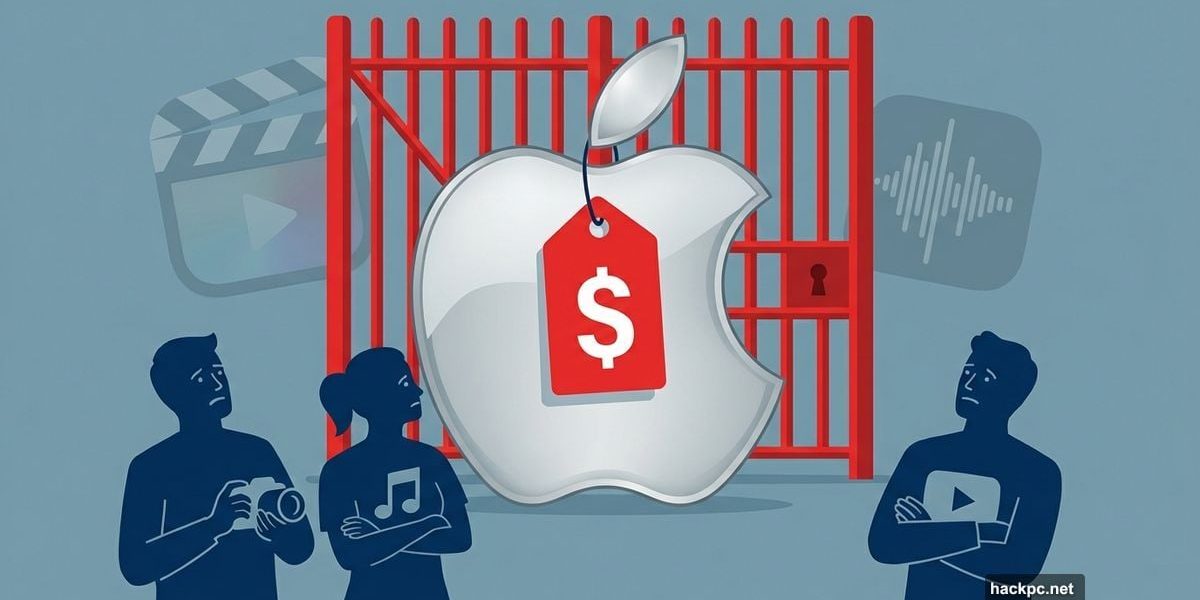
Apple dropped a bomb on creative professionals this week. Final Cut Pro, Logic Pro, and other Studio apps now require a monthly subscription through the new Apple Creator Studio bundle.
The shift hits hard for loyal Mac users who built careers on these tools. For years, you paid once and owned the software forever. Now that era ends on January 28.
What Apple Creator Studio Actually Includes
The bundle packs seven production apps into one monthly package. Final Cut Pro leads the lineup alongside Logic Pro for audio work. Motion handles graphics, while Compressor manages video encoding.
Plus, you get Pixelmator Pro for image editing and MainStage for live performance. The productivity apps Keynote, Pages, Numbers, and Freeform round out the collection.
Here’s the pricing breakdown. Individual subscribers pay $13 monthly or $129 annually. Students and educators catch a break at $3 monthly or $30 yearly. Those rates seem reasonable until you remember the old model.
Final Cut Pro currently sells for $300 as a one-time purchase. Logic Pro runs $200. So if you already own these apps, the subscription feels like paying rent on software you used to own outright.
The One-Time Purchase Option Still Exists (Sort Of)
Apple maintains you can still buy apps individually. Final Cut Pro keeps its $300 price tag in the Mac App Store for now. Same goes for Logic Pro at $200.
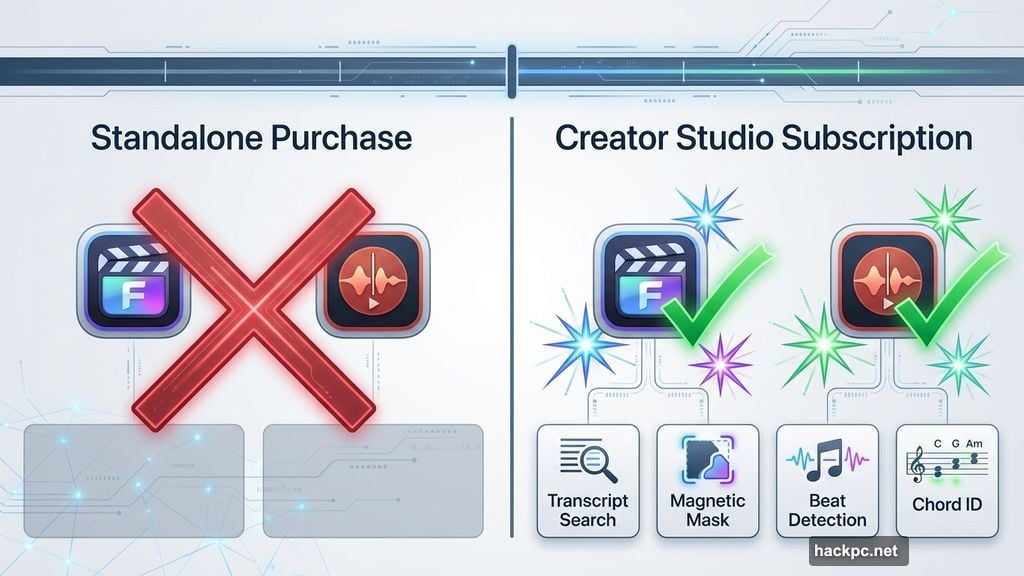
But here’s the catch nobody’s talking about. Those standalone purchases won’t get the new AI features landing in Creator Studio versions. Transcript Search in Final Cut Pro? Subscribers only. Beat Detection for music editing? Behind the paywall.
So technically, yes, you can avoid the subscription. But you’ll miss every major feature update moving forward. That’s not really a choice for working professionals who need cutting-edge tools.
New AI Features Sound Impressive on Paper
Apple loaded Creator Studio with machine learning tricks. Final Cut Pro gains Transcript Search on Mac and iPad, making it easier to find specific dialogue in long projects. The new Beat Detection analyzes music tracks and displays beat grids automatically.
Motion introduces Magnetic Mask, which isolates subjects without green screens. Logic Pro adds Chord ID to generate chord progressions from existing audio or MIDI files. The updated Sound Library throws in hundreds of royalty-free samples and loops.
Freeform gets AI image generation plus curated graphics libraries. Pixelmator Pro expands to iPad with new filters and tools. On paper, these additions justify the subscription cost for heavy users.
But most creators already own workarounds. Third-party plugins handle beat detection. Green screen alternatives exist. The AI features feel like artificial incentives to push subscriptions rather than genuine innovation.
The Real Cost Hits Long-Term Users Hardest
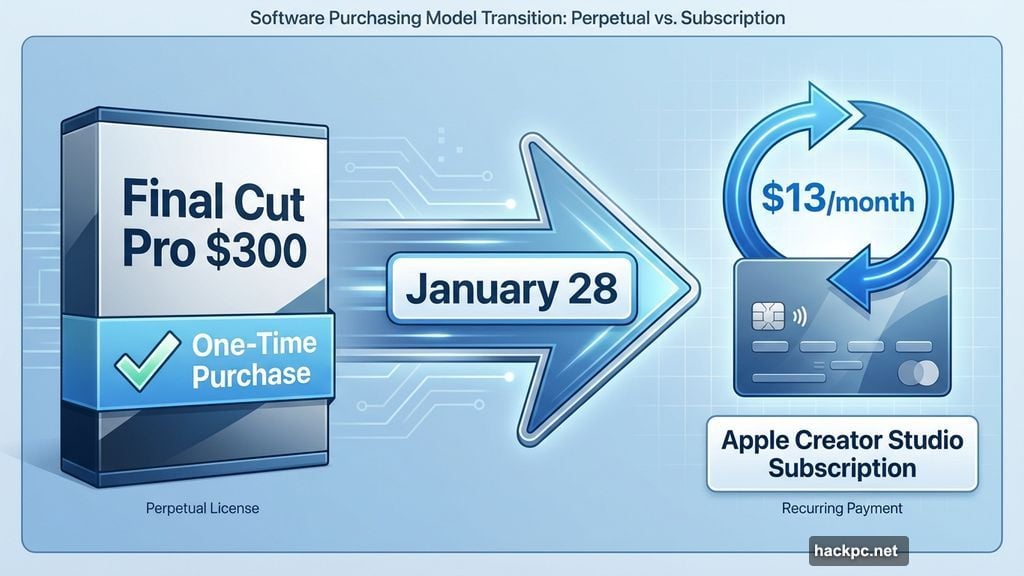
Let’s do the math for a typical professional workflow. Before Creator Studio, buying Final Cut Pro ($300) and Logic Pro ($200) cost $500 total. That’s a one-time investment lasting years across multiple projects.
Now the annual subscription runs $129. Sounds cheaper initially. But after four years, you’ve paid $516 and own nothing. After ten years? That’s $1,290 down the drain with zero asset to show.
Moreover, the subscription never ends. Miss a payment and your projects become hostage to Apple’s billing system. Can’t export that half-finished film without reactivating your subscription. That dependency changes the entire creative relationship with your tools.
Freelancers and small studios feel this squeeze most. Large production houses can absorb recurring costs. But independent creators operating on tight margins just saw their overhead increase permanently.
Apple Follows Adobe’s Playbook (Badly)
This move copies Adobe’s controversial shift to Creative Cloud subscriptions years ago. Adobe faced massive backlash before users grudgingly accepted the new model. Apple apparently learned nothing from that PR disaster.
The difference? Adobe offered genuine cloud integration, regular updates, and extensive new features that justified monthly fees. Early Creative Cloud releases delivered real value beyond forcing subscriptions.
Apple Creator Studio feels rushed by comparison. The AI features seem tacked on rather than transformative. Cloud integration remains minimal. The value proposition for existing users basically boils down to “pay us or lose updates.”
Adobe at least grandfathered loyal customers with transitional pricing. Apple just flipped the switch and said “subscribe or get left behind.” That’s a brutal way to treat professionals who championed Mac as the creative platform for decades.
Who Benefits From This Change?
Students and educators actually win here. The $3 monthly rate undercuts individual app purchases significantly. Film schools and music programs can equip entire labs for reasonable annual costs.
New users entering the creative field also benefit. Paying $13 monthly to access professional-grade video editing, audio production, and graphics tools beats buying everything separately. The barrier to entry drops considerably.
But Apple’s core creative user base? They’re funding discounts for everyone else. Long-time Final Cut Pro users who paid full price years ago now subsidize student rates through forced subscriptions. That stings.
Power users juggling multiple projects might find value in the full app suite. If you regularly bounce between video editing, audio production, and graphics work, bundling saves money over individual purchases. That’s a narrow use case though.
The Subscription Trap Tightens Further
This announcement signals Apple’s broader strategy shift. The company increasingly prioritizes recurring revenue over hardware and software sales. Services now drive growth, and that means pushing subscriptions everywhere possible.
We’ve watched this progression for years. iCloud storage, Apple Music, Apple TV+, Apple Arcade, Fitness+, News+. Now professional creative tools join the subscription army. What’s next, Final Cut Pro for Beginners as a separate tier?
The pattern creates dependency. Once your entire workflow runs on subscribed software, switching becomes nearly impossible. Apple knows this. Lock-in generates predictable revenue streams and higher lifetime customer value.
For users, it means less ownership and more vulnerability. Your creative business now depends on maintaining good standing with Apple’s billing department. That’s a uncomfortable position for independent professionals.
Better Alternatives Already Exist
DaVinci Resolve offers professional video editing completely free, with a one-time $295 upgrade for advanced features. Reaper provides powerful audio production for $60. Affinity Photo, Publisher, and Designer deliver pro graphics tools for one-time purchases under $200 total.
These alternatives don’t lock users into subscriptions. They respect the one-time purchase model that made desktop software sustainable for decades. Plus, many match or exceed Apple’s tools in specific areas.
So why stick with Creator Studio? Ecosystem integration and workflow familiarity mostly. If your entire studio runs on Mac with established Final Cut Pro projects, switching costs money and time. Apple counts on that inertia.
But younger creators building workflows from scratch should seriously consider alternatives. Starting with subscription-free tools means more financial flexibility and true software ownership. That matters more than brand loyalty.
What Creative Pros Should Do Now
If you already own Final Cut Pro or Logic Pro outright, keep using them. Updates will slow, but the apps still work. Don’t rush into subscriptions until your current versions genuinely limit your work.
Evaluate whether you actually need cutting-edge features. Beat detection and AI chord generation sound cool, but do they solve real problems in your workflow? Often, tried-and-true methods work fine without algorithmic assistance.
Consider this a wake-up call to diversify your toolset. Learning DaVinci Resolve or other alternatives now protects against future pricing changes or feature restrictions. Having options means Apple can’t corner you into subscriptions.
Students and educators should absolutely grab the $3 monthly rate while available. That’s genuinely good value for learning professional tools. Just understand you’re renting, not owning, and plan accordingly for post-graduation budgets.
The Industry Watches This Experiment Closely
Other pro software makers are monitoring Apple’s reception carefully. If Creator Studio succeeds, expect more forced subscriptions across creative tools. If users rebel and switch platforms, it signals limits to subscription tolerance.
Early social media reaction skews negative. Creative professionals express frustration at losing ownership and gaining mandatory costs. But talk is cheap until users actually cancel subscriptions or switch platforms en masse.
Apple’s market position gives them leverage to weather initial backlash. The company knows most Mac-based studios won’t abandon established workflows immediately. That buys time to normalize the subscription model before alternatives gain momentum.
Still, this feels like overreach. Forcing monthly fees on tools professionals already own crosses a line that even Adobe avoided. The creative community has long memories for this kind of move. Trust, once broken, rebuilds slowly.
Creator Studio launches January 28. The subscription era for Apple’s pro apps begins whether users want it or not. Choose your response carefully, because this decision shapes the creative software landscape for years to come.



Comments (0)