

The AI chatbot scene has exploded since ChatGPT first showed up in late 2022. Now you’ve got Google, Anthropic, Microsoft, and Meta all throwing their best models into the ring. So which one actually deserves a spot on your screen?
We tested them all to save you the headache. Here’s what we found.
—
Claude Takes the Crown for Best Overall
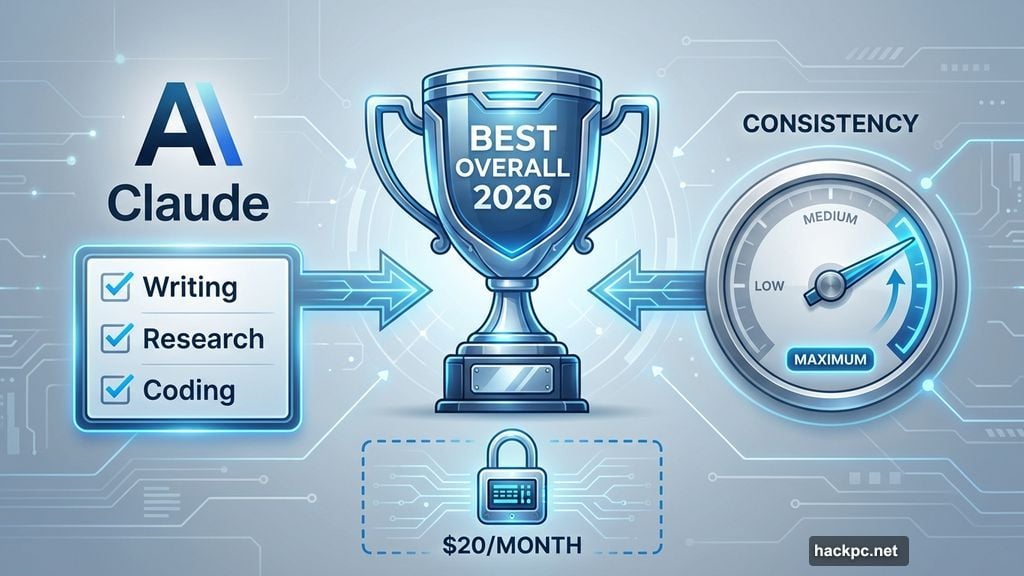
Anthropic’s Claude is the one to beat right now. It’s fast, it’s thoughtful, and it delivers detailed, nuanced answers more consistently than the competition.
What makes Claude stand out is its Connectors and Skills system. You can extend and customize what Claude does without a steep learning curve. That flexibility is rare, and it makes Claude feel genuinely useful rather than just impressive in demos.
That said, Claude has real limitations. Its best models sit behind a $20/month paywall. Plus, it has no built-in image or video generator, which is a meaningful gap when Gemini and ChatGPT both offer visual creation tools.
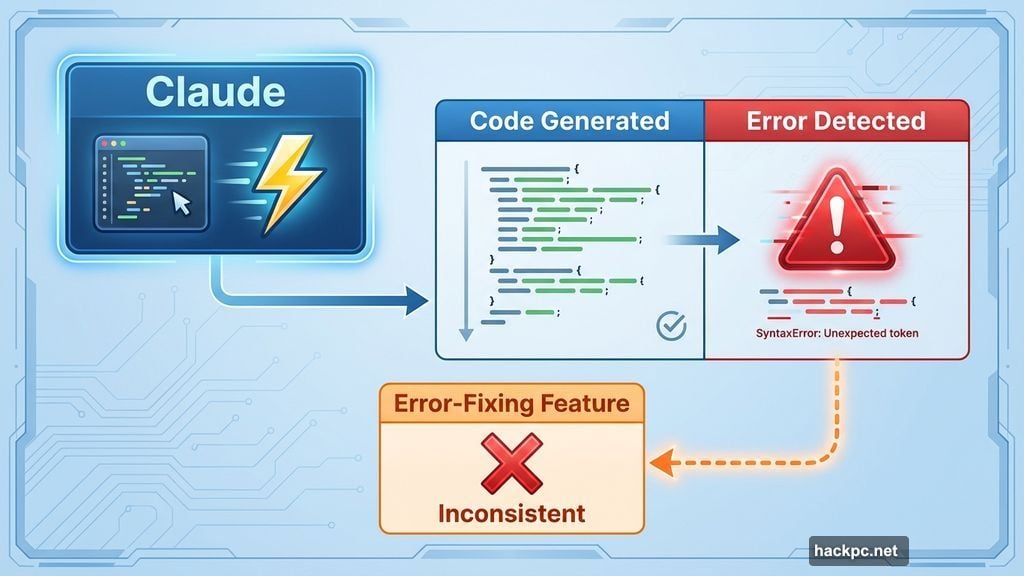
Vibe coding with Claude is genuinely fast. Even on the free tier, it generates code at a solid clip. But when it hits errors, Claude’s dedicated error-fixing feature doesn’t always save the day. For a tool designed specifically to catch mistakes, failing noticeably stings.
Still, across general tasks, research, writing, and coding, Claude’s consistency is what ultimately wins. The other contenders have their moments. Claude has fewer bad ones.
—
Google Gemini Offers the Best Subscription Value
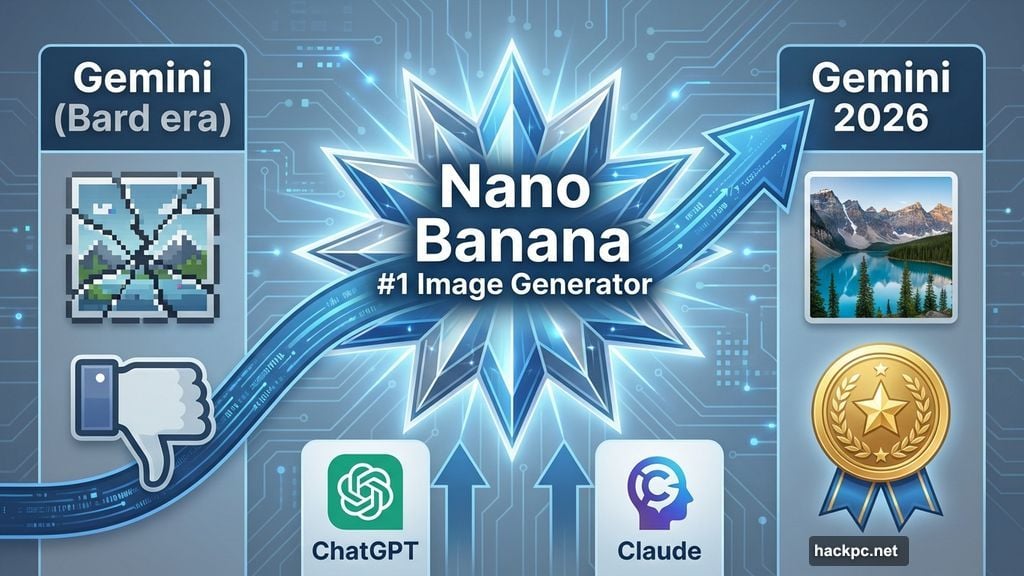
Remember when Gemini was called Bard and everyone kind of cringed at it? It hallucinated constantly and gave advice that was, at times, genuinely questionable. Those days feel distant now.
Gemini has improved dramatically. It rivals Claude and ChatGPT across most tasks and pulls ahead in a few specific areas. Shopping, vibe coding, and deep integration with Google’s ecosystem are all highlights.
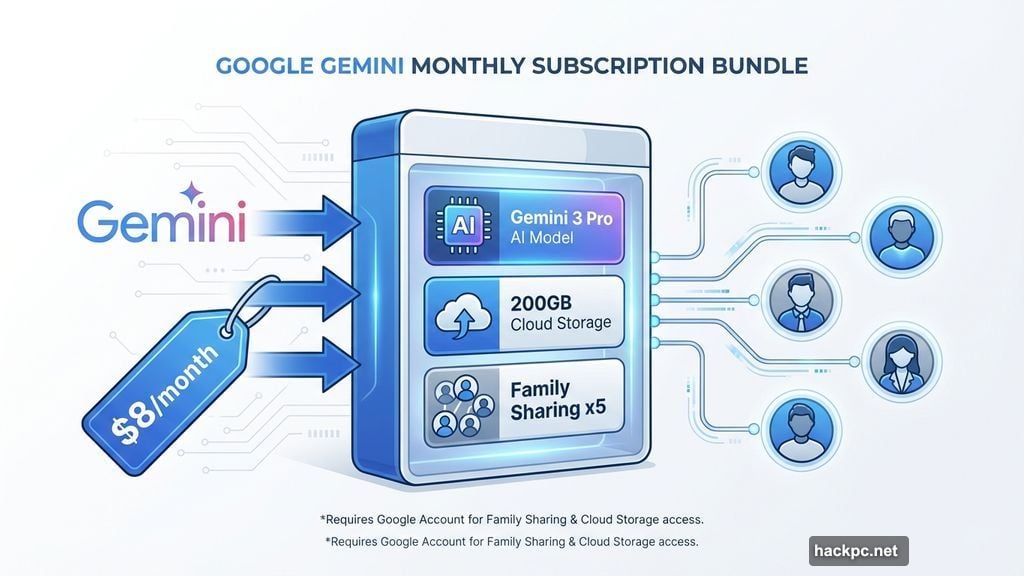
But the biggest win is the subscription value. Gemini’s Plus plan runs just $8/month, and it doesn’t just give you better AI models. You get 200GB of cloud storage, shareable with up to five people. That’s a genuinely compelling bundle, especially if you’re already living inside Google’s apps.
Even free accounts get a meaningful package. You’ll have access to Gemini 3 Flash, limited access to Gemini 3 Pro, and image generation through Nano Banana. Daily credits for tools like Flow and Whisk round out the free tier nicely.
Speaking of Nano Banana — it’s the best AI image generator available right now. Full stop. Gemini went from decent at images to leading the category seemingly overnight, and nothing else is quite catching up yet.
The trade-off? You’re giving more of your data to Google. Significant guardrails also restrict certain conversation topics. Those are real concerns depending on what you’re using it for.
—
ChatGPT Is Still Wildly Popular, Just Not the Best Anymore
ChatGPT has a loyal following, and honestly, that loyalty isn’t hard to understand. It’s good at most things, comfortable to use, and has had years to build trust with tens of millions of users.
Writing is where ChatGPT genuinely shines. It adapts to instructed tone easily and rarely misses the mark stylistically, whether you’re drafting a casual text, a professional email, or something more formal. Image generation is also solid, even if Nano Banana Pro holds the crown.
But here’s the honest truth. ChatGPT is less impressive when you put it side by side with Claude or Gemini in 2026. It lacks a clear killer feature. Its free plan and low-cost Go plan ($8/month) both include ads, which feels like a strange move for a product in this price range.
None of that means ChatGPT is bad. It’s genuinely capable and covers general-purpose tasks well. First-mover advantage is real, and OpenAI has kept improving the product meaningfully since its early days. It’s just that the competition has closed the gap — and in some spots, moved ahead.
If you’ve been using ChatGPT for a while and it’s working for you, there’s no urgent reason to jump ship. But if you’re starting fresh and shopping around, Claude and Gemini present stronger cases.
—
Perplexity Is the Research Specialist You Didn’t Know You Needed
Perplexity has always been the research-first option, and it’s still the best tool for that specific use case. It breaks down sources right next to each claim, so you can immediately see where an answer is coming from and whether it’s worth trusting.
It’s especially good for product comparisons and travel planning. If you need to weigh options or organize a trip with lots of moving parts, Perplexity handles that better than most general-purpose chatbots.
One persistent issue: Perplexity leans too heavily on Reddit and YouTube by default. Those can be fine sources depending on the question. But if you need something more credible, that default behavior gets old quickly. The good news is you can now filter sources by typing “@” and choosing from web, academic, social, and more. That’s a meaningful improvement.
Paid subscribers can also switch between multiple AI models for different perspectives on the same question. It’s a smart feature for anyone doing serious research.
The main downside is that many of Perplexity’s best features require a premium subscription. And hallucinations still happen even when sources are provided, which is a reminder that citations don’t automatically equal accuracy. Always read the source.
—
What About Microsoft Copilot and Meta AI?
Both made the testing list. Neither made the top four.
Microsoft Copilot runs on GPT-4/5 models and works across the web, Windows, and mobile. It’s easy enough to use, and image generation occasionally produces genuinely stunning results. But overall, the experience doesn’t match Claude, ChatGPT, or Gemini. Business users with a Copilot 365 license get more value, but for personal use, it’s hard to recommend over the main contenders.
Meta AI is baked into Meta’s apps and the Ray-Ban Meta glasses, which is a genuinely different approach to AI access. It’s free, it can generate text and images, and it’s decent at shopping advice. But nothing it does can’t be done better by one of the other options on this list.
—
What You Should Know Before Picking One
A few things are worth keeping in mind regardless of which chatbot you choose.
First, pricing. Most premium plans cost around $20/month. Google and OpenAI both offer lower-cost options at $8/month — Google’s Plus plan and ChatGPT’s Go plan — that bridge the gap between free and full-featured.
Second, privacy. No matter what any privacy policy promises, your sensitive personal information shouldn’t go into a chatbot. These models need training data, and what you share could potentially be used in ways you didn’t intend. Stay cautious.
Third, accuracy. Every major chatbot still has warning labels for a reason. Claude, Gemini, and ChatGPT all display reminders that they can make mistakes. Hallucinations still happen across the board, even in 2026. Always verify anything important with a primary source before acting on it.
On mobile, Gemini is the top pick for Android users since it’s preinstalled on many devices and deeply integrated into the system. For iOS, ChatGPT’s app is clean and straightforward, making it an easy recommendation for most people.
The chatbot that’s right for you depends entirely on what you actually need it for. Claude wins on consistency. Gemini wins on value and images. ChatGPT wins on versatility and familiarity. Perplexity wins for research. Pick your priority, start with the free tier, and see what clicks.



Comments (0)