
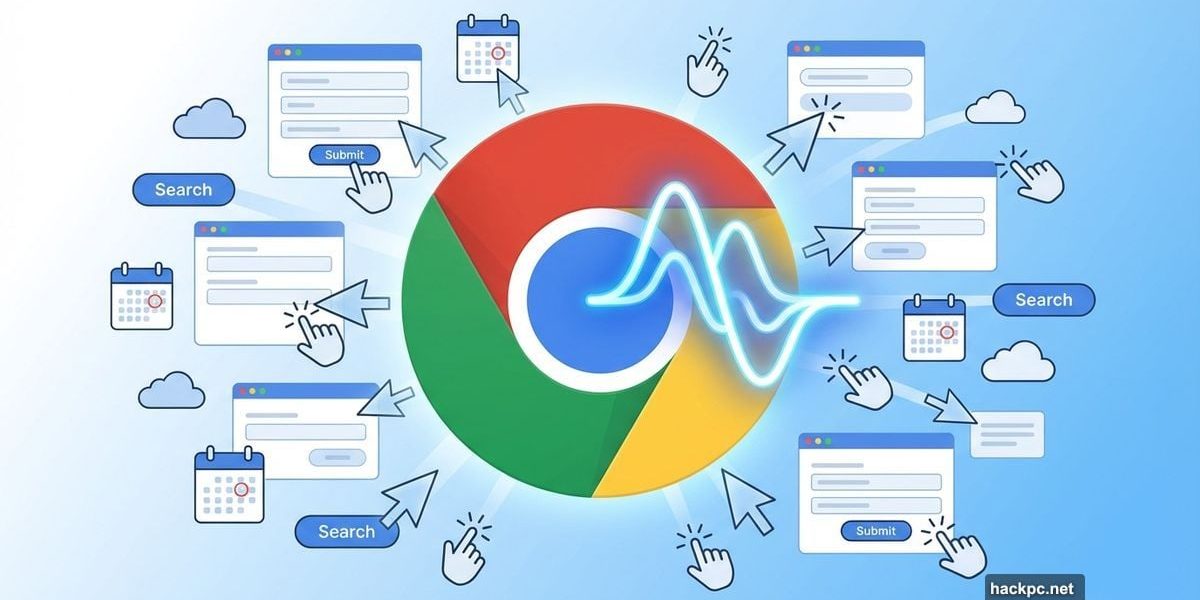
Anthropic killed the exclusivity wall. Their Claude Chrome plugin was locked behind a $200 monthly Max subscription. Now any paid Claude user can access it.
This matters because Chrome plugins fundamentally change how we interact with AI. Instead of copying text back and forth between tabs, Claude lives right there in your browser. Plus, it can actually do things for you across websites.
What Claude in Chrome Actually Does
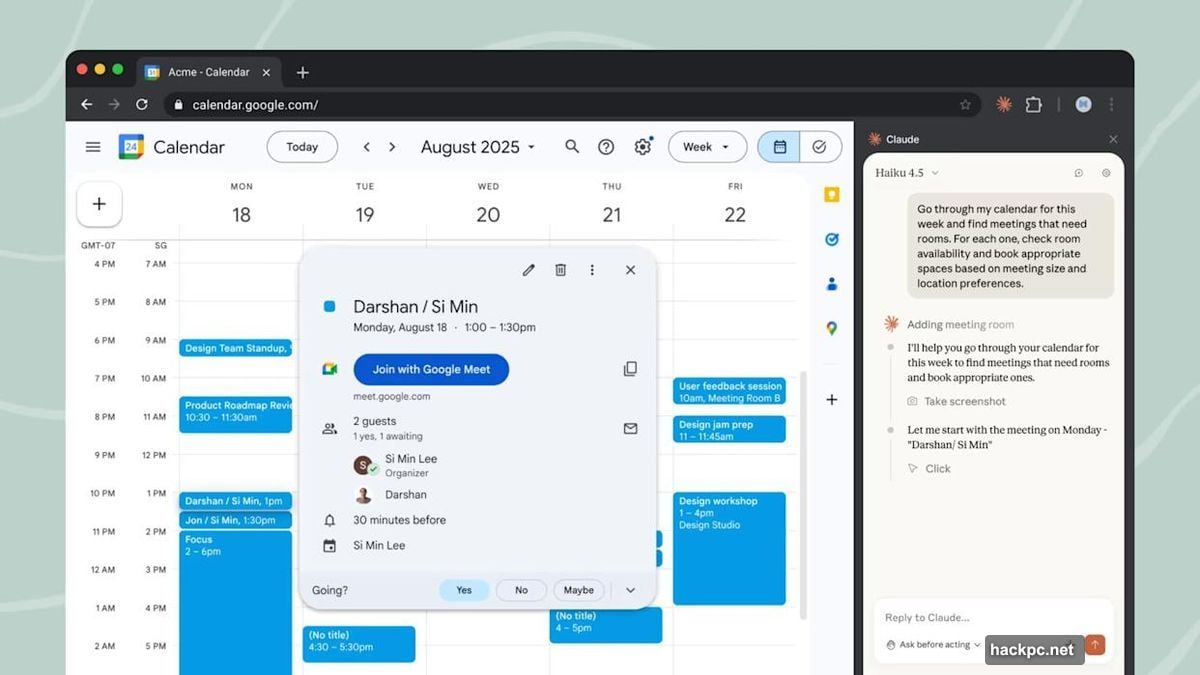
The plugin goes beyond simple question answering. Claude can navigate websites, fill out forms, and handle multi-step tasks without you touching the keyboard.
Need to book a flight? Claude can search dates, compare prices, and complete the booking form. Managing your calendar? It can schedule meetings and send invitations. The AI understands web interfaces well enough to click buttons, enter text, and move between pages.
This capability stems from Anthropic’s work on “computer use.” That’s the AI’s ability to understand visual interfaces and interact with them like a human would. Before everyone started calling everything “agents,” this was the hot technical challenge. Now it’s just one tool that makes agents possible.
Teaching Claude Your Workflows
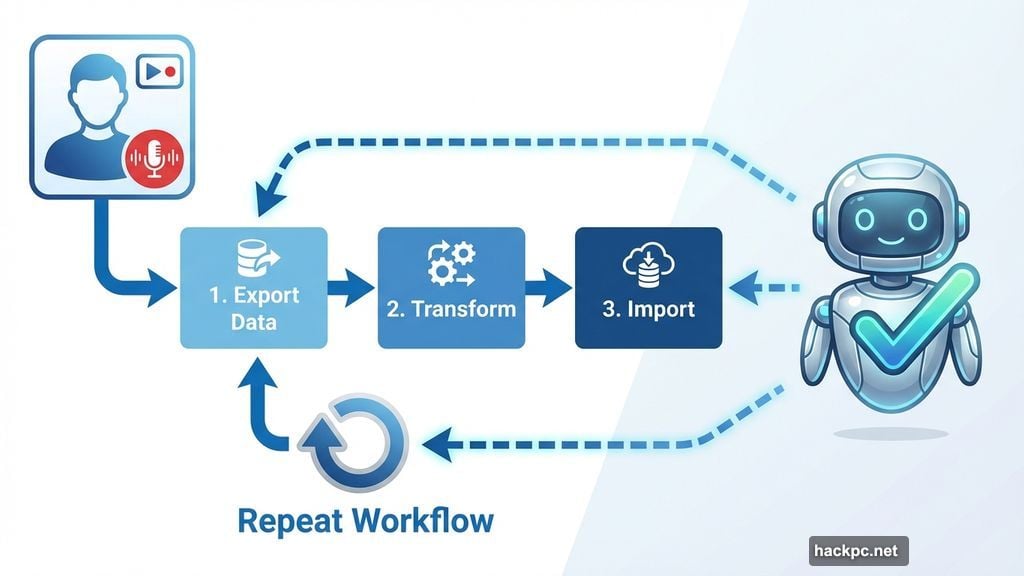
Here’s what sets this plugin apart. You can record yourself completing a task, and Claude learns that specific workflow. Then it can repeat those exact steps whenever you need them done.
Say you regularly export data from one platform and import it to another. Record that process once. Claude memorizes it. Next time, just tell Claude to run that workflow. No more repetitive clicking through the same sequence.
The latest version also integrates with Claude Code, Anthropic’s AI coding tool. So developers can combine coding assistance with browser automation in one place.
Everyone’s Racing to Control Your Browser
Anthropic isn’t alone here. OpenAI launched ChatGPT Atlas. Perplexity released Comet. Both offer similar agentic browser capabilities. The pattern’s clear: AI companies want their models embedded directly in your web browsing experience.

Google’s the notable holdout. Gemini works in Chrome, sure. You can ask questions about web pages. But Google hasn’t unleashed Gemini to actually navigate or control Chrome on your behalf.
Yet. Project Mariner demoed exactly those features months ago. Google’s presumably testing before rolling them out widely. Smart move given how badly autonomous browser control could go wrong if the model makes mistakes.
The Real Question: Do You Trust AI in Your Browser?
Here’s what bugs me about all these browser plugins. They need extensive permissions to work. Claude sees everything on every webpage you visit. It can click anything, fill any form, access any account you’re logged into.
That’s necessary for the functionality to work. But it’s also a massive trust requirement. You’re essentially giving an AI system full access to your digital life. The companies promise robust security. Time will tell if those promises hold up.
Moreover, these plugins only work if you’re paying. Claude’s basic tier doesn’t include the Chrome plugin. Neither do the free versions of ChatGPT or other AI assistants. So autonomous browser AI remains a premium feature.
That makes sense from the companies’ perspective. These capabilities consume significant compute resources. They need to monetize somehow. But it also means the most powerful AI tools remain behind paywalls.
What This Means for Regular Users
Expanding Claude’s Chrome plugin to all paid users, not just Max subscribers, is genuinely useful. It drops the entry price from $200 monthly to $20. That’s the difference between enterprise-only and accessible to individuals.
Will people use it? Depends on their workflows. If you regularly complete repetitive web tasks, teaching Claude those patterns saves real time. If you mostly browse casually, the plugin adds little value.
The bigger picture matters more. AI companies are betting that browser-integrated agents become how we interact with the web. Not search engines. Not typing URLs. Just tell your AI what you want done, and it handles the clicking.
Maybe that future arrives. Maybe it doesn’t. Right now, we’re in the awkward transition phase where the technology works but feels weird. Give it time. Either we’ll all be using AI browser agents daily, or we’ll look back and wonder why we thought this was a good idea.
Your move, Google. Everyone else already put their AI in the browser.




Comments (0)