

Data removal services promise to scrub your personal information from the internet. But not all removals work the same way.
Two main approaches exist: automated and custom. One handles everything for you. The other requires your help but covers far more ground. Let’s break down how each works and which might fit your needs.
Automated Removals Handle the Basics
Most data removal services start with automated removals. In fact, every service I’ve tested offers this as the standard option.
Here’s how it works. You provide basic information like your name, address, and date of birth. The service scans hundreds of data brokers and people-search sites for matches. When it finds your data, it sends removal requests automatically.
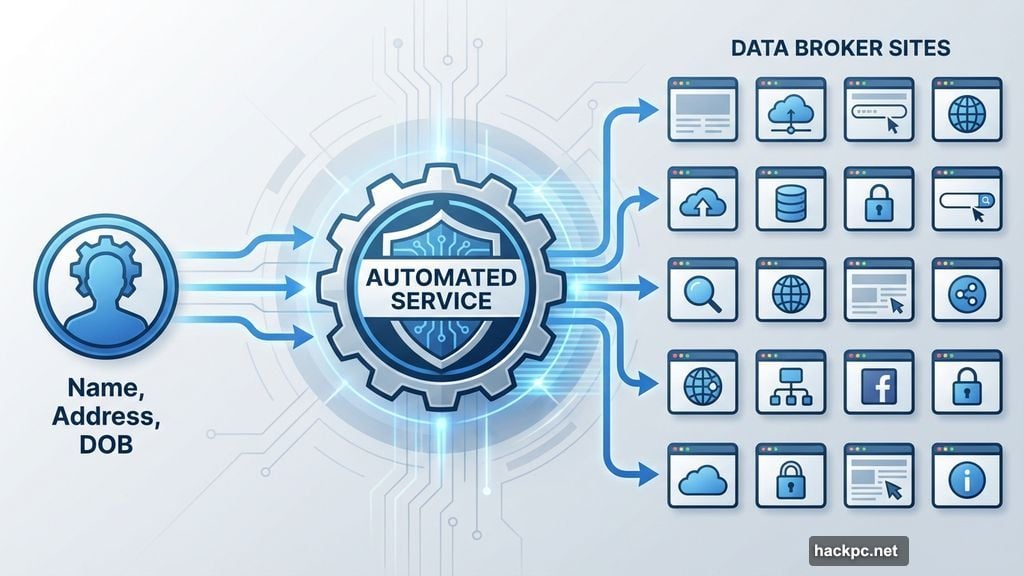
You’ll typically get reports showing where your information was found and which removal requests were submitted. Services like Aura rely entirely on this automated approach. It’s hands-off and straightforward.
But there’s a catch. According to OneRep, thousands of data brokers exist. Most automated services only cover a few hundred of them. Major players like Experian, Equifax, and Acxiom usually make the list. Smaller, less common sites might not.
So automated removals work great for mainstream data brokers. However, they miss the long tail of smaller sites selling your information.
Custom Removals Fill the Coverage Gap
Custom removals require more effort but deliver broader protection. Think of them as the manual supplement to automated removals.

The process is simple. You find your information on a data broker site that isn’t covered by your service’s automated scans. Then you send that link to your removal service. The company reviews your submission and attempts to remove your data from that specific site.
Not every data removal service offers custom removals. Plus, those that do often charge extra for the feature. It’s not included in basic plans.
Why go through the extra work? Coverage. Services offering custom removals can potentially scrub your data from over 1,000 additional sites. For example, Optery’s Ultimate plan covers 635 sites through automated removal and over 1,120 sites through custom requests. That’s roughly 1,755 sites total if you submit custom removal requests.
Some Services Offer Both Options
A few data removal services bundle automated and custom removals together. But expect to pay more for this combination.

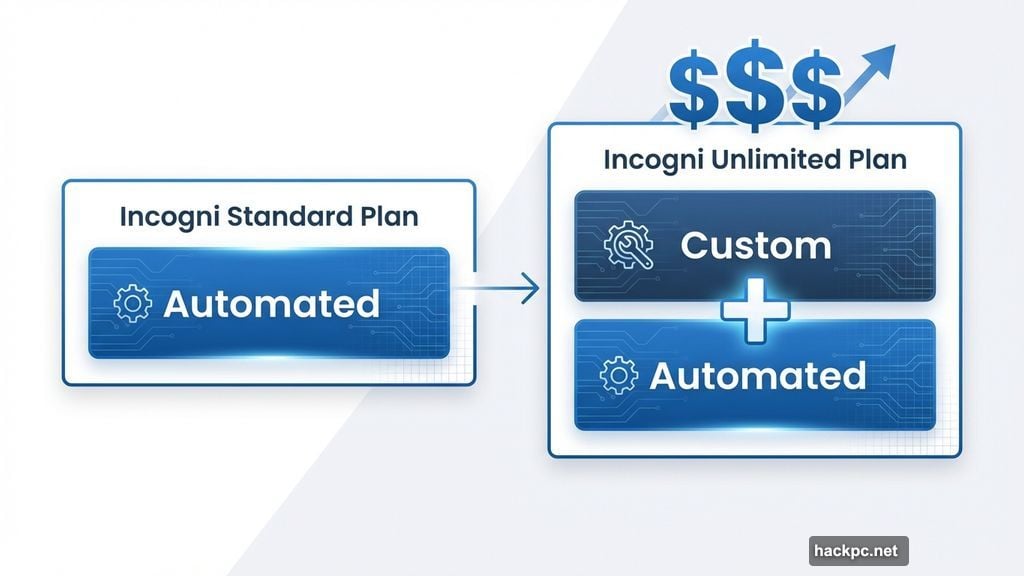
Incogni illustrates this pricing model clearly. Its Standard and Family plans stick to automated removals only. Meanwhile, the pricier Unlimited and Family Unlimited tiers include both automated and custom options.
Think of it like ordering pizza. Automated removals are the standard cheese pizza everyone offers. Custom removals let you build your own with extra toppings. You pay more and put in some work, but you get exactly what you want.
The extra cost and effort might be worth it if you’ve found your information on obscure data broker sites. Custom removals let you target those specific sites that automated scans miss.
Which Removal Type Makes Sense for You?
Both automated and custom removals have their place. Your choice depends on how hands-on you want to be.
Automated removals excel at simplicity. You set it up once and let the service handle everything. No ongoing work required. If you just want someone else to manage your data removal without your input, automated removals work fine. Most people find this approach sufficient.
Custom removals demand more involvement from you. You need to actively search for your information on data broker sites. Then you submit removal requests for sites your service doesn’t automatically cover. Yes, it takes more time and usually costs more money. But you gain significantly wider coverage across the data broker landscape.
Here’s my take. Start with automated removals through a reputable service. Monitor what gets removed and where your information still appears. If you keep finding your data on sites not covered by automated scans, consider upgrading to a plan with custom removals.
The reality is that no data removal service is perfect. Thousands of data brokers operate online, and new ones pop up regularly. Automated removals handle the major players efficiently. Custom removals let you tackle the stragglers.
Choose based on your privacy concerns and how much time you’re willing to invest. Either way, some data removal is better than none.




Comments (0)