

Google quietly dropped one of its most creative AI features yet. The Gemini app can now write and produce original songs for you, powered by DeepMind’s Lyria 3 music-generation model.
And yes, it’s exactly as fun as it sounds.
What Lyria 3 Can Do
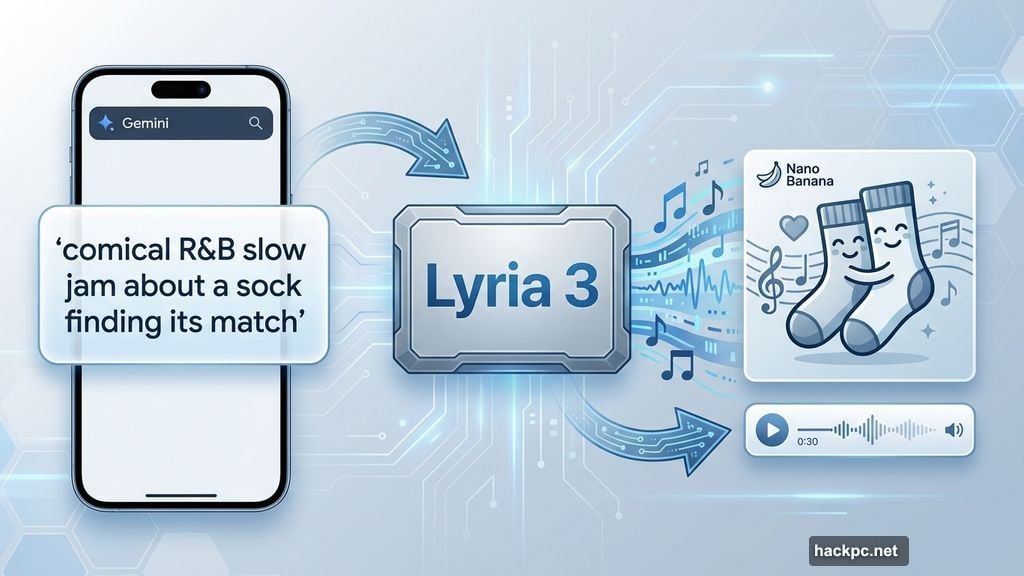
The feature works simply. You describe the song you want, and Gemini builds it. Ask for a “comical R&B slow jam about a sock finding its match,” and you’ll get a 30-second track, complete with lyrics and cover art generated by Nano Banana.
But the creative options go further than text prompts. You can upload a photo or video, and Lyria 3 will read the mood and compose something that fits. Heading to a beach? Snap a photo. Planning a birthday reel? Drop in the video. The model figures out the vibe and runs with it.

Beyond the initial generation, you can also tweak style, vocals, and tempo. So if the first version sounds a bit too mellow, you push it in a different direction.
Lyria 3 vs. the Previous Generation
Google says Lyria 3 is a meaningful step up from earlier models. The tracks it produces are more realistic and musically complex. That matters because first-generation AI music had a recognizable flatness to it, a kind of hollow quality that felt more like a placeholder than an actual song.
Plus, this version ships with SynthID watermarking baked in. Every track Lyria 3 creates carries an invisible AI-generated content marker. Google is also adding a detection tool inside Gemini, so users can upload any track and ask whether it was made by AI. That’s a genuinely useful addition, especially as AI-generated music floods streaming platforms.
YouTube Dream Track Goes Global
Alongside the Gemini rollout, Google expanded Dream Track on YouTube to all creators worldwide. Previously, the tool, which helps creators produce AI-generated background tracks, was limited to users in the United States.
So now, a creator in Berlin or Mumbai can use the same music-generation capabilities that U.S. creators have had access to. That’s a big deal for independent creators who can’t afford professional music licensing.
The Artist Mimicry Question
Here’s where things get a little complicated. Gemini won’t directly clone an artist’s sound. But if you include an artist’s name in your prompt, the model will treat it as creative inspiration and generate something in a similar style or mood.
Google addressed this directly in a blog post: “Music generation with Lyria 3 is designed for original expression, not for mimicking existing artists. If your prompt names a specific artist, Gemini will take this as broad creative inspiration and create a track that shares a similar style or mood. We also have filters in place to check outputs against existing content.”
That’s a reasonable line to draw. Still, the boundary between “inspired by” and “sounds like” can get blurry fast, and it’s easy to see why artists are watching this closely.
AI-Generated Music and the Bigger Picture
The timing of this launch sits in the middle of a messy industry debate. Platforms like YouTube and Spotify are actively signing deals with music labels to monetize AI-generated content. Meanwhile, multiple lawsuits from the music industry are targeting AI companies over how their models were trained.
Deezer has already rolled out tools to flag AI-generated tracks to prevent fraudulent streaming. And artists across genres have pushed back on the idea of AI reproducing their styles without consent or compensation.
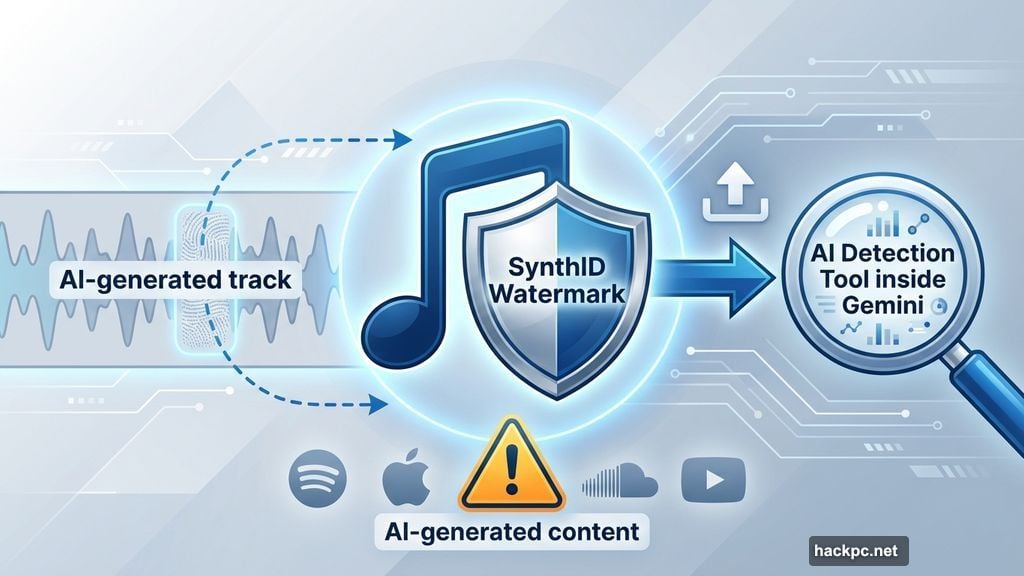
Google’s SynthID watermarking approach is at least a step toward transparency. But watermarking only helps if platforms actually check for it and enforce it consistently.
Who Can Use It Right Now
Music generation in Gemini is available to all users aged 18 and older, globally. It supports eight languages: English, German, Spanish, French, Hindi, Japanese, Korean, and Portuguese. The feature is still in beta, so expect some rough edges.
For casual creators, content makers, and anyone who’s ever wished they could score their own videos without paying for stock music, this is genuinely exciting to play with. Lyria 3’s combination of mood detection, style controls, and SynthID transparency puts it ahead of most consumer-facing AI music tools right now.
Just don’t expect it to replace session musicians anytime soon. But as a creative sandbox? It’s worth opening up.




Comments (0)