
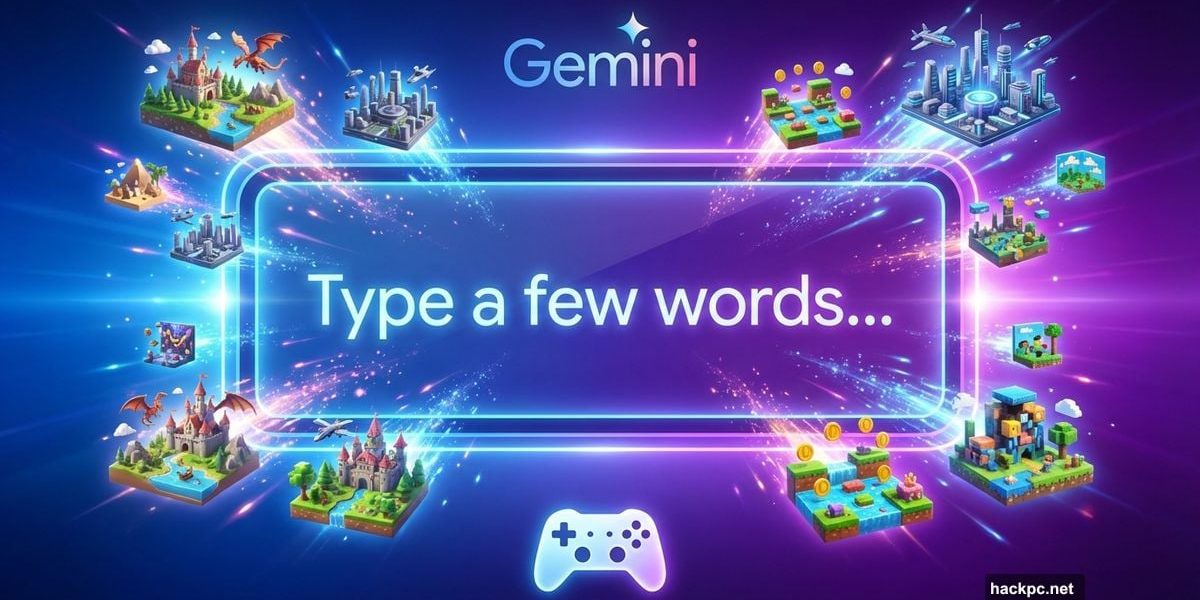
Google dropped something wild on Thursday. Genie 3, their experimental world-building AI, is now available to Google AI Ultra subscribers. And it’s exactly as crazy as it sounds.
Type a few words. Watch a playable 3D world materialize. Navigate through it like a video game. No coding required. No game development experience needed. Just prompts and instant worlds.
This isn’t some distant tech demo anymore. It’s live. Plus, the implications are massive enough that video game stocks actually fell when Google made the announcement.
What Genie 3 Actually Does
Think of Genie 3 as a video game generator on steroids. You describe a world through text prompts or uploaded images. The AI builds it. Then you explore it in real time.
Google showed glimpses of this back in August. But access stayed locked to their Trusted Testers program. Now it’s expanding to AI Ultra subscribers who are 18 or older.
The technology combines three of Google’s powerhouse AI tools. Gemini handles the intelligence. Nano Banana Pro manages the processing. Veo 3 creates the visuals. Together, they generate dynamic environments that respond to your actions as you move through them.
Here’s what makes it different from static AI video generation. These worlds don’t just play back. They react. You control a character. The environment builds itself around your movements. It’s interactive in ways that previous AI tools simply weren’t.
Three Core Functions That Make It Work
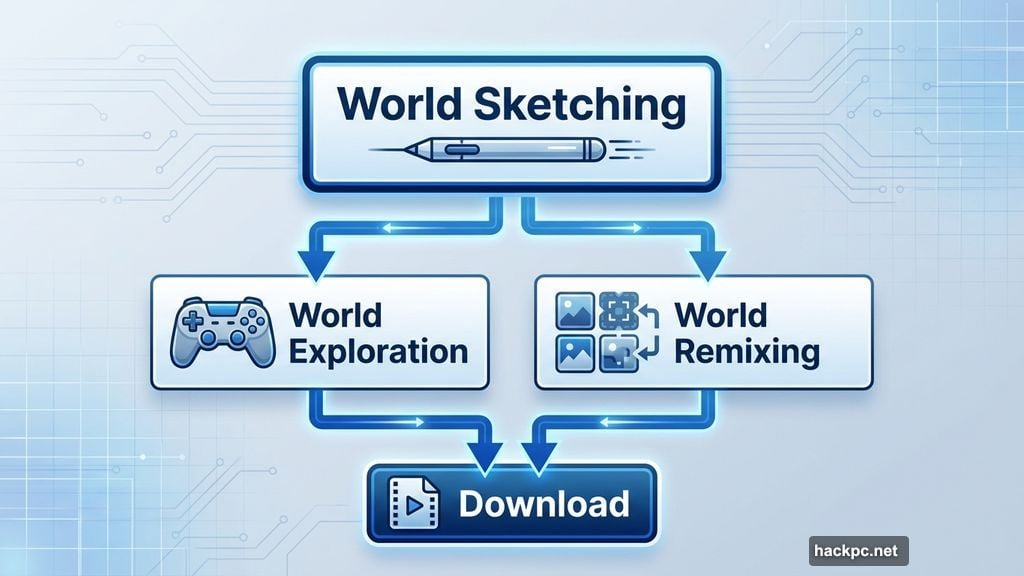
Google breaks Genie 3 into three main capabilities. Each one builds on the others to create complete explorable spaces.
World Sketching lets you craft the initial environment. You write text descriptions or upload reference images. The AI interprets your vision and generates the world along with a character to navigate it.
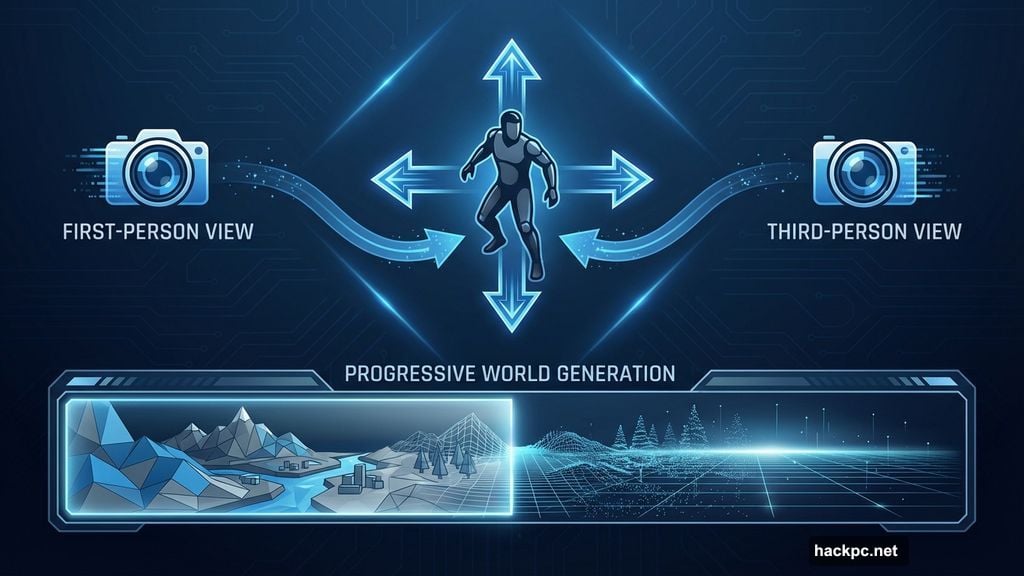
You also choose how that character moves. Walking? Flying? Something weirder? Your call. Plus, you select the camera perspective. First-person view puts you in the character’s shoes. Third-person view gives you that classic video game angle.
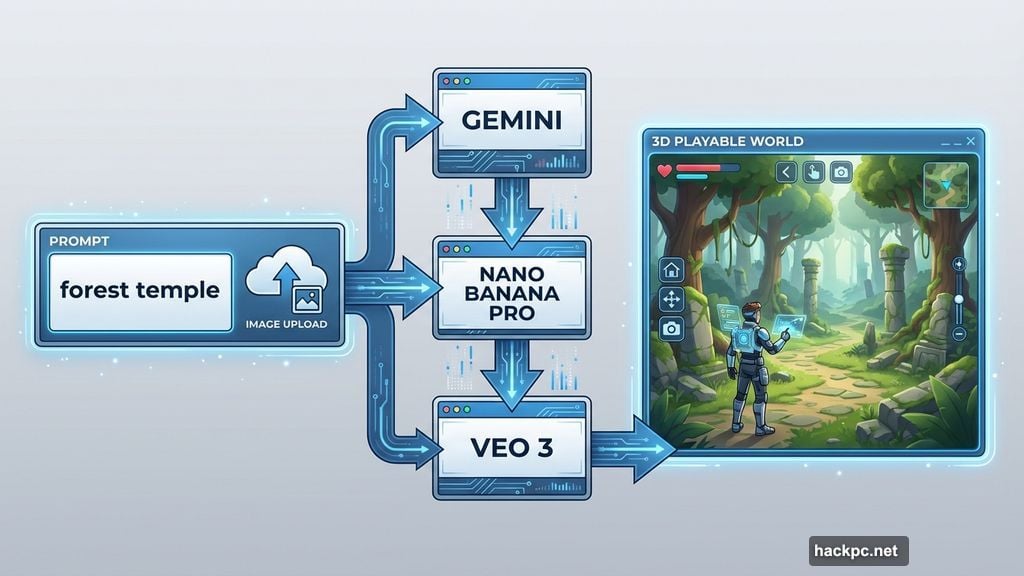
World Exploration happens in real time as you navigate. The AI generates the path ahead based on your movements and interactions. It’s not rendering a complete world upfront. Instead, it builds what you need as you go.
You can adjust camera angles on the fly. Shift perspectives mid-exploration. The world adapts to your viewing choices while maintaining coherence with what’s already generated.
World Remixing opens up creative possibilities. Browse Google’s curated gallery of existing worlds. Pick one that catches your eye. Then modify it with new prompts that build on the original concept.
Once you’ve explored to your satisfaction, download videos of your journey. Share them. Study them. Use them as reference for other projects. The output belongs to you.
The Limitations You Should Know About
Genie 3 is still experimental. Google admits it comes with some rough edges that affect the experience.
Generated worlds might not look photorealistic. They won’t always perfectly match your prompts either. The AI interprets rather than copies. Sometimes that interpretation misses the mark.
Character control varies wildly. Some avatars respond precisely to your inputs. Others feel sluggish or unpredictable. Latency affects certain character types more than others.
Plus, there’s a hard 60-second limit on world generation. You can’t create sprawling environments that take hours to explore. You get a minute. That’s it.
These constraints make sense for an early release. But they also limit practical applications. You’re not building full games here. You’re generating explorable prototypes and concept demonstrations.
Why Game Stocks Dropped on This News
Several video game company stocks fell when Google announced Genie 3’s wider release. That reaction tells you everything about how seriously the industry takes this technology.
Game development traditionally requires massive teams. Artists, programmers, designers, sound engineers. Budgets run into millions. Development cycles span years.
Genie 3 compresses that entire process into seconds. Sure, it’s limited now. But the trajectory is obvious. AI-generated interactive worlds will keep improving. Fast.
Indie developers might celebrate this. Solo creators can prototype game concepts without learning Unity or Unreal Engine. Test ideas quickly. Iterate freely.
But established studios? They see their competitive moat eroding. The technical expertise that once separated professionals from amateurs matters less when AI handles world generation.
Whether this actually threatens major game companies remains unclear. AAA titles offer polish, narrative depth, and gameplay complexity that AI can’t match yet. Yet is the key word.
What This Means for Creative Industries
Game development isn’t the only field watching Genie 3 nervously. Film pre-visualization, architectural walkthroughs, virtual tourism, educational simulations. They all involve creating explorable spaces.
Genie 3 democratizes that creation process. Small production companies can generate environment concepts without hiring entire CGI teams. Educators can build interactive historical recreations. Virtual events can happen in custom-generated spaces.
The barrier to entry for spatial design just collapsed. That’s exciting for creators with vision but limited technical skills. It’s terrifying for professionals whose expertise suddenly became automatable.
Still, there’s a gap between generating a cool world and creating something meaningful. AI handles the technical execution. But concept, purpose, narrative, and emotional impact? Those still require human creativity.
At least for now. How long that remains true is anyone’s guess.
Access Remains Limited for Most People
Unless you’re already a Google AI Ultra subscriber or part of the Trusted Testers program, you can’t try Genie 3 yet. Google promises expansion to more territories “in due course.” Classic vague timeline language.
AI Ultra isn’t cheap either. Google positions it as their premium AI tier. So casual users looking to experiment will either need to subscribe or wait for broader access.
The limited rollout makes strategic sense. Google can manage server load. Monitor how people use the technology. Fix bugs before opening the floodgates.
But it also means most people will experience Genie 3 through YouTube videos and social media posts rather than hands-on exploration. That creates hype without letting the masses verify the claims.
The Bigger Picture Nobody’s Talking About
Here’s what strikes me about Genie 3. It’s not just another AI tool. It represents a fundamental shift in how we create interactive experiences.
For decades, making games or virtual worlds required deep technical knowledge. Programming languages. 3D modeling software. Game engines. That expertise created natural quality filters. Only dedicated professionals could produce polished results.
AI removes those filters. Suddenly, anyone can generate explorable spaces. Quality might vary. But the ability itself becomes universal.
That democratization brings benefits. More voices. More perspectives. More experimental ideas that wouldn’t survive traditional development pipelines.
It also brings challenges. Content moderation. Copyright concerns. The economic impact on creative professionals. The environmental cost of running these massive AI systems.
Google launching Genie 3 to paid subscribers is just the beginning. This technology will spread. Competitors will build similar tools. Capabilities will expand. Limitations will shrink.
The question isn’t whether AI can generate interactive worlds. It clearly can. The question is what we do with that capability and who benefits from it.




Comments (0)