
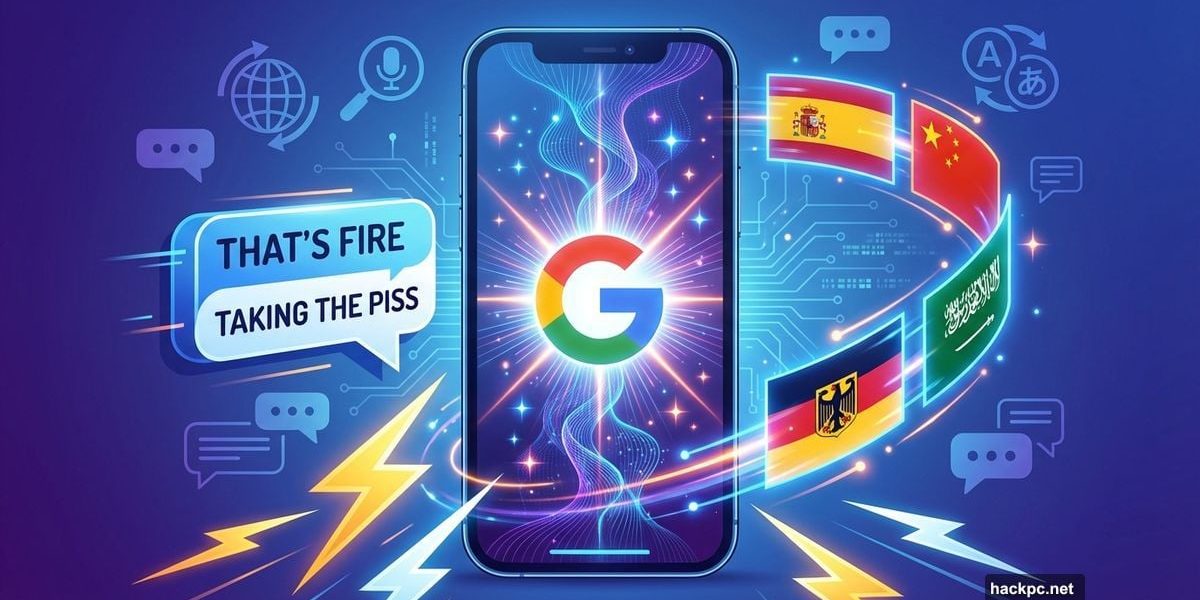
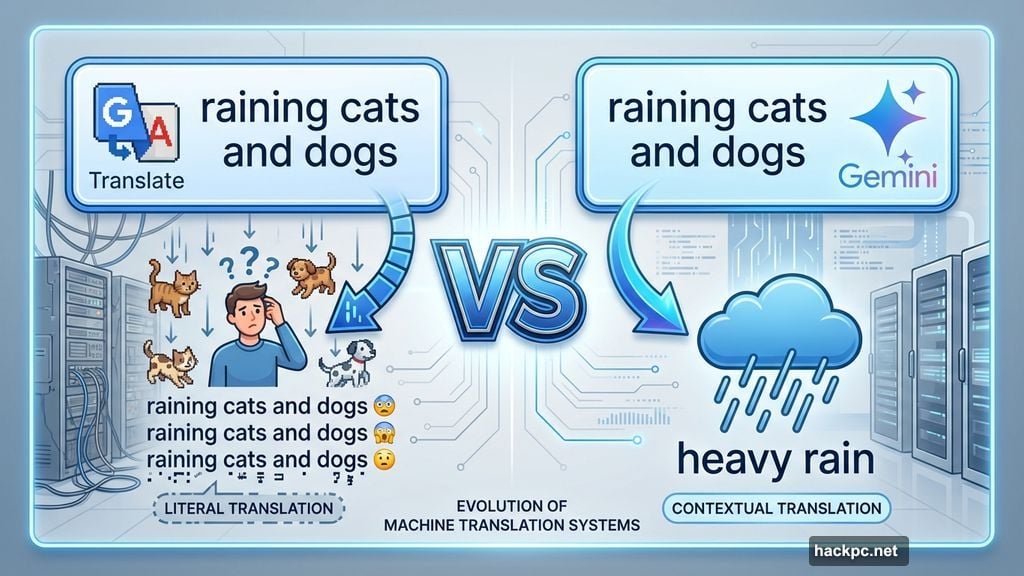
Google Translate used to butcher idioms. You’d type “raining cats and dogs” and get back something about falling pets. Not anymore.
Google just rolled out Gemini-powered updates that make Translate actually understand context. Plus, it can now handle slang, colloquialisms, and those weird phrases every language has. Let’s break down what actually works.
AI Finally Understands Nuance
Direct translation is dead. Google’s AI now considers what phrases actually mean in context.
Take American slang like “that’s fire.” Old Translate would give you something about combustion. Now it understands you mean “that’s excellent.” Same goes for British “taking the piss” or Spanish “estar en la luna.”
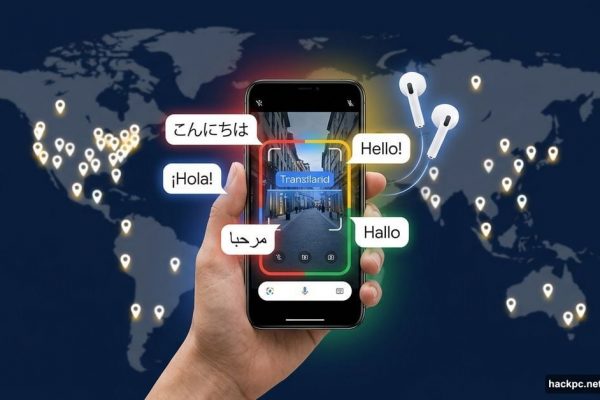
The update works between English and roughly 20 languages. That includes German, Spanish, Chinese, Arabic, and others. You can use it in the iOS and Android apps, plus the web version.
But here’s the catch. It’s rolling out first in the US and India. Other regions get it later. So your results might vary depending on where you live.
Real-Time Speech Translation Gets Personal
Speech translation just got weird. In a good way.
Google added real-time audio translation that pipes directly into your headphones. Think Apple’s AirPods Pro translation feature, but for any headphones you own.
Here’s what makes it different. The AI tries to preserve each speaker’s tone, emphasis, and rhythm. So you don’t just hear words. You hear how people are actually talking.
It works with over 70 languages. But there’s a catch. Android users get it now in beta. iOS users wait until next year. Plus, it’s US-only for now.
Duolingo Should Be Worried
Google added language learning tools to Translate in August. Now they’re getting competitive with Duolingo.
First, streak tracking arrived. Use Translate to practice daily and you’ll see how many days in a row you’ve studied. Whether it guilt-trips you like Duolingo’s owl remains to be seen.
Second, pronunciation feedback got smarter. The AI gives more specific tips on how you’re saying words. Not just “wrong” but “your vowel sound is too short” or “stress the second syllable more.”
These learning features expanded to 20 countries. Germany, India, and Sweden are among the additions. But it’s still limited compared to Duolingo’s global reach.
Two Speed Modes for Different Situations
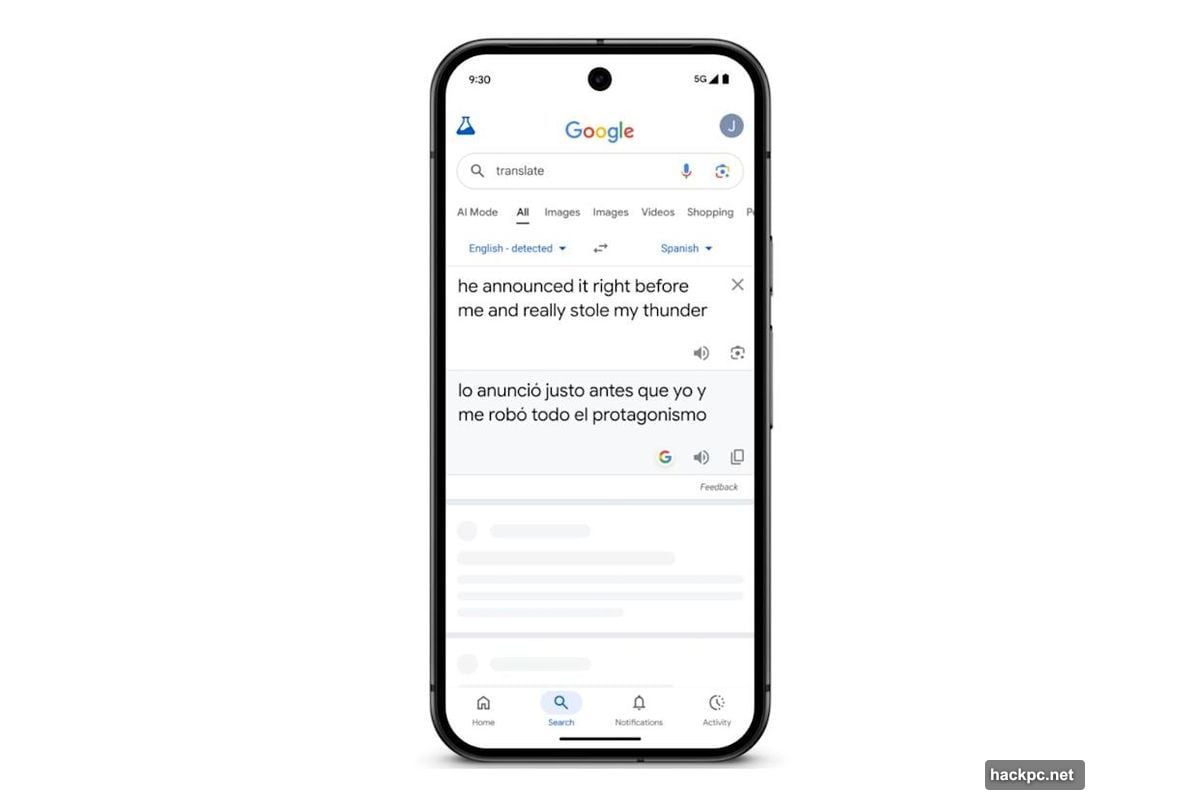
Last month’s update added something clever. You can now choose between “Fast” and “Advanced” translation modes.
Fast mode prioritizes speed. You’re at a bar trying to order a drink? Fast mode gets you close enough, quick. Advanced mode takes longer but uses Gemini for more accurate results.
This makes sense for real-world use. Sometimes “good enough” beats “perfect but slow.” Other times, like translating legal documents or medical information, you want accuracy over speed.
The trade-off is clear. Fast mode might miss nuance. Advanced mode might feel sluggish. Pick based on what matters more in the moment.
Why This Actually Matters
Machine translation sucked at context for decades. It could handle simple sentences but failed spectacularly with anything culturally specific.
Now Google’s betting AI changes that. Gemini understands that “break a leg” means good luck, not an injury wish. It knows “piece of cake” refers to ease, not dessert.
But there’s a bigger implication. If Translate can handle slang and idioms reliably, it becomes useful for casual conversation. Not just tourism or business.
You could actually text with someone in another language. Not perfectly. But well enough to build relationships across language barriers.
The Limitations Nobody Mentions
Google’s marketing sounds great. Reality is messier.
First, these features are geographically limited. US and India get first access. Everyone else waits. So depending on where you live, you might not see these improvements yet.
Second, 20 languages sounds like a lot. But there are over 7,000 languages spoken worldwide. Google’s update covers maybe 0.3% of them. Popular languages? Sure. Minority languages? Still ignored.
Third, AI translation isn’t perfect. It’s better than before. But it still makes mistakes with complex idioms or regional dialects. Don’t use it for anything where accuracy is critical.
What This Means for Language Learning Apps
Duolingo built a $6 billion company on language learning. Google just copied their streak tracking and pronunciation feedback.
And Google has one massive advantage. Integration. Translate is already installed on millions of Android phones. It’s free. It doesn’t nag you with push notifications (yet).
But Duolingo has gamification down to a science. Their courses are structured. Their progression feels rewarding. Google’s approach is more utilitarian.
So will Translate replace Duolingo? Probably not for serious learners. But for casual users who just want basic proficiency? Maybe.
Real-World Testing Reveals Gaps
I tested the new features with Spanish, German, and Japanese. Results were mixed.
Spanish slang worked surprisingly well. “Está chido” correctly translated to “that’s cool” instead of literal nonsense. German compound words improved too.
But Japanese idioms still confused it. “猫の手も借りたい” (literally “want to borrow a cat’s paw,” meaning “I’m swamped with work”) came back as a weird phrase about needing feline assistance.
So progress? Yes. Perfect? Not even close.
The Privacy Question
Real-time audio translation means Google’s AI is listening to your conversations. Processing them. Analyzing tone and cadence.
Google says processing happens on-device when possible. But “when possible” is doing a lot of work in that sentence. Complex translations likely hit Google’s servers.
Your comfort level with that determines whether speech translation is useful or creepy. There’s no easy answer. Just trade-offs between convenience and privacy.
What Comes Next
Google’s treating Translate seriously again after years of neglect. That’s good news.
But the real test is whether these AI improvements keep getting better. Or if they plateau at “pretty good” like voice assistants did.
My guess? Google’s betting on AI to differentiate Translate from competitors like DeepL and iTranslate. So expect more Gemini-powered features in 2025.
Whether they’ll be genuinely useful or just AI gimmicks remains to be seen. For now, Translate is significantly better than it was six months ago. That counts for something.


Comments (0)