
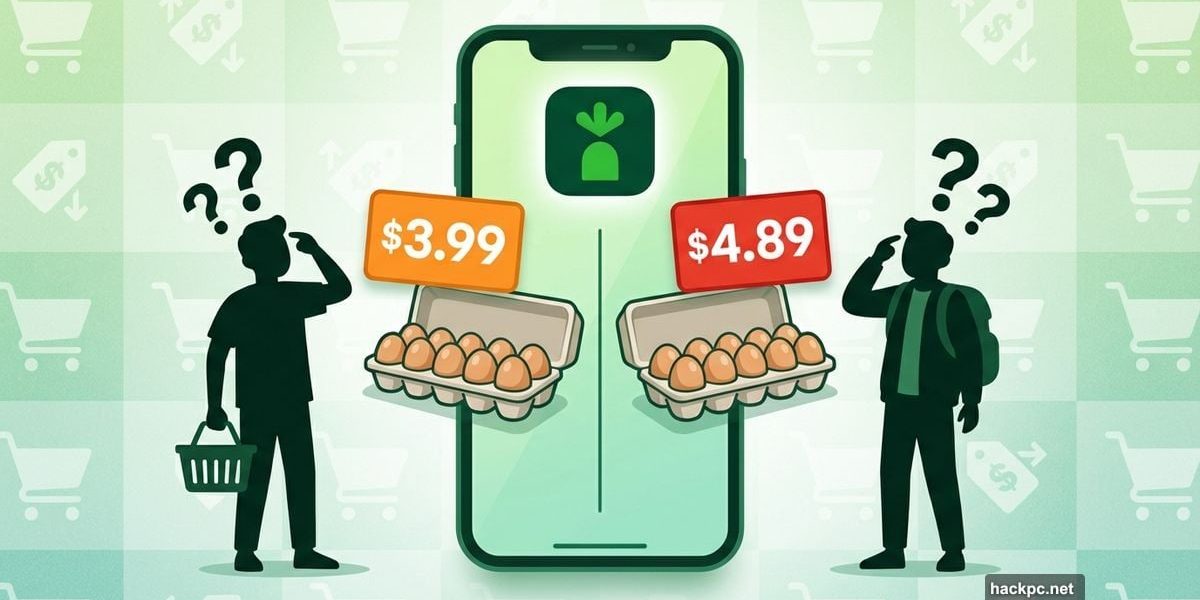
Instacart just got caught running pricing experiments that nobody asked for. A joint investigation revealed the grocery delivery app showed wildly different prices to different customers for the exact same products from the same store.
Here’s the uncomfortable truth. Almost 75% of items tested displayed multiple price points to shoppers. So your neighbor might pay $3.99 for eggs while you’re charged $4.89. Same store. Same eggs. Different price tag.
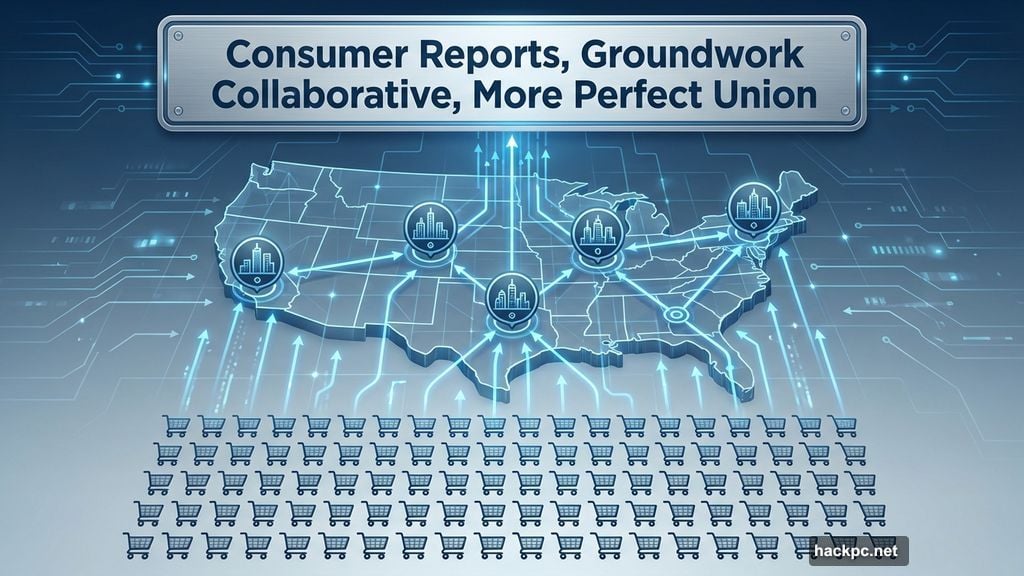
Consumer Reports, Groundwork Collaborative and More Perfect Union teamed up to expose this practice. They enrolled 437 shoppers across four cities to add identical items from the same stores to their Instacart carts. What they found should make anyone using the app pretty angry.
The Price Gaps Are Massive
The numbers tell a disturbing story. On average, the highest price shown for an item ran 13% higher than the lowest price. But some gaps stretched much wider.
One item showed a 23% price difference between shoppers. That’s not a rounding error or minor variation. That’s the difference between paying $4 or nearly $5 for the same product.

Plus, this affected nearly three-quarters of all grocery items tested. We’re not talking about a few outliers. This appears to be systematic testing across most of the platform’s inventory.
Most experiments happened at Safeway and Target stores. Both chains showed similar patterns of price variation. Target quickly distanced itself from the practice, telling the New York Times they’re “not responsible for prices on the Instacart platform.”
Instacart Says It’s Not Dynamic Pricing
The company’s defense feels weak at best. Instacart claims this isn’t dynamic pricing because it doesn’t factor in supply and demand. Instead, they frame it as standard retail experimentation.
Their official statement reads: “Just as retailers have long tested prices in their physical stores to better understand consumer preferences, a subset of only 10 retail partners — ones that already apply markups — do the same online via Instacart.”
But there’s a crucial difference. Physical store tests typically involve different locations or time periods. Everyone in the store at the same moment sees the same shelf price. Online testing can show different prices simultaneously to people ordering from the identical digital storefront.
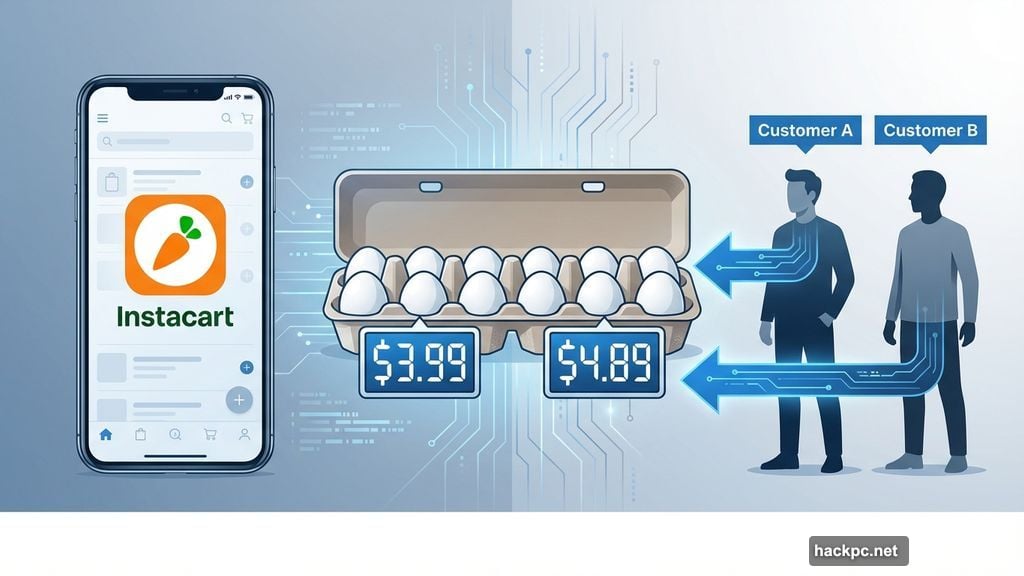
Instacart insists no personal demographic data influenced pricing. They characterize the tests as random and short-term. Yet the scope of testing affecting 75% of items suggests this wasn’t exactly a limited experiment.
Moreover, the company told the Times they’ve since discontinued pricing tests on Target orders. That timing seems awfully convenient given this investigation just went public.
The Trust Problem Nobody’s Addressing
Here’s what really bugs me about this situation. Grocery shopping already feels expensive enough without wondering if your neighbor’s getting a better deal on milk.
Instacart published a blog post today claiming these tests help retailers “invest in lower prices.” That’s corporate spin at its finest. Testing higher prices on customers doesn’t magically create savings. It identifies maximum willingness to pay.
Traditional retailers test prices too. Fair point. But when you walk into a physical store, you can compare your receipt with other shoppers. Online platforms remove that transparency. You have no idea if you’re paying more than the person who ordered 10 minutes before you.
So the platform creates an information asymmetry that heavily favors the company. They know exactly what everyone’s paying. You don’t. That power imbalance should concern anyone who values fair pricing.
What This Means for Your Grocery Bill
Should you delete Instacart? That depends on your priorities and alternatives. The convenience remains real. But so does the risk of paying inflated prices.
Some practical steps can help. Compare Instacart prices against store apps or websites before ordering. Check multiple times to see if prices fluctuate. Consider shopping in person when possible to guarantee consistent pricing.
Remember that markup transparency matters. Instacart adds service fees and delivery charges on top of item costs. Those are disclosed. Random price testing on identical items? That stayed hidden until this investigation.
The grocery delivery market needs better consumer protections. Until regulators step in, shoppers bear the burden of vigilance. Question every price. Compare constantly. Vote with your wallet when platforms abuse your trust.




Comments (0)