

Linux kernel 6.19 landed Sunday with performance boosts for aging AMD hardware. But the real surprise? Linus Torvalds himself teased what’s coming next.
The kernel update brings meaningful improvements for older AMD graphics cards and hints at a fresh numbering system. Plus, the timing couldn’t be better for users stuck on decade-old GPUs that still work great.
Old AMD GPUs Get New Life
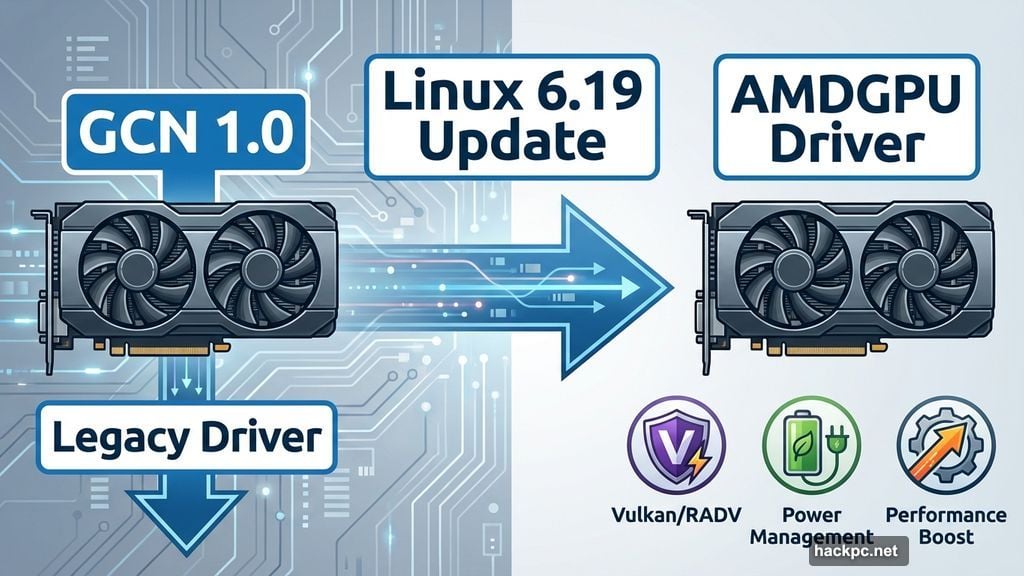
Radeon HD 7000 series cards just became far more useful on Linux. Version 6.19 adds full support for the modern AMDGPU driver on these older GCN 1.0 and 1.1 graphics processors.
What does that mean practically? Better performance, Vulkan support through RADV, and smarter power management. Cards from 2012-2013 that previously ran on legacy drivers now tap into current GPU technology.
Many budget gamers and home server builders still run these cards. They’re cheap on the used market and handle basic tasks fine. Now those systems get driver improvements that felt impossible just months ago.
HDR Support Takes a Leap Forward
The DRM Color Pipeline addition marks a significant step for HDR displays on Linux. This framework gives applications better tools to handle high dynamic range content properly.
Moreover, Intel’s newer Wildcat Lake and Nova Lake chips gained expanded support. Early adopters of these processors won’t face compatibility headaches when kernel 6.19 arrives on their distros.
The update also includes refined Asus Armoury driver support and PCIe link encryption features. These additions matter most for enthusiasts running gaming rigs or workstations with specific hardware needs.
Version 7.0 Breaks the Numbering Pattern
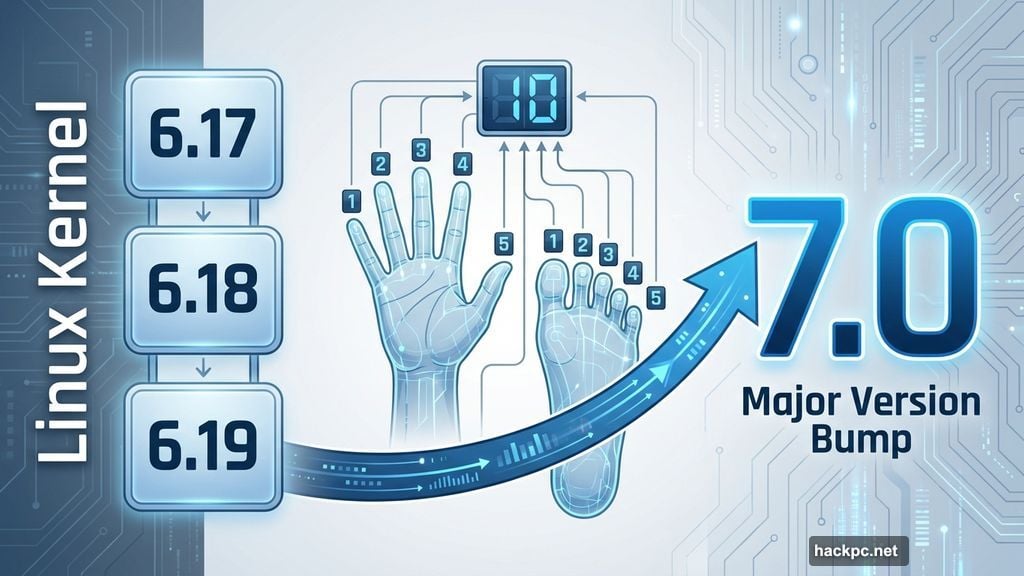
Here’s where things get interesting. Torvalds admitted he’s “running out of fingers and toes” for version counting. So the next kernel jumps to 7.0 instead of continuing the 6.x series.
This isn’t just cosmetic. Major version bumps typically signal meaningful architectural changes or feature sets. However, Torvalds kept details sparse in the announcement note.
Early reports suggest version 7.0 could bring even deeper AMD GPU improvements, display support for Qualcomm Snapdragon 8 Elite Gen 5, and expanded sensor monitoring for Asus motherboards. But nothing’s confirmed yet.
When You’ll Actually Get This Update
Rolling release distributions move fastest. Arch Linux and Fedora users should see kernel 6.19 within days or weeks through normal system updates.
Stable distributions take longer. Ubuntu LTS, Debian, and similar distros prioritize stability over cutting-edge features. Those users might wait months for kernel 6.19 to land in their repositories.
That’s the trade-off. Rolling releases get new features immediately but risk occasional instability. Stable distros lag behind but rarely break unexpectedly.
The AMD GPU Story Matters More Than You’d Think
Giving decade-old graphics cards modern driver support contradicts typical tech industry behavior. Most companies abandon hardware after 3-5 years maximum.
But Linux kernel developers play by different rules. They support hardware until it physically dies, not when manufacturers stop caring. This philosophy keeps usable equipment out of landfills.
Plus, it gives budget-conscious users real options. A $30 used Radeon HD 7950 now runs current drivers with Vulkan support. That’s incredible value for basic gaming or content creation work.
The kernel 6.19 update proves open source’s strength. Nobody profits directly from supporting old AMD cards. Developers do it because it’s the right technical decision and helps users with limited resources.
Kernel 7.0 will bring its own surprises when it arrives. But for now, 6.19 delivers tangible improvements to hardware many thought had reached end-of-life. That’s worth celebrating in an industry obsessed with forcing upgrades.




Comments (0)