

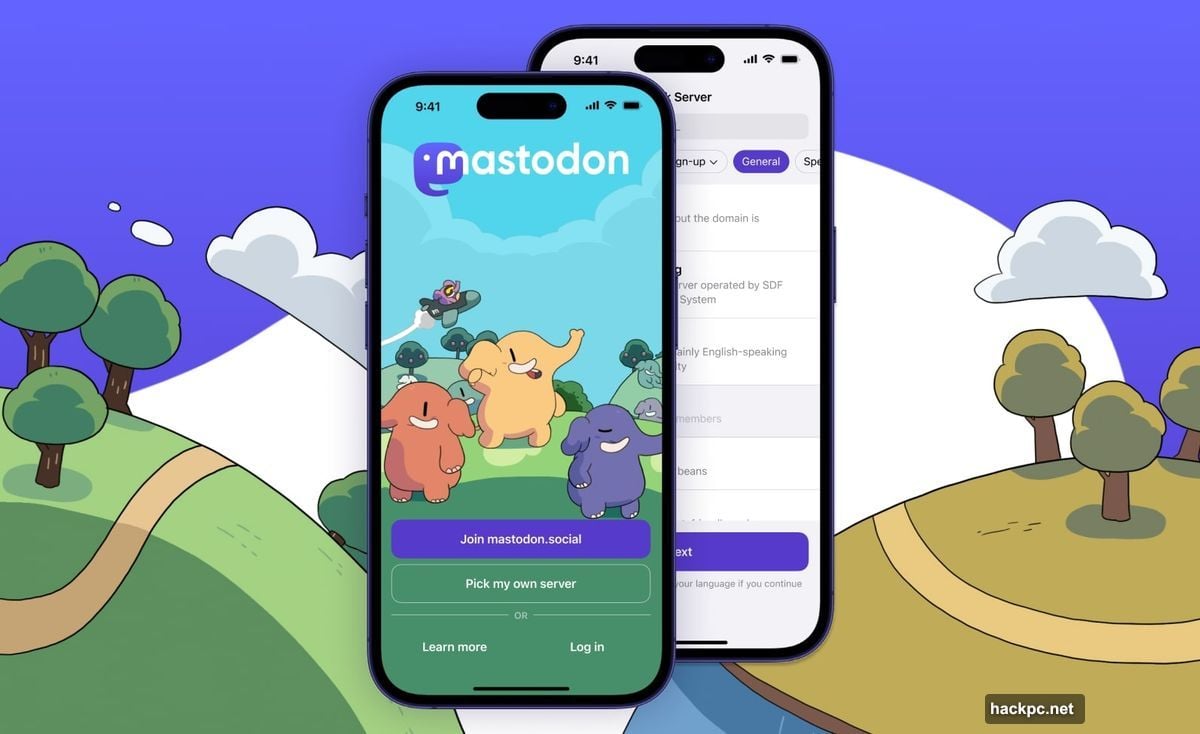
Mastodon has always been the social network that tech enthusiasts love and everyone else finds confusing. Now, the decentralized platform wants to change that — starting with the people most likely to bring others along with them.
On Wednesday, Mastodon announced a fresh wave of updates aimed at two distinct groups: the newcomers who bounce off the platform after five minutes, and the creators who could give those newcomers a reason to stick around. The plans were laid out in a blog post co-authored by technical director Renaud Chaput and product designer Imani Joy.
A Growing Team With a New Direction
The timing of this announcement isn’t random. Over the past 18 months, Mastodon has quietly been building out its core development team, bringing in people with experience across web, mobile, and back-end engineering. Plus, it hired a dedicated designer — something you’d think a major social platform would have had from the start, but Mastodon has long run lean as a nonprofit.
That investment is now showing up in a more coherent product vision. Instead of just maintaining the existing experience, the team is making deliberate choices about what Mastodon should feel like for someone brand new to the fediverse.
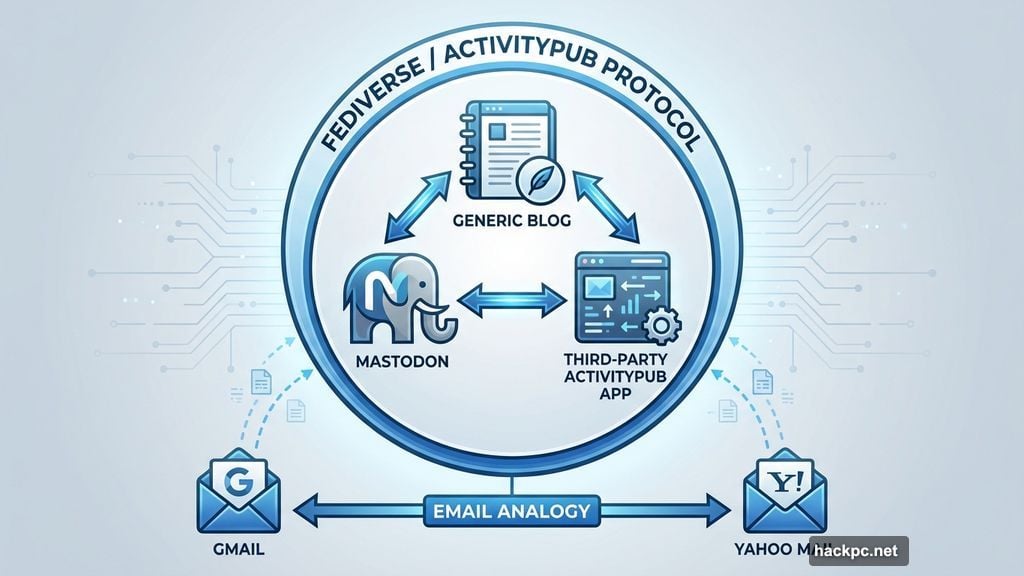
The fediverse, if you haven’t heard the term, is the broader decentralized social web that Mastodon belongs to. It runs on a shared standard called the ActivityPub protocol, which lets different platforms talk to each other even if they’re run by entirely different organizations. Think of it like email — you don’t need to use Gmail to send messages to someone who does.
The Onboarding Problem Mastodon Needs to Fix
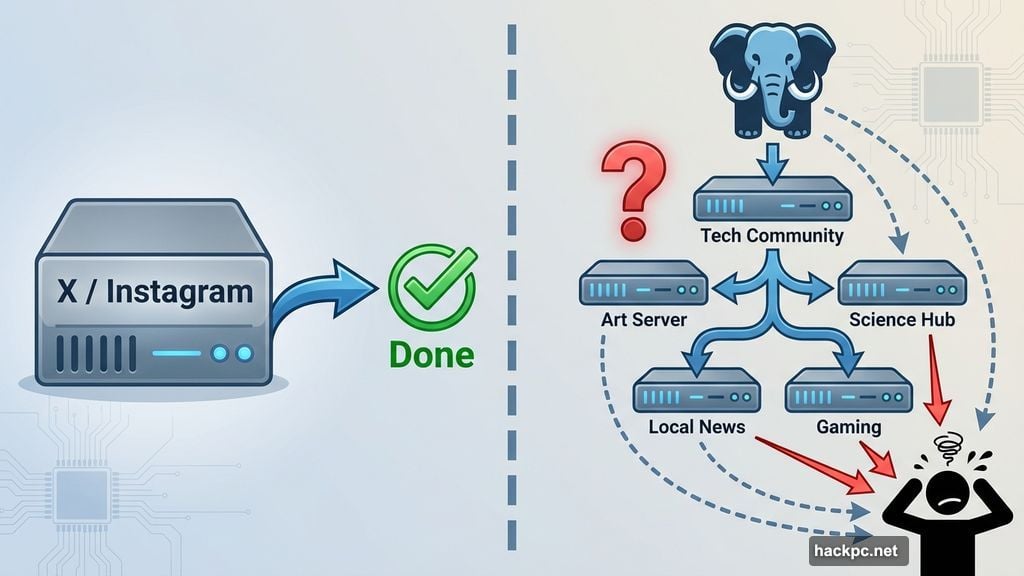
Here’s the honest truth about why Mastodon struggles to keep new users: picking a server is weird and unfamiliar.
When you sign up for X or Instagram, you create a username and move on. Mastodon asks you to first choose which community server you want to live on. It’s a meaningful distinction — each server has its own rules, culture, and moderators — but it feels like unnecessary friction when you just want to post something.
That friction has real consequences. Mastodon currently sits somewhere between 750,000 and 1 million monthly active users, depending on which tracker you check. Mastodon’s own figures put it around 785,000. For context, that’s a tiny fraction of X’s user base, even as X continues to shed advertisers and frustrated power users.
Mastodon’s new updates promise to make the server-selection step easier to understand. The platform also wants to steer newcomers toward smaller, more specialized servers rather than the massive default options. As the blog post puts it, “Mastodon is best when communities are spread across many independent servers, each with its own character and focus.” Crowding everyone onto one giant server defeats the whole philosophical point of decentralization.
Server Operators Get Powerful New Admin Tools
Running an independent Mastodon server is a labor of love. Moderators deal with spam, harmful content, and the technical headaches of keeping a server online — usually without pay. So this next batch of updates should make those operators’ lives considerably easier.
New admin tools will include support for external blocklists, which means small servers can tap into community-maintained lists of known bad actors instead of manually reviewing every report. Mastodon will also add content scanning for detecting illegal material and spam automatically.
There’s also a practical storage solution in the pipeline. Remote media — posts and images from other servers that your users interact with — can eat up enormous amounts of disk space. A new option to serve that content through a trusted third party should significantly reduce storage costs for indie operators. That’s the kind of mundane-but-critical improvement that keeps the decentralized web actually functional.
Creators Are the Real Target Here
The most strategically interesting part of Mastodon’s announcement is the push to attract public figures, journalists, and content creators. This is clearly where the platform sees its biggest growth opportunity.
A redesigned user profile will let creators showcase their work more prominently. An enhanced compose experience is also coming, giving people more expressive tools when they post. Both feel overdue — Mastodon’s current profile pages are functional but hardly inspiring for someone trying to build an audience.
The most clever addition, though, is an email notification option that lets people follow a creator’s updates without needing a Mastodon account at all. Someone could subscribe to a journalist or newsletter writer the same way they’d sign up for an email list. That gives creators a way to reach beyond Mastodon’s existing user base, which is a genuine barrier today. And it gives curious readers a low-commitment way to sample what the platform offers before fully committing to it.
Quote Posts and Collections Are Already Rolling Out
Some of these changes are already live. Mastodon recently launched Quote Posts — a familiar feature from X and Threads, but built with more user controls so people can limit who quotes their content. That’s a thoughtful distinction that addresses one of the more common complaints about how quote posting gets weaponized for harassment.
Collections are also in the works. Think of these as Mastodon’s version of Starter Packs — curated lists of recommended accounts to help new users quickly find people worth following. Discovery has always been a weak spot, so this addresses a real pain point.
Leadership Changes at the Top
All of this is happening alongside a significant shift in how Mastodon is run. Founder Eugen Rochko stepped down as CEO earlier this year as the platform transitioned to a nonprofit structure. Felix Hlatky, based in Austria, has taken over as executive director.
Additionally, Dr. Marius Rothermund — a certified German lawyer — has joined to handle legal responsibilities during the restructuring. That restructuring spans three markets: the United States, Germany, and Belgium. It’s a deliberately careful approach for a platform that positions itself as a trustworthy alternative to profit-driven social networks.
Whether that careful, principled approach can compete with the sheer momentum and network effects of X and Threads remains an open question. But Mastodon is clearly done waiting for people to find it on their own. It’s coming to meet them halfway — and it’s bringing better tools for creators to lead the way.




Comments (0)