

Meta is reportedly preparing for one of its biggest rounds of layoffs ever, even as the company continues to pour money into artificial intelligence at a staggering pace.
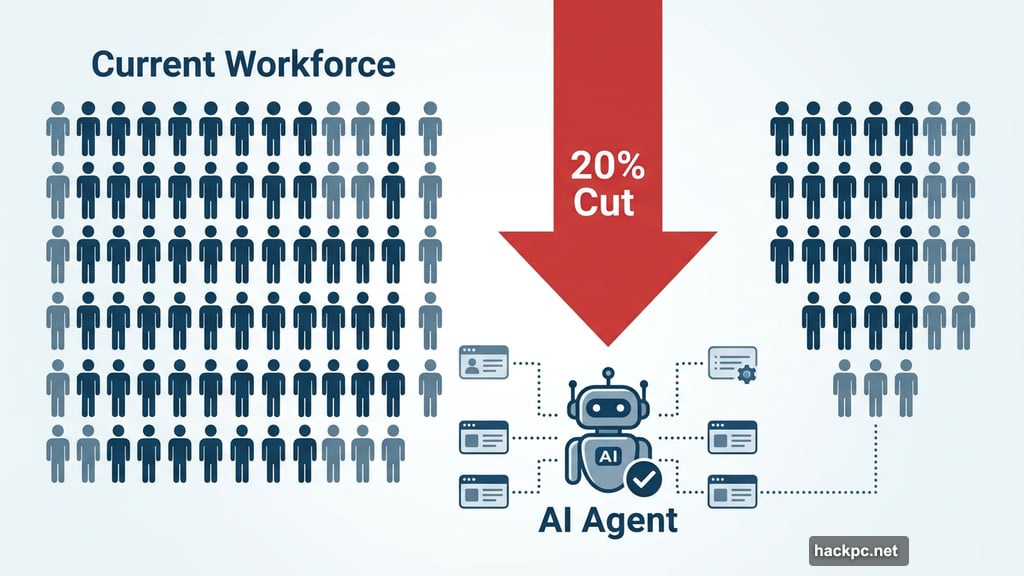
According to a Reuters report citing three anonymous sources, Meta plans to cut about 20% of its workforce. No exact headcount or official timeline has been set yet, but senior executives have already been asked to start planning for the cuts. Meta did not respond to a request for comment.
So what’s driving this? Two things at once, which makes it a strange story to unpack.
AI Agents Are Replacing Human Roles
The first reason for the cuts is brutally simple. Meta believes AI agents can now handle work that previously required full teams of people.
Earlier this year, CEO Mark Zuckerberg told investors he was seeing “projects that used to require big teams now be accomplished by a single very talented person.” That’s the direction Meta is heading. Fewer employees, more automation.
It’s a trend happening across Silicon Valley right now. Amazon, Block, and Atlassian have all announced layoffs in recent months, each citing greater reliance on AI tools as a key reason. Meta is far from alone in making this call.
But here’s where it gets complicated. Meta isn’t cutting spending overall. It’s cutting people specifically.
Billions Keep Flowing Into AI Infrastructure
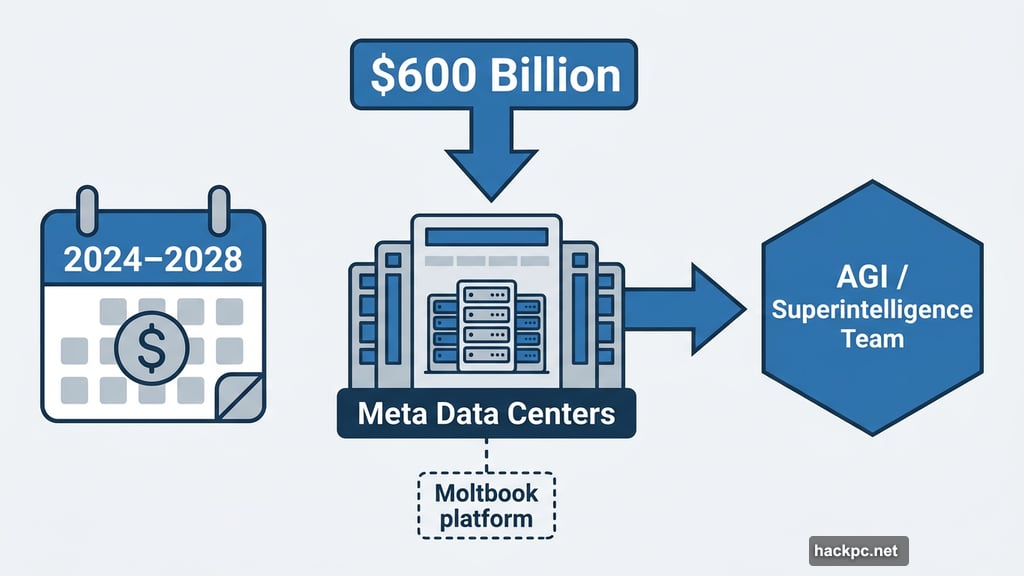
Even as it plans to reduce headcount, Meta is spending at a scale that’s hard to wrap your head around. The company reportedly still plans to drop $600 billion on data centers by 2028. It recently bought Moltbook, a social platform for AI, and is acquiring Chinese AI startup Manus for $2 billion.
Zuckerberg has also been aggressive in the ongoing AI talent war. He personally poached Scale AI co-founder Alexandr Wang in a deal reportedly worth $14.3 billion and offered $100 million signing bonuses to lure engineers away from OpenAI. These aren’t small bets. These are the kinds of moves you make when you believe the future of your company depends entirely on winning at AI.
Meta also created a dedicated “superintelligence team” working toward achieving artificial general intelligence, or AGI, which refers to AI systems that can reason and learn across a wide range of tasks the way humans can.
The tension here is real. Meta is simultaneously cutting costs and ramping up spending, depending on which bucket you’re looking at.
The AI Wins Haven’t Arrived Yet
Despite all this spending, CNET AI expert Katelyn Chedraoui points out that Meta’s big AI projects haven’t produced many visible results.
“Meta has been spending big to keep up with its AI ambitions, from hiring to data center construction,” Chedraoui said. “But all that cash hasn’t led to many public wins, with recent reports saying it will delay the release of its new foundational model, named Avocado. Rumors of cost-cutting measures like layoffs are another sign Meta is struggling.”
The Avocado delay isn’t an isolated stumble. Meta also ran into serious problems last year rolling out its Llama 4 models to the public. More recently, Meta’s AI-powered smart glasses landed the company in a class action lawsuit tied to the capture of sensitive personal information, including footage of private situations.
These setbacks matter because they show a gap between how much Meta is investing and what it’s actually delivering publicly.
Llama 4 Struggles and Smart Glasses Backlash
The Llama 4 rollout was meant to establish Meta as a serious contender in the large language model (LLM) race alongside OpenAI and Google. Instead, the release was rocky and drew criticism about the models’ capabilities compared to competitors.
Then came the smart glasses problem. Meta’s Ray-Ban smart glasses with AI capabilities were one of the company’s most visible consumer products. But the lawsuit alleging they captured sensitive user information without consent has become a significant PR headache at a moment when Meta desperately needs public confidence in its AI products.
Both situations feed into a broader question investors and employees are probably asking right now. When does all this spending actually start paying off?
This Has Happened Before, but the Stakes Feel Different
This wouldn’t be Meta’s first major round of layoffs. Between 2022 and 2023, the company let go of 21,000 employees during a period Zuckerberg called the “year of efficiency.” Those cuts were painful but widely seen as necessary after Meta over-hired during the pandemic boom.
However, this moment feels different. Those earlier cuts came before Meta went all-in on AI as its central identity. Now, the company has publicly tied its entire future to AI development. Cutting 20% of the workforce in that context sends a more complicated signal.
It suggests that even with the most aggressive AI spending in its history, Meta hasn’t found a way to make the numbers work with its current headcount. The AI tools themselves are now being used as justification for replacing the people who were hired to build them.
That’s an uncomfortable loop. And it’s one that workers at Meta and across Silicon Valley are navigating in real time.
The honest reality is that Meta is gambling on an AI future it hasn’t fully delivered yet. Whether these layoffs are the painful but necessary step toward getting there, or a sign that the strategy isn’t working as planned, probably depends on whether Avocado, the smart glasses, and whatever comes next finally make good on the hype.
The money is clearly committed. Now Meta needs the results to match.




Comments (0)