
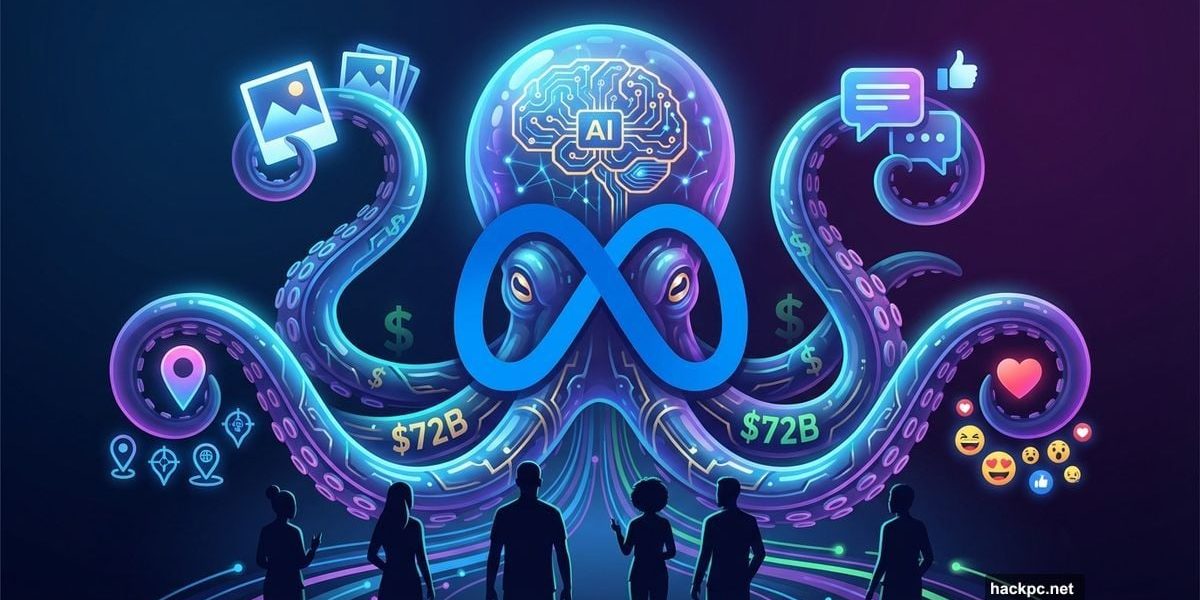
Meta just announced it’s cranking AI spending to $135 billion in 2026. That’s almost double what it spent last year. Why the massive bet?
Because Meta already knows more about you than any other company on earth. And now it plans to weaponize that data to build “personal superintelligence.”
Mark Zuckerberg spelled it out during Wednesday’s earnings call. The goal isn’t just another chatbot. It’s AI that understands your relationships, your interests, your entire digital existence. Plus, Meta believes this gives them an unbeatable advantage over competitors.
Here’s the uncomfortable truth: You’ve been training Meta’s AI for years without realizing it.
The Data Goldmine You Built for Free
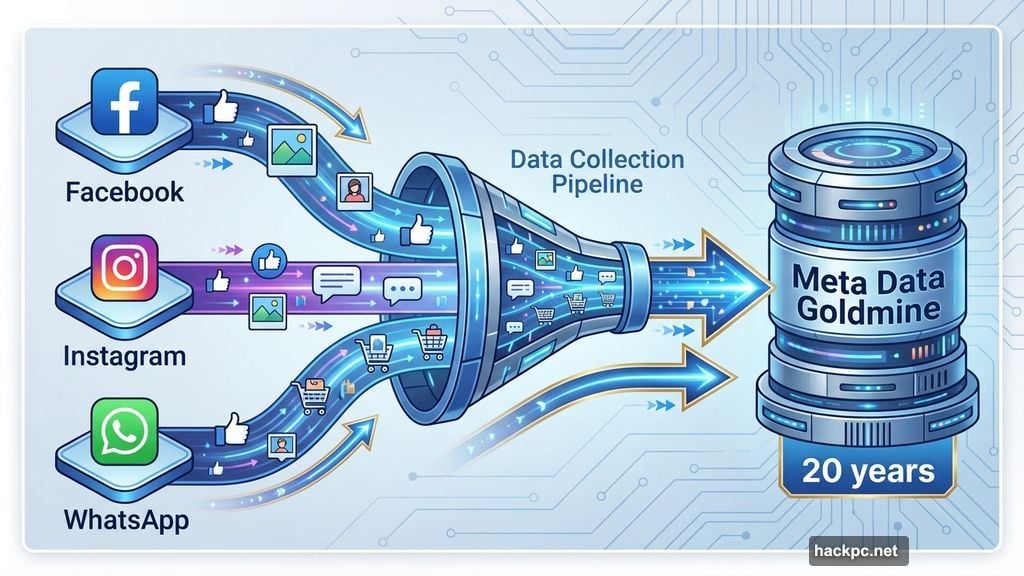
Meta didn’t start collecting your data yesterday. Facebook, Instagram, and WhatsApp have been vacuuming up information about you for two decades.
Every post you’ve liked. Every photo you’ve tagged. Every message you’ve sent. Every ad you’ve clicked. Meta stored it all, analyzed it, and sold insights to advertisers. That’s how they became a trillion-dollar company.
Now they’re using that same data to train AI models. And unlike competitors, Meta doesn’t need to ask permission. You already agreed when you signed up for Facebook.
The company calls this “unique context.” Translation: They know what you care about, who you talk to, and what makes you click. That’s rocket fuel for personalized AI.
Personal Superintelligence Sounds Creepy Because It Is
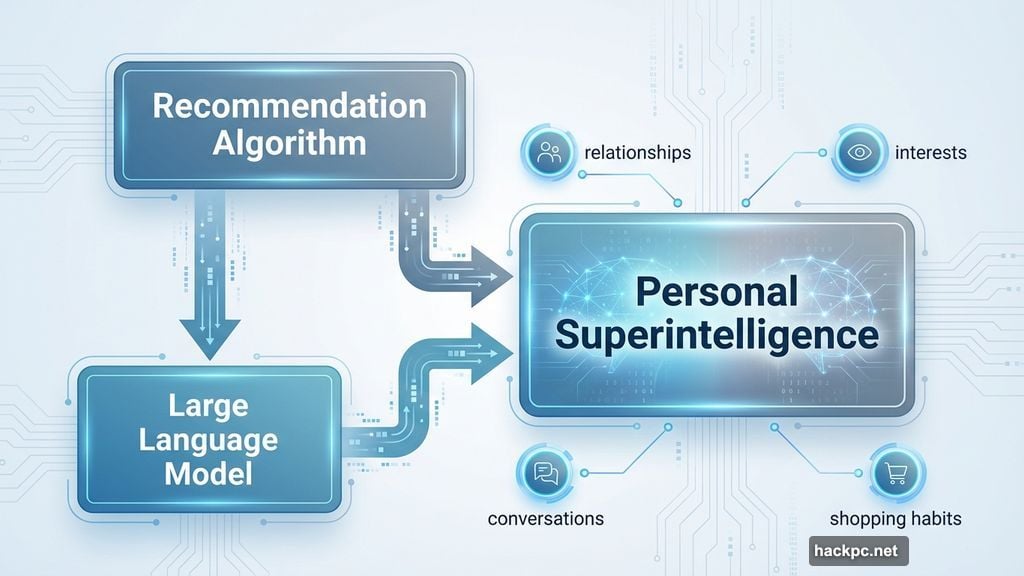
Zuckerberg’s vision for 2026 centers on something he calls “personal superintelligence.” Basically, AI that’s smarter than humans and knows you intimately.
Think about what that means. An AI assistant that remembers every conversation you’ve had. Knows your relationship status, your work history, your shopping habits. Understands your sense of humor and your insecurities.
Meta already uses similar technology to build your social media feed. Soon, that same system will power chatbots, smart glasses, and “agentic AI” that handles tasks without you asking.
The company plans to merge its recommendation algorithms with large language models. So the AI that decides what you see in your feed will also control what the chatbot tells you.
That level of personalization requires massive amounts of personal data. Fortunately for Meta, they’ve been hoarding yours for years.
You Can’t Opt Out Even If You Want To
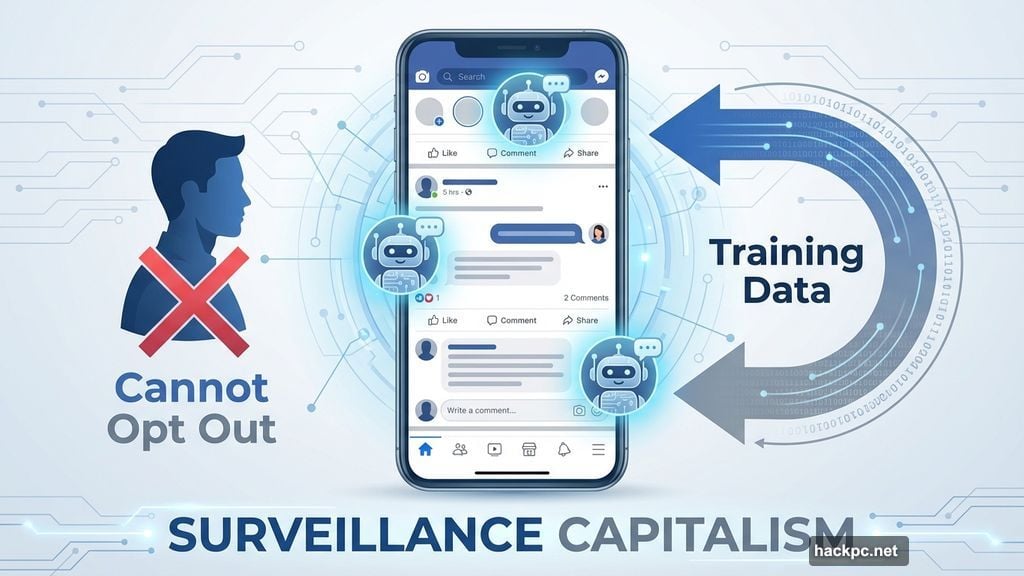
Meta AI appears everywhere on Facebook and Instagram now. Search bar, messaging, comments sections. It’s inescapable.
Worse, Meta doesn’t let you opt out of training their models with your data. You can mute Meta AI, sure. But you can’t turn it off completely or stop it from learning from your posts.
Google and Microsoft likely do something similar with YouTube and LinkedIn data. But Meta has a proven track record of turning personal information into profit. They perfected surveillance capitalism long before AI became the hot buzzword.
Previous AI integrations sparked backlash for good reason. WhatsApp users revolted when Meta started using chat data. The company’s plan to personalize ads based on AI interactions drew similar outrage.
Yet Meta keeps pushing forward. Because what are you going to do, delete Facebook?
Meta’s Rocky AI Journey Just Got Expensive
Last year didn’t go smoothly for Meta’s AI ambitions. The company hired top researchers from OpenAI and Apple during the summer. Those moves made headlines.
Then internal reports revealed chaos. The new hires clashed with Meta’s existing FAIR lab over strategy and direction. Progress stalled. No major public releases emerged.
Meta eventually laid off hundreds of AI employees. Yann LeCun, a legendary AI pioneer, left his chief scientist role at the end of 2025.
Meanwhile, competitors crushed it. Google released Gemini 3 with industry-leading reasoning. OpenAI rushed out GPT-5.2 to catch up. Anthropic’s Claude impressed everyone with its coding abilities.
Google even launched personalized intelligence in Search. So Meta’s big advantage might not last long.
The $135 Billion Question
That brings us back to Meta’s massive spending increase. Capital expenditures will jump from $72 billion to potentially $135 billion this year. Almost all of it goes toward AI development.
Is it worth it? For Meta shareholders, probably. The company reported better-than-expected earnings. Revenue keeps growing. The bet on AI might pay off handsomely.
For users? That’s a different story.
Every dollar Meta spends on AI comes with a hidden cost: your privacy. The more personalized their systems become, the more they need to know about you. And Meta has shown zero interest in letting you control that process.
Zuckerberg promised AI that “understands people’s unique personal goals” and tailors content to “improve their lives in the ways that they want.” Sounds great in theory.
But who decides what “improves” your life? Meta’s AI. Trained on Meta’s data. Optimized for Meta’s business model. Which is selling ads based on surveillance.
Personal superintelligence might be the future. Just don’t expect it to serve your interests over Meta’s.




Comments (0)