

Meta has been playing catch-up in the AI race for a while now. But this week, the company made a bold move to change that narrative.
On Wednesday, Meta unveiled Muse Spark, its newest artificial intelligence model. And this one is different from anything the company has released before. It comes straight from Meta Superintelligence Labs, a team assembled specifically to help Meta compete with the biggest names in AI.
The $14.3 Billion Team Behind Muse Spark
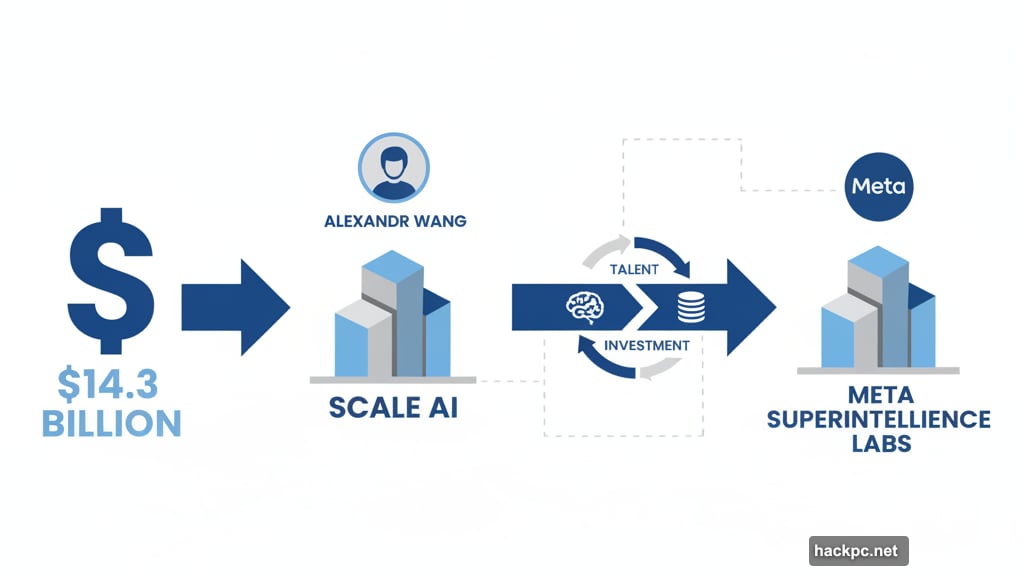
Meta didn’t build this team quietly. The company spent big to recruit top AI talent from rival companies last year, creating what it calls Meta Superintelligence Labs.
Leading that charge is Alexandr Wang, co-founder and CEO of Scale AI. Wang joined Meta’s AI effort after the company agreed to make a staggering $14.3 billion investment in Scale AI. That’s not a small bet. That’s a statement.
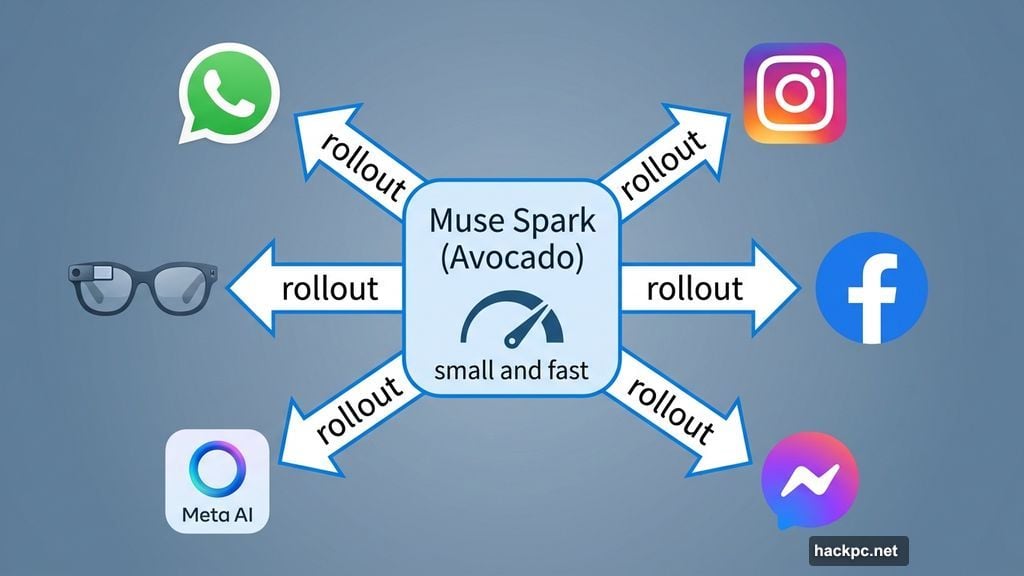
The model, known internally as Avocado, now powers the Meta AI app and the Meta AI website. Soon, it will roll out across WhatsApp, Instagram, Facebook, Messenger, and even Meta’s AI glasses.
Small, Fast, and Built to Reason
So what can Muse Spark actually do? Meta describes it as “small and fast by design, yet capable enough to reason through complex questions in science, math and health.”
That might sound modest. But the framing here is intentional. Meta is positioning Muse Spark as a foundation, not a finished product.
“This initial model is small and fast by design,” Meta said in its announcement. “It is a powerful foundation, and the next generation is already in development.”
In other words, Meta is telling the world to watch this space. Larger, more powerful models are already in the pipeline.
![Meta Superintelligence Labs researchers collaborating on AI model development with screens showing Muse Spark neural network diagrams]
Why Meta Needed This Win
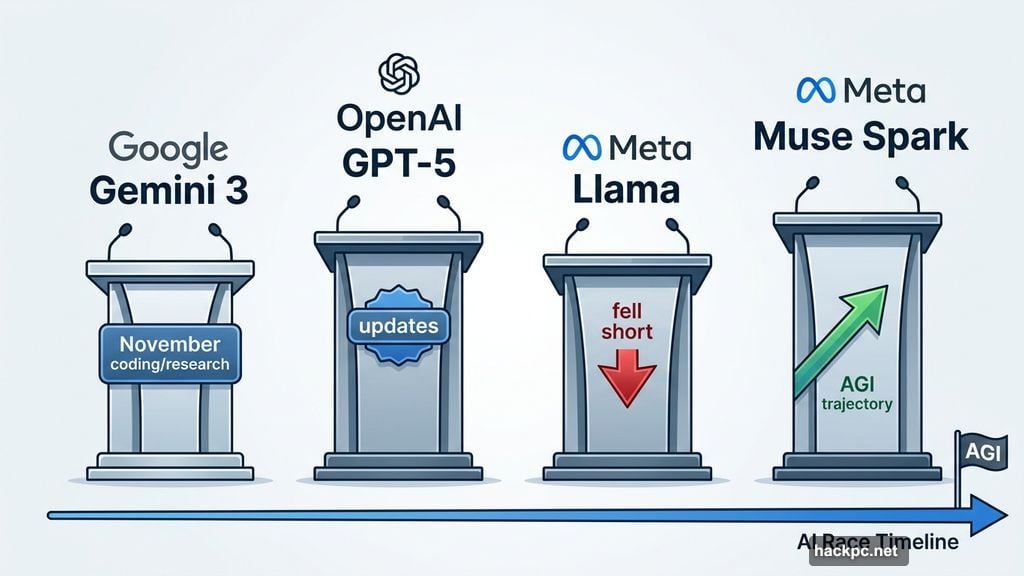
Meta’s AI track record hasn’t been flawless. The company’s Llama model releases last year landed with a thud, falling short of expectations. Meanwhile, the competition kept sprinting ahead.
Google pulled off a major leap in November with its Gemini 3 model, which wowed developers with its coding and research capabilities. OpenAI moved fast to respond with GPT-5 updates shortly after.
So Meta needed a moment. A real one. And Muse Spark, while described as an “early data point on our trajectory,” signals that the Superintelligence Labs team is ready to compete.
Chasing Artificial General Intelligence
There’s a bigger picture here too. Meta hasn’t been shy about its ambitions. The company is pouring enormous resources into achieving artificial general intelligence, or AGI, the kind of AI that can reason and learn across virtually any domain like a human can.
That goal is still a long way off for any company. But the Superintelligence Labs team exists precisely to push Meta closer to that target.
![Meta AI app interface displaying Muse Spark model powering real-time reasoning responses on smartphone screen]
Muse Spark is the first public proof that this expensive, high-stakes team is delivering results. One model doesn’t win the AI race. But it does show that Meta’s massive investment in talent and infrastructure is starting to bear fruit.
The real test comes with what’s next. Meta says larger models are already in development, and the company clearly wants to send a message to Google, OpenAI, and every other player in the space.
Superintelligence Labs is just getting started. Whether that justifies the eye-watering cost of building it is the question Meta’s rivals will be watching very closely.




Comments (0)