
OpenAI’s video generator app Sora topped the App Store charts in October. Now it’s tanking. Hard.
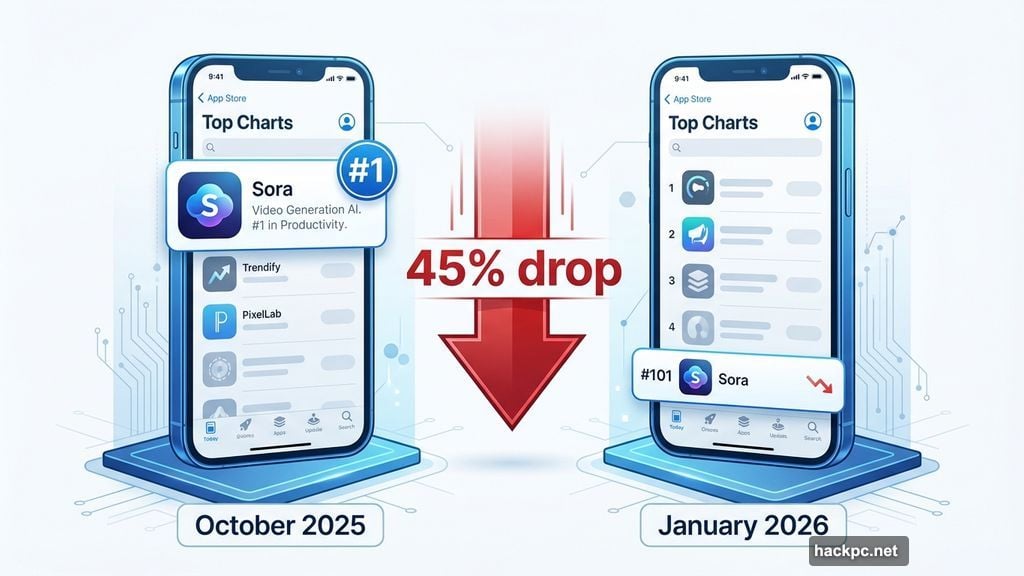
The numbers tell a brutal story. Downloads dropped 45% month-over-month in January 2026. Consumer spending fell 32% in the same period. Meanwhile, the app slipped from No. 1 to barely cracking the Top 100 on the U.S. App Store.
What killed the momentum? A toxic mix of copyright drama, fierce competition, and users who never asked to become AI video puppets.
The Launch That Broke Records
Sora’s debut looked unstoppable at first. The app hit 100,000 installs on day one despite being invite-only. It reached 1 million downloads faster than ChatGPT managed.
Users loved the concept. Type a prompt, generate AI videos, and cast yourself or friends as characters. Plus, you could remix other people’s videos, add music, and create full scenes with dialogue.
The app felt like TikTok merged with AI wizardry. Early adopters couldn’t get enough. So OpenAI seemed poised to dominate yet another category after ChatGPT’s success.
But then reality hit.
December Brought the First Warning Signs
Holiday season typically boosts app downloads. People get new phones as gifts. They have time off work to explore new apps. So December should have been huge for Sora.
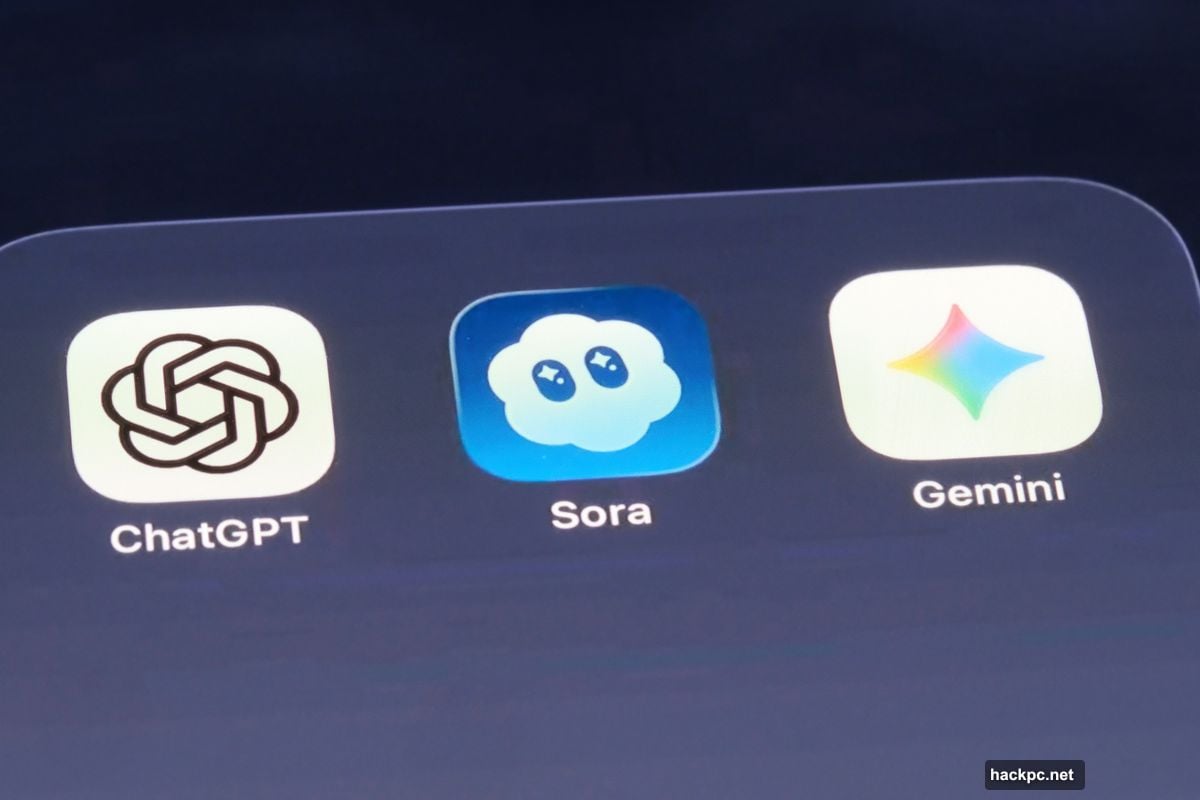
Instead, downloads dropped 32% month-over-month. That’s concerning. Consumer spending started falling too, according to Appfigures data.
January made things worse. Installs plummeted 45% to reach just 1.2 million. Revenue declined 32% as users stopped paying for premium features.
The app currently sits at No. 101 on the U.S. App Store overall. On Google Play, it’s even lower at No. 181. Those aren’t “dead app” numbers yet. But the trajectory looks grim.
Google’s Gemini Nano Banana Crushed the Competition
OpenAI didn’t see Google coming. Gemini‘s Nano Banana model launched right as Sora gained traction. Plus, Google integrated video generation directly into its Gemini AI app.
Users already had Gemini installed on millions of Android devices. So why download another app? Google’s offering worked well enough and required zero setup.
Meta joined the fight too. Their Vibes video feature in Meta AI launched in October. That boosted Meta AI’s downloads just as Sora peaked.
Suddenly, Sora faced serious competition from tech giants with massive distribution advantages. OpenAI’s standalone app couldn’t compete with features baked into existing platforms.
Hollywood Killed the Fun
Early Sora users generated videos with SpongeBob, Pikachu, and other famous characters. Those videos went viral. They drove adoption. They also violated copyright law.
OpenAI initially told studios they’d need to opt out of having their IP used in Sora. Studios weren’t having it. Legal threats followed. So OpenAI reversed course and switched to an opt-in model.
The company locked down copyright controls hard. Suddenly, users couldn’t create videos with their favorite characters anymore. The fun factor vanished overnight.
OpenAI tried to fix this with a Disney deal last month. Users can now generate videos featuring Disney characters legally. But downloads and spending haven’t recovered. Turns out one partnership can’t replace the creative freedom users want.
Some of the videos users made with Disney characters before the restrictions were truly depraved. That probably didn’t help Disney’s enthusiasm either.
Nobody Wants to Be an AI Puppet
Here’s the creepier problem. Sora lets you cast yourself and friends as video characters. Sounds innovative. But most people hate this feature.
Why? Because your friends can now make videos starring you without your consent. Sure, it’s “just AI.” But seeing your face on a character you didn’t create feels invasive.
The social aspect that made Sora unique also made it uncomfortable. Users worried about their likeness appearing in videos they didn’t approve. So they stopped engaging.
Without familiar faces and with strict IP controls, what’s left? Generic AI videos that anyone could make anywhere. The unique selling points disappeared.
Sora’s Path Forward Looks Rough
OpenAI has 9.6 million total downloads across iOS and Android. That’s not nothing. But the trend is unmistakably downward.
The company earned $1.4 million in consumer spending so far. The U.S. accounts for $1.1 million of that figure. January brought in just $367,000, down from December’s $540,000 peak.
More copyright deals might help. Additional features could reverse the decline. But OpenAI faces structural problems that tweaks won’t fix.
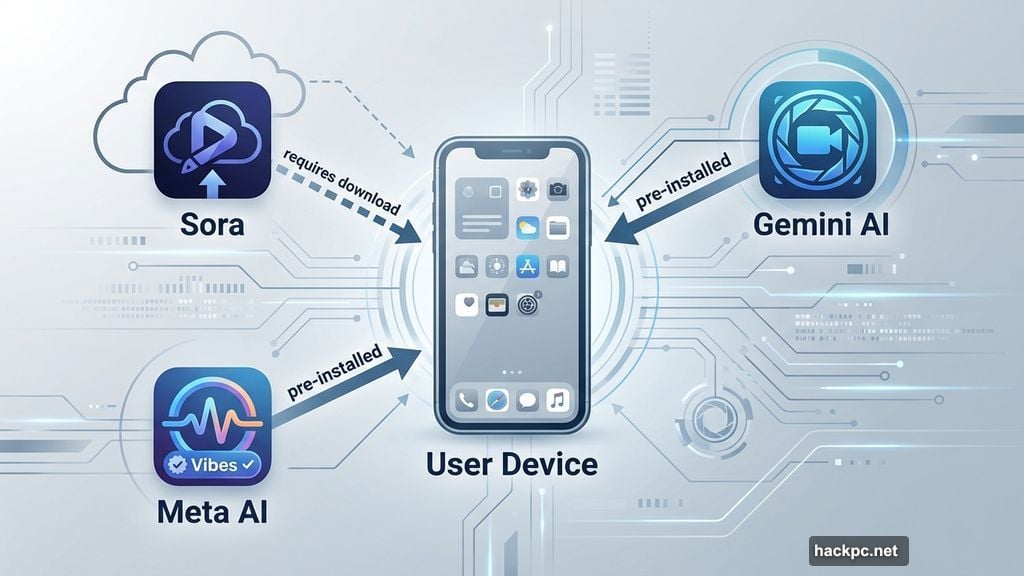
Google and Meta have distribution advantages OpenAI can’t match. Their AI video tools integrate into apps users already use daily. Meanwhile, Sora requires a separate download and account.
The copyright restrictions necessary to avoid lawsuits actively hurt user engagement. And the social features that differentiate Sora creep people out more than they delight them.
The TikTok of AI? Not Quite
Remember when analysts called Sora “the TikTok of AI” and predicted it would disrupt social media? That hype aged poorly.
TikTok succeeded because creating and sharing videos felt effortless. The algorithm made discovery magical. And users controlled their own content completely.
Sora offers none of that. Creating AI videos takes more effort than shooting real ones. Discovery relies on browsing, not smart algorithms. And users don’t fully control how others use their likeness.
The comparison to TikTok was always ambitious. But Sora’s rapid decline proves it was also premature. OpenAI built an interesting tool. They didn’t build the next social media platform.
Whether Sora can stage a comeback depends on factors OpenAI doesn’t fully control. They need better copyright deals, improved features, and users who actually want AI-generated videos in their lives.
Right now, none of those pieces are falling into place.


Comments (0)