
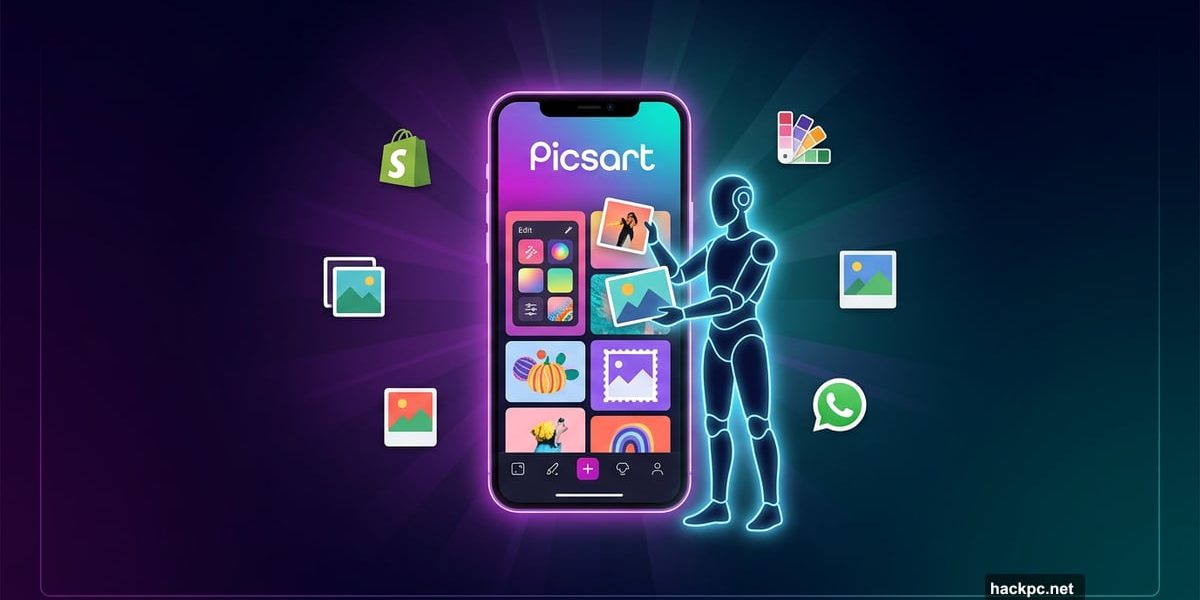
Imagine having a personal assistant who resizes your images, refreshes your Shopify store photos, and remixes your entire photo library into a new visual style — all while you grab lunch. That’s essentially what Picsart is building right now.
The AI-powered design platform just launched an AI agent marketplace, letting creators “hire” specialized AI assistants for specific creative tasks. And with 130 million users worldwide — most of them Gen Z content creators and social media managers — Picsart has a pretty clear audience in mind.
Creators Tired of Doing Everything Themselves
If you’ve ever managed social media content at scale, you know the grind. Resizing images for every platform. Editing product photos to look cohesive. Refreshing visual themes across hundreds of files. It’s repetitive, time-consuming work that pulls creative energy away from actual creative decisions.
Picsart founder and CEO Hovhannes Avoyan put it well. “Creators have been stuck as the operator of every workflow — the one doing, not deciding,” he said. “Our Agents change that relationship — you set direction, the agent builds a plan using real data, you approve, it executes.”
That’s a pretty compelling pitch. Instead of executing every small task yourself, you become the director. The AI handles the production work.
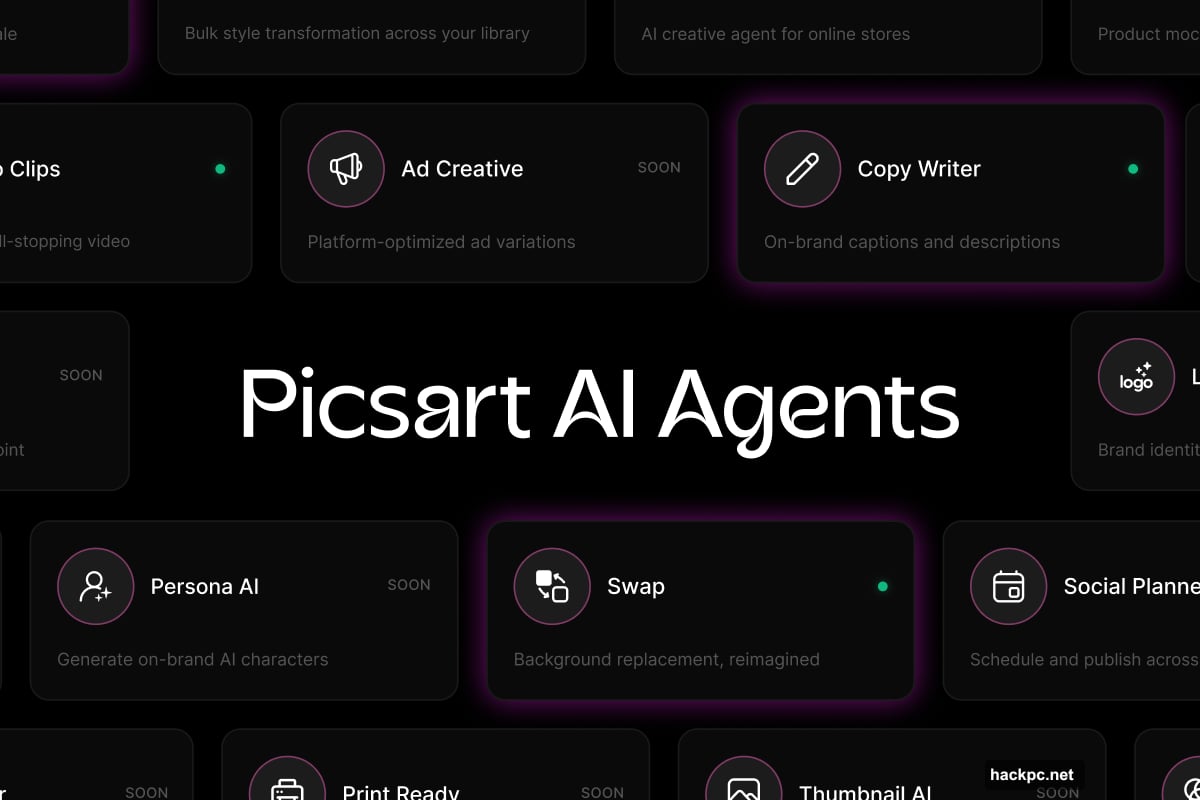
Four AI Agents at Launch
Picsart is starting with four agents, and each one targets a real pain point creators face daily.
Flair is the most sophisticated of the group. It connects directly with Shopify, acting like a behind-the-scenes assistant for online store owners. The agent analyzes market trends, reviews your product photos, and suggests improvements — like flagging inconsistent product imagery and recommending edits for a more cohesive look. In a future update, Flair will run A/B tests and proactively flag underperforming products before you even notice them slipping.
Resize Pro handles one of the most tedious tasks in content creation: reformatting visuals for different platforms. But here’s what makes it more interesting than a simple crop tool. If your original image isn’t the right shape for a given platform’s recommended dimensions, the agent uses generative AI to extend the frame naturally. The goal is that resized images look intentional, not like someone hastily chopped them down.
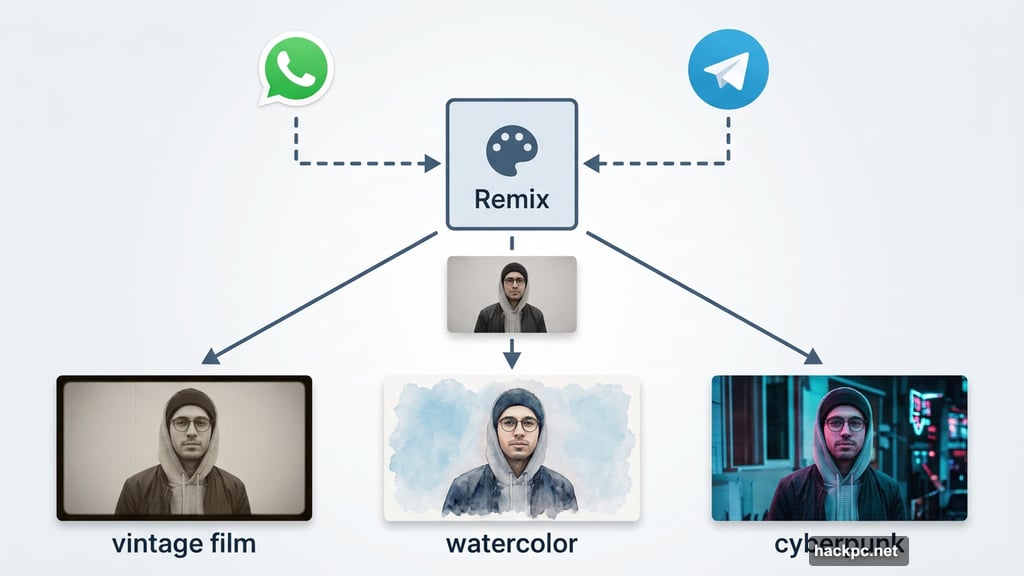
Remix lets creators pick a visual style — think “vintage film,” “watercolor,” or “cyberpunk” — and apply it across an entire photo library at once. So instead of editing photos one by one, you describe the vibe and the agent handles the batch transformation.
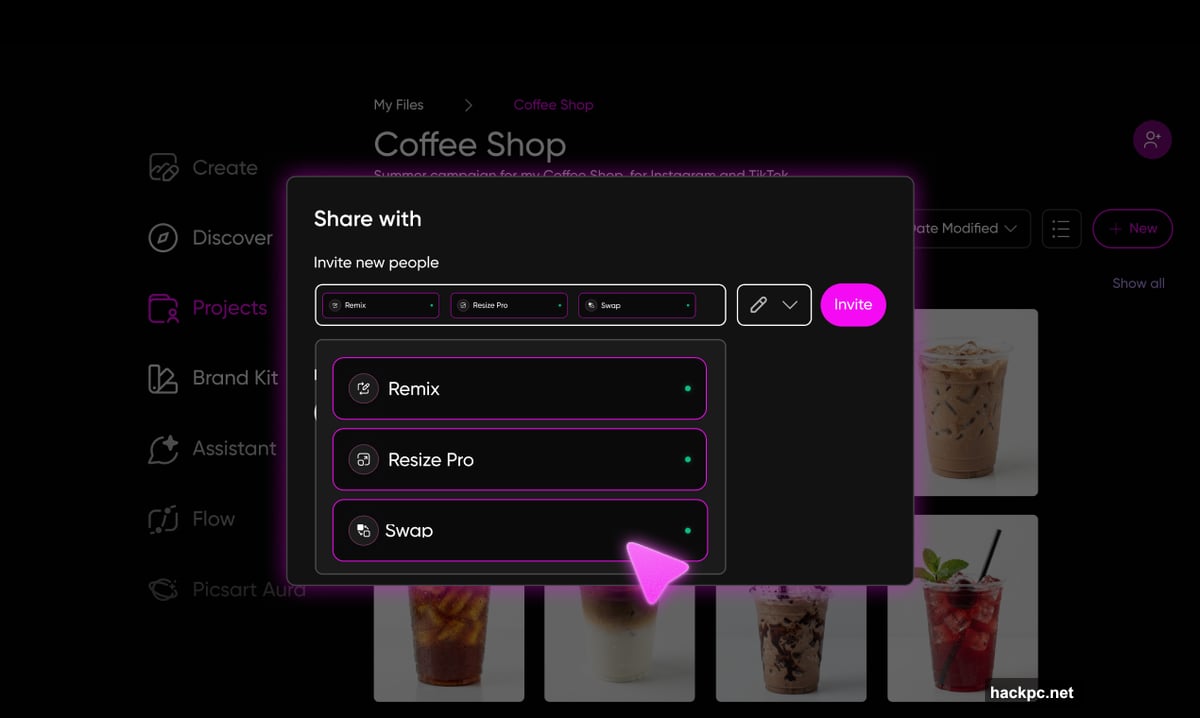
Swap changes photo backgrounds in bulk. For product creators shooting lots of content, this alone could save hours each week.
Running Agents on WhatsApp and Telegram
One genuinely clever design choice here is how Picsart handles communication with these agents. Rather than forcing users back to a dedicated app dashboard, Picsart integrates with WhatsApp and Telegram.
For Flair especially — an agent designed to work asynchronously in the background — this makes a lot of sense. You can check in on your store analysis or approve a batch of edits from your phone, wherever you are. “As agents extend to messaging apps creators already use, that conversation happens anywhere — at your desk or from the subway,” Avoyan added.
The choice of WhatsApp and Telegram is intentional. Both platforms offer APIs that let businesses build AI chatbot integrations. As more messaging platforms add similar tools, Picsart could expand beyond just those two.
Setting Autonomy Levels to Stay in Control
Any time AI agents start taking real-world actions — editing photos, analyzing store data, making recommendations — it raises a fair question. What happens when things go sideways?
Picsart addresses this with “autonomy levels.” For agents like Flair, you can require your approval before the agent takes any action. Nothing happens without your sign-off. That’s a smart middle ground between fully manual control and letting AI run loose on your business assets.
There’s also a structural reason these agents may be more reliable than some other AI tools out there. Because they’re not directly interacting with the public internet or external customers, they’re less exposed to prompt injection attacks — a known vulnerability where malicious inputs trick AI systems into doing something unintended. That’s not a guarantee of perfection, but it does reduce one meaningful category of risk.
What It Costs to Actually Use This
Picsart keeps a free plan available with a limited number of AI credits each week. But realistically, if you want meaningful access to the agent marketplace, you’ll need a paid subscription. Premium plans start at around $10 per month when billed annually — competitive pricing compared to most creative software tools in this category.
Picsart also plans to add more specialized agents every week going forward, so the marketplace should grow quickly from this starting lineup.
The Bigger Picture for Creators
The timing here isn’t accidental. Agentic AI has become one of the hottest categories in tech, driven by viral projects and a broader industry shift toward AI that can actually do things rather than just answer questions. Picsart is positioning itself right in the middle of that wave.
For content creators, this represents a genuine shift in how AI fits into the workflow. Earlier AI tools in design platforms mostly generated individual assets or applied single effects. What Picsart is describing is closer to delegation — handing off a category of work entirely and stepping back into a reviewing and decision-making role.
Whether that vision fully delivers depends on how well each agent performs in real-world conditions. Early AI agent products have had mixed results, and the gap between demo performance and everyday reliability can be significant. Still, the concept is well-suited to the actual problems creators face, and Picsart’s existing user base gives them plenty of real feedback to iterate quickly.
For anyone managing content at scale, these tools are worth keeping a close eye on as the marketplace grows.




Comments (0)