
Teddy Martin just wanted to help his coworkers stress less. Instead, he lost his job, his health insurance, and now finds himself at the center of a growing debate about worker rights in Silicon Valley.
The former Pinterest engineer is going public with his side of the story — and it looks very different from what his former employer has been saying.
A Simple Slack Post That Ended a Career
It was late January. Pinterest had just completed a round of layoffs, and surviving employees were anxious, confused, and getting almost no answers from leadership.
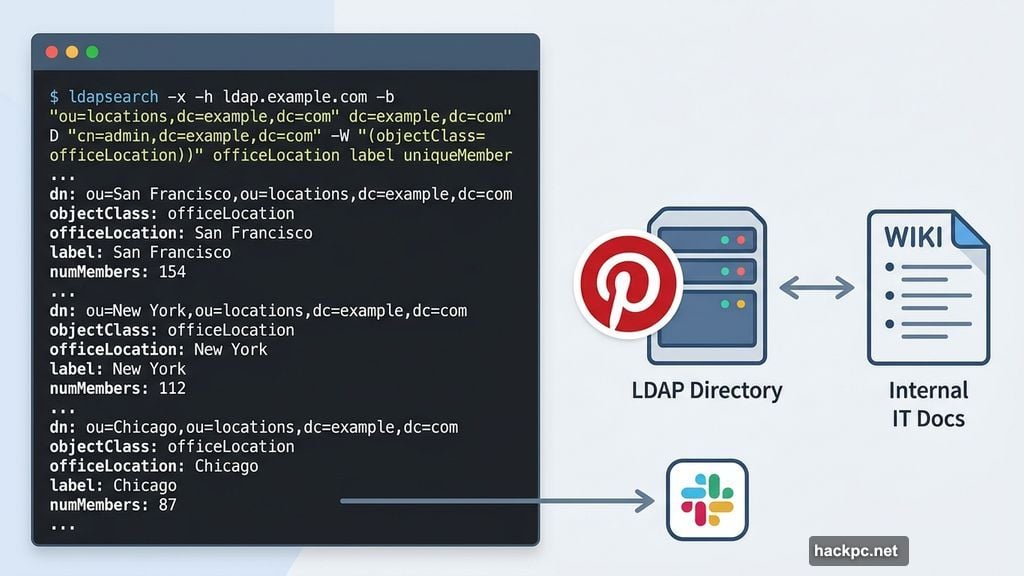
Martin spotted something useful: a command called ldapsearch. It’s a standard IT tool, built into Pinterest’s own directory system. When you run it, it tells you how many employee accounts have been recently deactivated, sorted by office location. No names. Just numbers.
He shared it in Slack, thinking it might help colleagues understand the scope of what was happening. A few hours later, the post was gone. The next morning, he got a calendar invite for an “urgent 15-minute meeting” at 11:30 AM — starting in one minute.
He was fired on the spot. HR told him his health insurance would end the following day. Martin had a new house, a toddler, and a wife on medical leave.
What Pinterest Says Happened
Pinterest’s version of events is significantly more dramatic. Shortly after the firings, CEO Bill Ready held an all-hands meeting. Audio leaked to CNBC showed him describing “obstructionist” behavior the company wouldn’t tolerate.
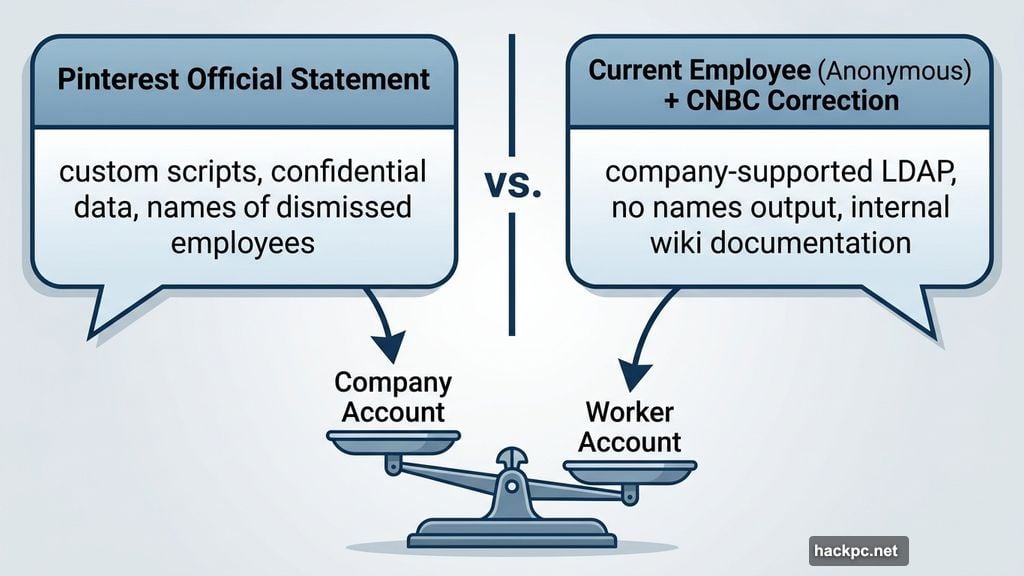
A Pinterest spokesperson told CNBC that “two engineers wrote custom scripts improperly accessing confidential company information to identify the locations and names of all dismissed employees and then shared it more broadly.” The company said this violated its policies and employees’ privacy.
Martin says that description is simply wrong. And he’s not alone.
Current Employees Are Pushing Back
A current Pinterest employee, speaking anonymously, told The Verge that ldapsearch isn’t some obscure hacking tool. It’s a standard, company-supported service with internal documentation.
“LDAP is like an IT-managed service that Pinterest provides. We have wiki articles all about how to use it,” they said. “If you ask our AI assistants, they will happily tell you all about how to use it. In my view, this was a known method, and I wouldn’t be surprised if half of engineering was already running this command prior to it being shared.”
The employee also confirmed that the version Martin shared did not output names. CNBC updated its own story after multiple Pinterest employees contacted the outlet to dispute the company’s account.
Pinterest’s Shifting Explanation
After The Verge pressed Pinterest for comment, spokesperson Ivy Choi offered a somewhat different framing. She acknowledged that Martin’s command didn’t pull names directly. But she argued it “could be easily manipulated to pull the names of all impacted employees, simply by omitting the last line of the command,” and that another engineer demonstrated that after Martin’s post.
Choi also said Martin “egged on others to misuse access to information and save data about the identities of laid-off colleagues before it expired.”
Martin’s spokesperson Douglas Farrar fired back immediately. “Pinterest said two engineers wrote scripts to identify the names of laid-off employees, and fired Teddy on that basis. They’re now acknowledging his query didn’t do that. Those two statements can’t both be true.”
Farrar called the privacy violation accusations “without merit and defamatory.”
Not Everyone Agreed With Martin
To be fair, the reaction inside Pinterest wasn’t unanimous.
One former employee who was laid off told The Verge they were “in shock” to learn about a tool circulating that could reveal their layoff status. Already feeling a loss of control over the situation, they felt the command sharing was like another thing “potentially could take away my autonomy to let people know.” They described it as employees “trolling the executive team.”
On Blind, the anonymous forum for tech workers, both sentiments showed up. But in one poll with nearly 200 respondents, most said they would either want or simply not care if coworkers could find out they had been impacted.
What Labor Law Actually Says
This situation has caught the attention of legal experts — and it may not be over yet.
Harvard labor law professor Ben Sachs told The Verge that workers discussing layoffs with colleagues are typically protected under Section 7 of the National Labor Relations Act. “Employees who use information that’s made available to them as part of a discussion amongst themselves about working conditions, including layoffs, they are protected,” Sachs said.
Crucially, he added: “employees don’t lose protection just because their discussion might lead to some people knowing who got laid off.”
So Sachs said a fair reading of the law would likely favor Martin. But he also acknowledged it’s “conceivable” the NLRB could reach a different conclusion under the current Trump administration, which has historically taken a less worker-friendly stance.
Joshua Nadreau, an employment attorney at Fisher Phillips, pointed out two complicating factors. First, there’s the question of intent. “If your motivation was to either reduce layoffs or improve visibility into how they were conducted, that could be mutual aid protection,” Nadreau said. “Versus, I was just curious if my friend in San Francisco had been laid off.” Second, labor laws were written long before digital workplace tools existed, which creates genuine grey areas around employee access to company IT systems.
Martin is currently “considering all his legal options,” according to Farrar.
The Bigger Picture for Silicon Valley
Martin says one piece of coverage stuck with him. An article suggested that if Pinterest gets away with this without consequences, it could trigger a wider crackdown on employee dissent across the industry.
“I can’t just let that happen without what I have available to me to try and stop it,” he said.
The current Pinterest employee who spoke to The Verge echoed that concern. They noted a very similar command had been shared on Slack by a different employee earlier in the year with no reaction. But the timing of Martin’s post — right in the middle of layoff anxiety — apparently made leadership see it differently.
“I never would’ve dreamed it would be a fireable offense,” the employee said. The firing effectively sent a message to those who remained: stay quiet, or face the same fate.
Martin had a reputation for asking hard questions. After he transferred to a new team within Pinterest, he later found out a former colleague volunteered to “be Teddy” at a meeting where nobody else was speaking up.
“I was the guy that was willing to say things that people were scared to say,” Martin said. “And I got fired because I wasn’t afraid enough.”
Whether Pinterest’s handling of this situation holds up legally remains to be seen. But the fact that it’s now public — with employees contradicting the company’s account and labor lawyers weighing in — suggests this story is far from over.



Comments (0)