
Sling just raised prices for the second time in recent months. If you watch local ABC, Fox or NBC through Sling Blue, your bill jumped by $4 monthly.
The increase affects millions of cord-cutters who rely on Sling for affordable live TV. Plus, this marks a troubling pattern as streaming services continue hiking prices across the board. Let’s break down what changed and whether Sling still makes sense for your budget.
What Changed in January 2026
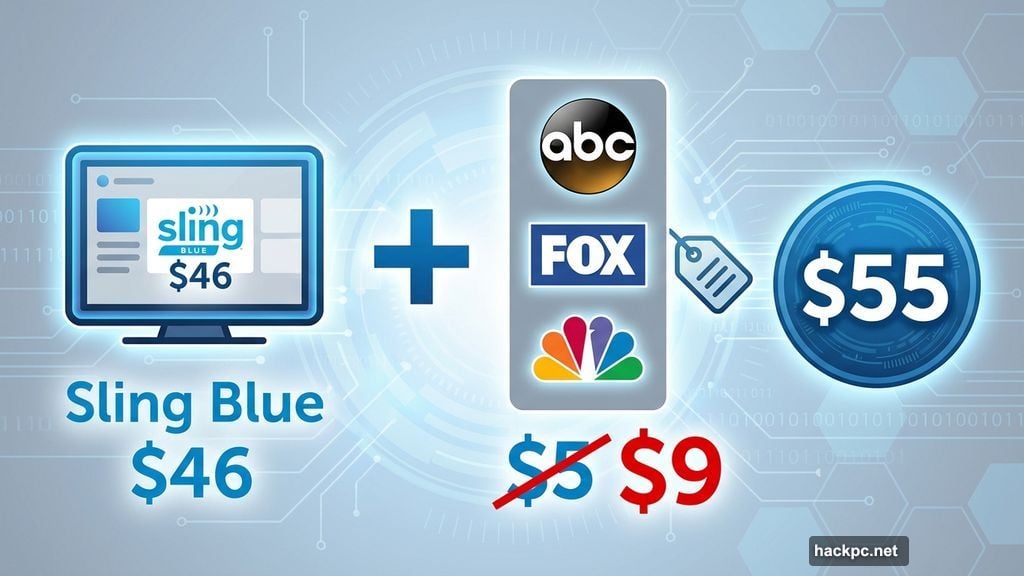
Sling Blue subscribers with local channel access face the biggest impact. The base Blue package stayed at $46 monthly. But access to local ABC, Fox or NBC stations now costs extra.
Previously, all three local channels added $5 to your monthly bill. Now that jumps to $9 extra per month. So Sling Blue with full local access costs $55 total.
Got just one or two local stations? You’ll pay $4 more than before. Your bill depends on which locals Sling offers in your area. Not everyone gets access to all three networks.
Meanwhile, Sling’s Select package dodged the price hike entirely. Select still costs $20 without locals, $25 with one or two stations, and $30 with all three. That’s unchanged from before.
When You’ll Start Paying More
New subscribers already see the higher prices when signing up. Existing customers get a brief reprieve before the increase hits.
If you’re already a Sling Blue customer, expect the new rate on or after February 20. Sling will notify you before your billing date changes. So check your email for the exact date your price adjusts.
The company claims local broadcast fees keep rising faster than inflation. Networks charge streaming services hefty retransmission fees for the right to carry ABC, Fox and NBC. Those costs get passed directly to subscribers.
Is Sling Still Worth It?
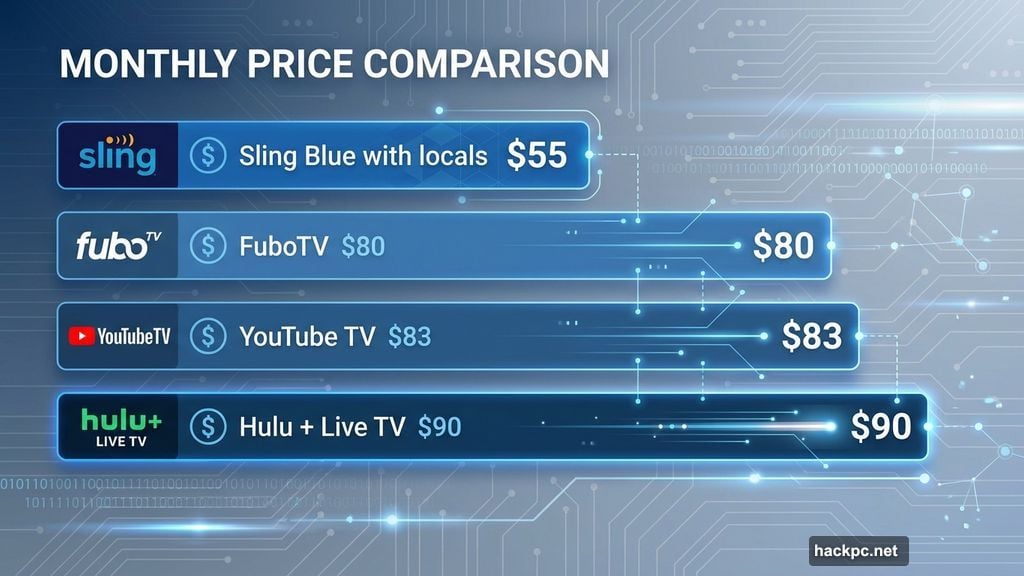
Even at $55 monthly, Sling Blue with locals costs less than most competitors. YouTube TV charges $83 per month. Hulu + Live TV runs $90. FuboTV starts at $80.
But the gap keeps shrinking. Sling built its reputation on budget-friendly streaming. Now it’s creeping toward mid-tier pricing for full local channel access.
Consider your actual viewing habits. Do you watch local news and sports regularly? Then the extra $9 might justify the cost. But if you rarely tune into local channels, you’re paying for something you don’t use.
Check which local stations Sling offers in your zip code before subscribing. Not every market gets all three networks. You might pay extra for incomplete coverage.
Alternatives to Consider
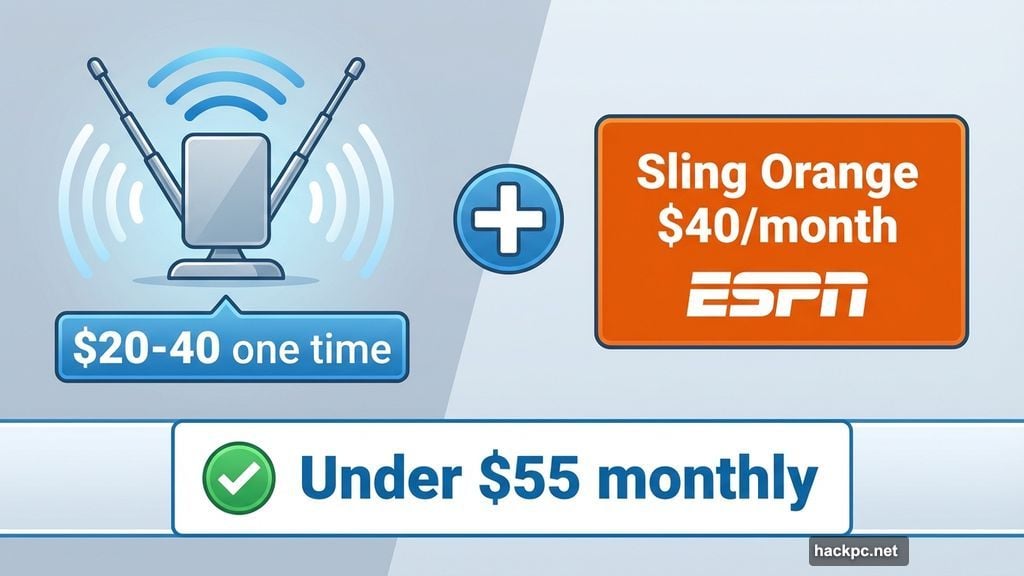
Antenna-based options provide local channels completely free. A decent indoor antenna costs $20-40 one time. You’ll get ABC, Fox, NBC and CBS in high definition without monthly fees.
Combine a free antenna with Sling Orange for $40 monthly. You’ll access ESPN and cable channels while pulling locals over the air. Total cost stays well below $55.
Streaming services like Paramount Plus and Peacock offer on-demand content from CBS and NBC for under $10 monthly. You lose live programming but gain flexibility. Plus, you can watch shows the next day instead of live.
Some markets get local channels through free streaming apps. Check if your local ABC, Fox or NBC stations offer their own apps with live streams.
The Bigger Streaming Price Problem
Sling’s increase follows a broader industry trend. Nearly every major streaming service raised prices in 2025-2026. Netflix, Disney Plus, Max, Paramount Plus all bumped rates.
Streaming was supposed to save money compared to cable. Now the average household subscribes to multiple services costing $80-100 combined. That rivals traditional cable bills.
The convenience remains. You can cancel anytime without contracts or installation fees. But the cost savings that made cord-cutting attractive keep eroding.
Expect more price hikes ahead. Content costs rise as studios demand higher licensing fees. Live sports drive up expenses even faster. Streaming companies pass those costs directly to subscribers.
What You Should Do
Audit your streaming subscriptions now. Which services do you actually watch monthly? Cancel anything you haven’t used in 30 days.
For Sling specifically, decide if local channels matter to your viewing. If yes, the new $55 price still beats most alternatives. If not, drop to Sling Blue without locals for $46 or switch to Sling Orange.
Consider rotating services. Subscribe to one for a few months, watch everything you want, then cancel and switch to another. You’ll save money while still accessing content.
Most importantly, stop treating streaming like cable. Don’t mindlessly pay for channels you never watch. The flexibility to cancel anytime is streaming’s biggest advantage. Use it.
Sling remains cheaper than YouTube TV and Hulu Live. But the price gap narrows with each increase. At some point, the savings stop justifying the trade-offs in channel selection and features.
That point gets closer every time streaming services raise prices. Choose carefully.

Comments (0)