
Spotify isn’t a music app anymore. It’s transforming into a full video platform that wants your eyes, not just your ears.
The company just struck deals with major labels to stream music videos directly in its app. Plus, it’s hiring teams to build video features rivaling YouTube and TikTok. This isn’t a small pivot. It’s a complete reimagining of what Spotify can become.
Music streaming hit a wall. So Spotify is breaking through it with video.
Music Videos Land This Month
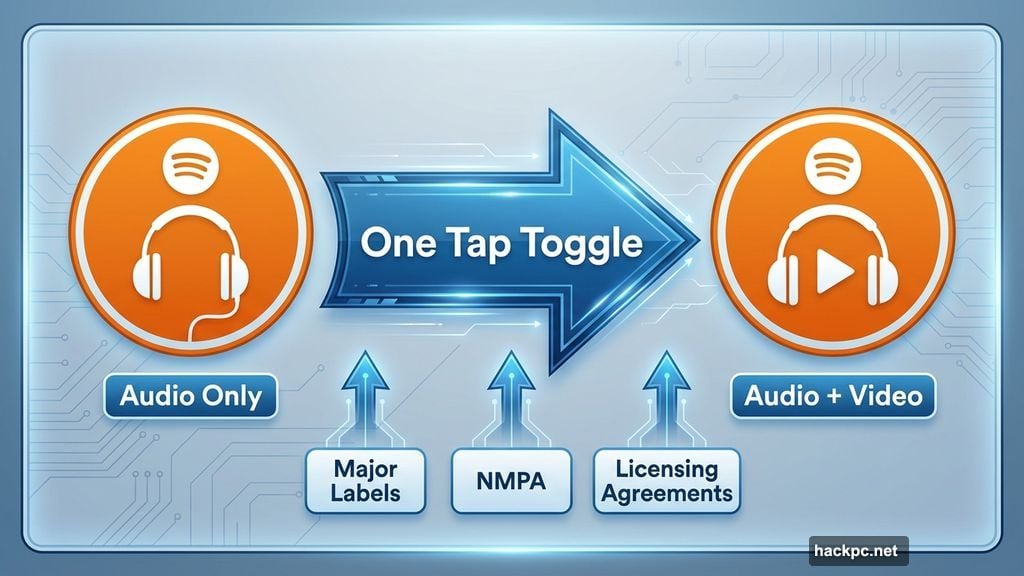
US subscribers will soon toggle between audio and video versions of popular songs. One tap switches you from listening to watching, right inside the Spotify app.
This capability stems from new licensing agreements Spotify signed with major labels and the National Music Publishers’ Association this fall. Those deals included specific provisions for audiovisual rights that Spotify lacked before.
“These deals secure broader video rights that we’ve long needed,” explained Spotify’s chief business officer Alex Norström on the company’s recent earnings call. “This unlocks our ability to innovate and launch more products and features.”
The timing makes sense. Music streaming growth is slowing in developed markets. Most people willing to pay for subscriptions already have one. So Spotify needs new ways to keep users engaged and attract ad revenue.
Nearly 500,000 Video Podcasts Already Streaming
Spotify didn’t start with music videos. It’s been building a video foundation for years through podcasts.
The platform now hosts close to half a million video podcasts and shows. More than 390 million users have streamed video podcasts on Spotify. Plus, time spent watching videos has more than doubled year over year, according to Norström.
That’s massive growth most people missed. Spotify quietly became a video destination while everyone thought of it as just a music service.
The company even partnered with Netflix in October to bring The Bill Simmons Podcast and other shows to the streaming giant. Samsung now streams a free, linear channel programmed with Spotify podcast episodes like The Dave Chang Show and The Rewatchables.
These partnerships generate extra revenue. But they also drive new viewers back to Spotify itself, building momentum for the bigger video push.
YouTube Dominates Music Video Right Now
Spotify faces a formidable competitor in YouTube. The Google-owned platform remains the top destination for free music worldwide.
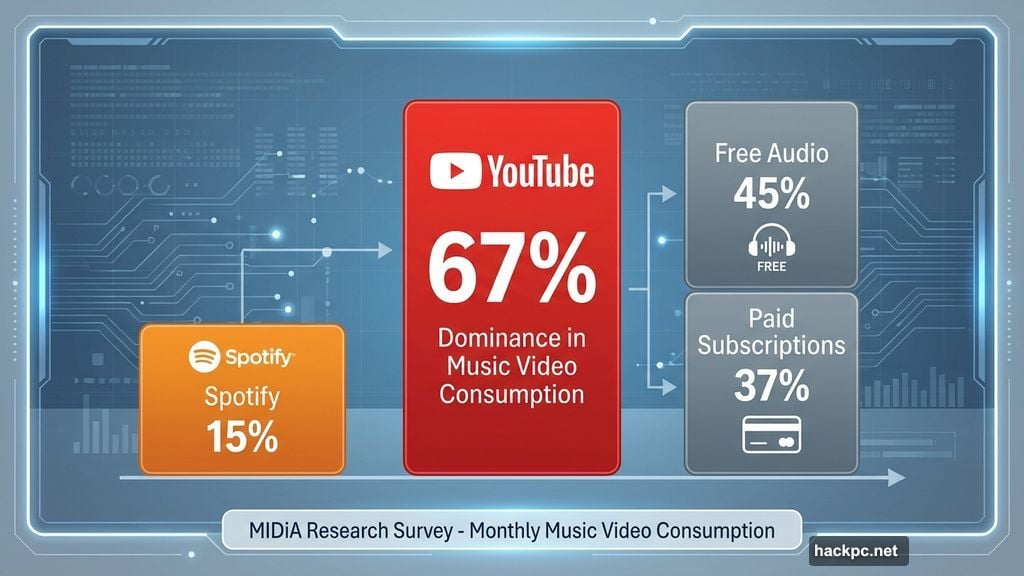
A MIDiA Research survey this summer found 67 percent of consumers watch music videos on YouTube monthly. That compares to just 45 percent streaming free audio and 37 percent paying for music subscriptions.
YouTube Music benefits from tight integration with YouTube’s massive video catalog. “It is a visual medium in an entertainment world defined by video,” says MIDiA Research managing director Mark Mulligan. “YouTube [Music] is also the only other global player than Spotify that is growing at pace.”
That makes YouTube Music Spotify’s most serious challenger right now, even if it’s not the biggest competitor by subscriber count.
Why Video Matters More Than You Think
Music tends to be background noise for most listeners. Adding video commands more attention because it engages multiple senses.
“Of all entertainment formats, music is the one consumers are least likely to be paying attention to,” Mulligan notes. “Just under a third are focused on the music they are listening to when streaming. Adding video commands more of the senses and therefore attention.”
More attention means longer session times, better ad rates, and stickier subscriptions. Spotify isn’t just competing with Apple Music anymore. It’s fighting for your time against TikTok, Netflix, and even video games.
That’s why Spotify’s job listings now describe the company as evolving “from an audio-first platform to also become a world-class video service.” Music alone won’t cut it in today’s entertainment landscape.
Music Curators Could Be Spotify’s Secret Weapon
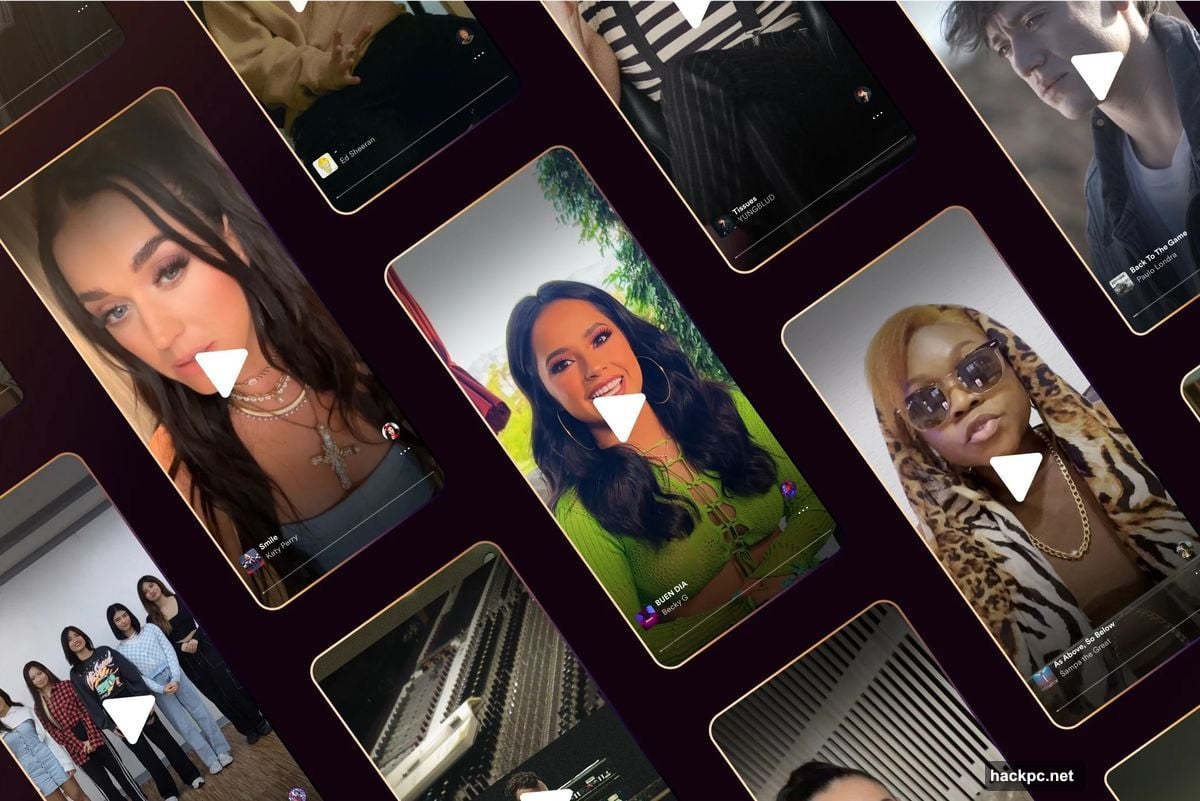
Spotify already allows artists to upload 30-second vertical video clips similar to Instagram Reels. The company also featured clips from podcasters and audiobook authors in its 2025 Spotify Wrapped.
The next logical step? Onboard music influencers and curators, suggests Thematic COO Audrey Marshall.
Music curators have become hugely popular on TikTok, recommending songs, artists, and playlists across every genre. But TikTok isn’t ideal for music discovery because it requires users to leave the app to actually play full songs on Spotify.
“Wouldn’t it be that much more effective to see this video directly within Spotify and then simply click to play the artist’s music immediately?” Marshall wrote in a recent blog post.
That integration could give Spotify a major advantage over TikTok and YouTube for music discovery. Users wouldn’t need to jump between apps anymore.
Spotify Won’t Go Full TikTok
One question remains: Will Spotify let anyone upload videos like YouTube or TikTok do?
Probably not. Opening the floodgates to user uploads brings massive copyright and content moderation challenges. Spotify declined to comment on future video plans, but allowing unrestricted uploads seems unlikely.
However, the lines between professional and amateur creators continue blurring. Spotify could selectively onboard music influencers and verified creators without dealing with the chaos of fully open uploads.
That middle ground would give Spotify the benefits of creator content without the headaches YouTube and TikTok face with content moderation at scale.
Music Streaming Enters a New Era
“Music streaming is entering an optimization phase,” Mulligan says. “The last 10 years were about growth; the next 10 will be defined by consolidation.”
With subscriber growth plateauing in Western markets, Spotify must focus on growing share of audience time, retaining paying subscribers, and better monetizing free users. Video helps accomplish all three goals.
Spotify’s transformation makes sense in this context. The company needs to become more than just a music app to survive the next decade. Video offers a path to remain relevant as consumer attention fragments across more entertainment options.
Whether Spotify can truly rival YouTube and TikTok remains uncertain. But one thing is clear: music alone won’t be enough anymore. Video isn’t optional for Spotify. It’s essential for the company’s future.



Comments (0)